Korea Muslim Federation Commemorates Seven Decades of Islamic Presence
International Halal Seminar and Gala Dinner Marks Historic Milestone in Seoul
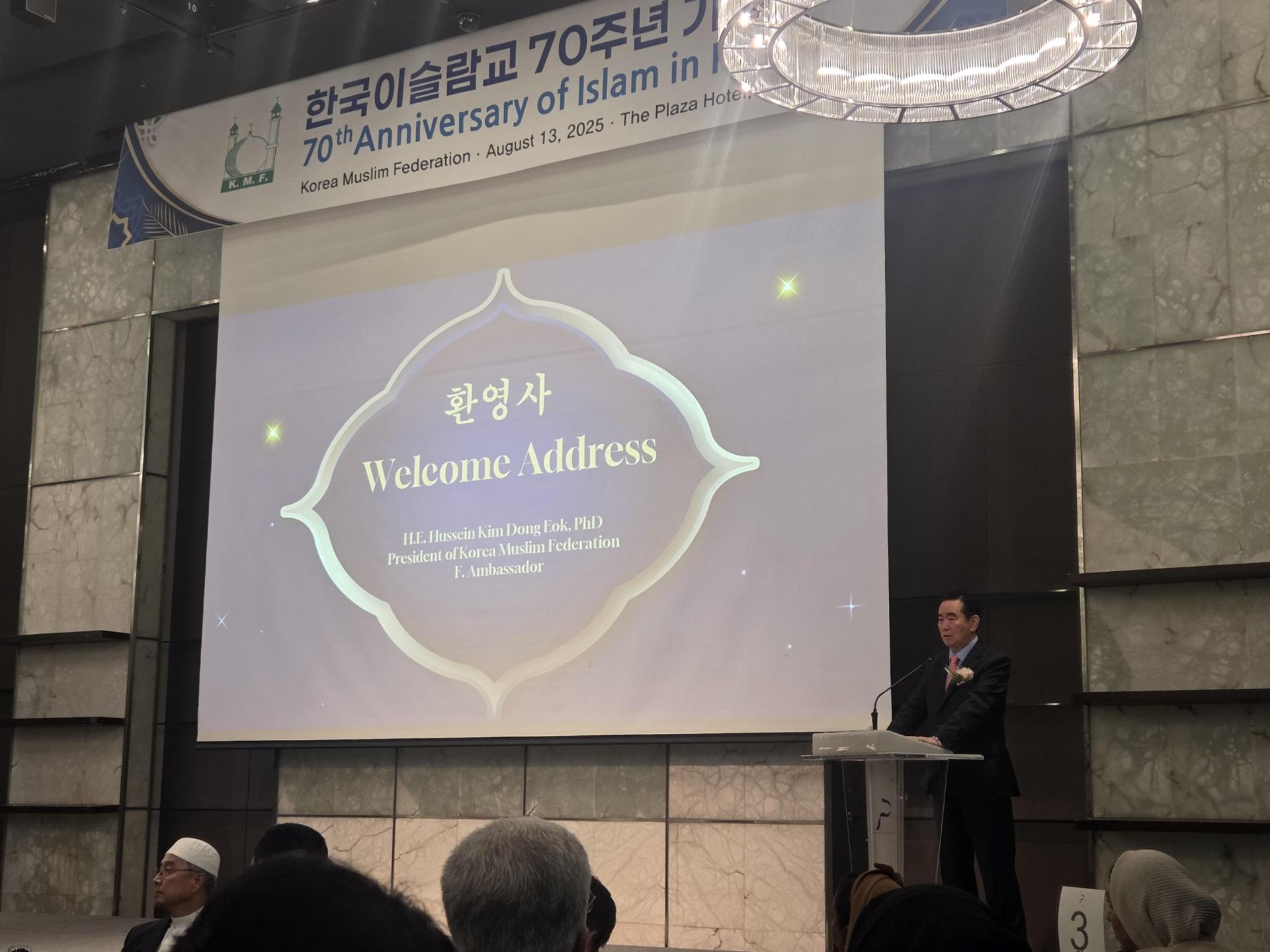
The Korea Muslim Federation (KMF) celebrated a significant milestone on Wednesday, marking 70 years of Islamic presence in Korea through an international halal seminar and gala dinner held in Seoul. The event brought together prominent figures from Islamic nations and domestic halal organizations to commemorate this important anniversary and discuss future opportunities for Islamic community development.
Distinguished International Participation
KMF President Kim Dong-eok expressed profound appreciation to international guests who traveled from various countries to attend this landmark celebration. The gathering featured high-ranking officials representing key Islamic institutions and halal certification bodies from across the Muslim world.
The event welcomed several distinguished participants, including Ahmad Haikal Hasan, minister of Indonesia’s Badan Penyelenggara Jaminan Produk Halal (BPJPH), Osama bin Ahmad Al-Jaffal, undersecretary of the Saudi Ministry of Religious Affairs, and Saleh I. Babear, secretary-general of the World Assembly of Muslim Youth. These leaders represented major Islamic institutions and halal certification authorities.
Historical Context
President Kim traced the extensive history of Islamic connections to the Korean Peninsula, highlighting that Arab merchants were actively trading with the Silla Kingdom during the middle of the ninth century. These early commercial relationships established the foundation for cultural and religious exchanges that would continue for centuries.
The historical significance of Islamic presence extends to the Goryeo Dynasty in the early 11th century, when Arab merchants first introduced the name “Korea” to Western civilizations. Additionally, historical records document Quran recitations taking place at the royal court during the reign of King Sejong in the 15th century, demonstrating early Islamic cultural influence in Korean society.
Modern Islamic Establishment in Korea
Korean War and Turkish Military Influence
While historical connections existed for centuries, Islam began to establish firm roots in Korea only in 1950 during the Korean War. Approximately 4,500 Turkish troops deployed as part of United Nations forces played a crucial role in introducing Islamic faith while providing humanitarian care to war orphans.
Humanitarian Impact and Community Formation
Korean civilians experiencing the devastation of war were profoundly moved by the humanitarian values and ethical principles demonstrated by Turkish soldiers. This compassionate approach to Islamic practice became the catalyst for forming the Korean Muslim community and establishing lasting Islamic presence in the country.
“Koreans who were in despair amid the devastation of war were deeply moved by the humanitarianism and ethical values demonstrated by Turkish soldiers, which became the catalyst for the formation of the Korean Muslim community,” President Kim explained.
Contemporary Islamic Infrastructure and Growth
Modern Korea now supports 24 mosques and more than 260 prayer halls distributed nationwide, with the Seoul Central Mosque in Hannam-dong serving as the primary center for Islamic activities. This extensive infrastructure demonstrates the significant growth of Islamic practice and community organization over seven decades.
The domestic Muslim population in Korea has grown to approximately 250,000 individuals, representing a substantial religious minority that continues to expand through both conversion and immigration. This growing community provides the foundation for increased Islamic cultural influence and halal market development.
Strategic Organizational Goals
KMF has outlined comprehensive plans to promote financial independence within the Muslim community, nurture the next generation of Islamic leaders, and enhance understanding of Islam among non-Muslim Koreans. These initiatives include publishing Korean translations of the Quran to improve accessibility and comprehension.
President Kim emphasized Islam’s fundamental commitment to peace, stating that “Islam is truly a religion that pursues peace.” He outlined KMF’s active commitment to contributing toward an ideal future where all humanity can coexist peacefully and harmoniously, regardless of religious background.
International Halal Seminar
The celebration’s first component, the 2025 International Halal Seminar-Seoul, featured presentations by leaders from major halal certification bodies. Participants included representatives from Jabatan Kemajuan Islam Malaysia, Thailand’s Chulalongkorn University Halal Science Center, and Indonesia’s BPJPH, sharing expertise and best practices.
The second component included a formal gala dinner attended by ambassadors, halal industry leaders, and other domestic and international guests. This diplomatic gathering provided opportunities for relationship building and strategic discussions about halal industry development and cooperation.
Strategic Objectives and Market Development
Strengthening International Relationships
KMF stated that the event aims to strengthen relationships with major halal certification authorities worldwide, creating a foundation for enhanced cooperation and mutual recognition of halal standards. These relationships are essential for Korean companies seeking to enter global halal markets.
Export Opportunity Expansion
The celebration serves as a platform for expanding export opportunities for Korean halal products, connecting domestic producers with international certification bodies and potential overseas markets. This focus on export development supports Korea’s broader economic diversification goals.
Global Halal Industry Positioning
Through this milestone celebration, Korea seeks to advance its position in the global halal industry, demonstrating the country’s commitment to high-quality halal production and certification standards. This positioning could attract international investment and partnership opportunities.
Cultural Integration
Building Bridges Between Communities
The 70-year anniversary celebration represents more than religious commemoration; it demonstrates how Islamic communities have successfully integrated into Korean society while maintaining their religious identity and contributing to cultural diversity.
Educational and Outreach Initiatives
KMF’s commitment to publishing Korean translations of Islamic texts and enhancing interfaith understanding reflects a comprehensive approach to community integration that benefits both Muslim and non-Muslim populations in Korea.
Legacy of Humanitarian Values
The celebration honors the humanitarian legacy established by Turkish soldiers during the Korean War, emphasizing how Islamic principles of compassion and service continue to influence the Korean Muslim community’s approach to social engagement and community development.
Original Article:
Hyun-bin, K. (2025, August 18). Korea Muslim Federation celebrates 70 years of Islam in Korea. The Korea Times. https://www.koreatimes.co.kr/amp/foreignaffairs/20250814/korea-muslim-federation-celebrates-70-years-of-islam-in-korea