Tasting Jeddah: A Culinary Journey Full of Unexpected Discoveries
Jeddah, Saudi Arabia – There is one thing that never fails to excite me whenever I travel: trying the local food. And when the JHCPO team was assigned to Jeddah, I knew this trip wouldn’t be just another work mission—it would be filled with flavors, aromas, and culinary experiences I wouldn’t find anywhere else.
From the moment we arrived, Jeddah welcomed us with the unmistakable warmth of the Middle East—vibrant, lively, and full of character. And through its food, I began to see how deeply Arab culture is woven into everyday life.
When “Arabian Rice” Redefines Portion Sizes
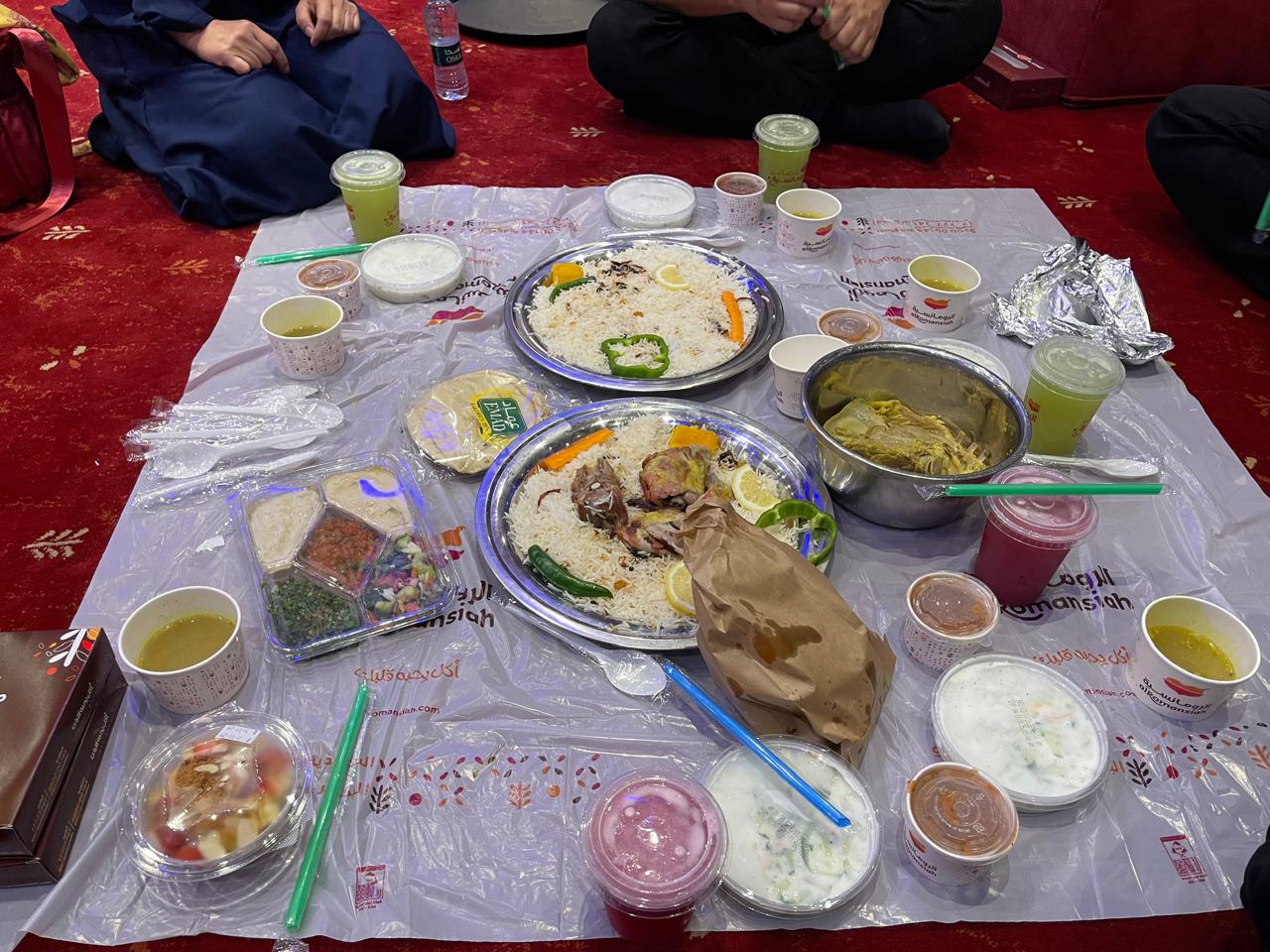
One of our first explorations was Arabian rice dishes. I’m familiar with Indonesian-style kebuli, but the “real” version in Jeddah was on an entirely different scale—especially the portions.
To put it simply: the serving size was two to three times larger than what we usually get in Indonesia. A single plate could easily cover our entire table. And instead of chicken, the dishes came with tenderly cooked lamb or even camel meat seasoned with rich, aromatic spices.
When the food arrived, I had to pause for a moment. The portion was so enormous that the five of us just stared at each other and burst into laughter. We felt full just by looking at it.
Fast Food, 24 Hours a Day: A Saudi Lifestyle Staple
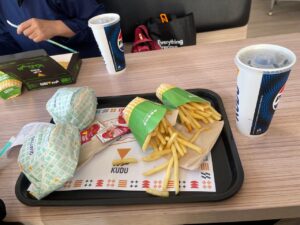
Another thing that surprised me was how deeply fast food is ingrained in everyday Saudi life. On almost every major road, you’ll find rows of 24-hour fast-food chains—always busy, always open.
During a short break between activities, we tried Kudu, a popular local fast-food brand. The portions were big (naturally), the food was tasty, and the prices were reasonable. Enjoying a giant burger under the blazing Jeddah sun felt surprisingly right—practical, quick, and satisfying.
An Egyptian Restaurant: Between Surprise and Delight
We also visited an Egyptian restaurant, and this was when our culinary adventure became even more interesting. Many of the menu items were unfamiliar, and one dish in particular made us stop in our tracks:
Donkey meat.
At first, I thought I had misread the menu—but I hadn’t. The dish sparked a long discussion about its halal status, and of course, we didn’t order it. But its mere presence on the menu was something none of us could forget.
We ordered two family sets that were listed as enough for five people. In reality? The servings were so massive that we could barely keep up. Bread, rice, meat, soup—everything came in what I now call “Arab-sized” portions.
Sometimes I think Arabs and Asians simply have completely different definitions of portion size. Extremely different.
Molokhia Soup: A Dish I’ll Never Forget
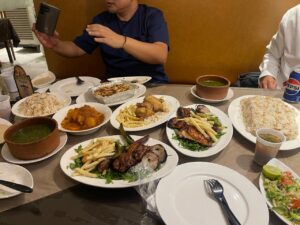
Among everything we tried, the dish that left the deepest impression was Molokhia soup. This traditional Egyptian soup made from molokhia leaves is prepared in a rather dramatic way—pulled repeatedly like teh tarik until the texture becomes thick and elastic.
The soup was dense and slightly sticky, almost glue-like. I hesitated for a moment before tasting it. It was flavorful, with strong herbal notes, but the unusual texture made me pause and think, “I’ve truly never had anything like this.”
It may not be for everyone, but in my opinion, it’s a must-try when visiting an Egyptian restaurant.
A Small Personal Challenge
One thing I struggled with throughout the trip was the drink options. Most restaurants only served soda. Even when the menu listed different “flavors,” I initially thought they were juices—but all of them turned out to be flavored sodas.
As someone who doesn’t really enjoy soda, this left me confused a few times. Eventually, I began bringing my own drink just to be safe.
Arab Restaurants from Across the Region
Interestingly, most restaurants in Jeddah aren’t Saudi but originate from other Arab countries—Egypt, Yemen, Syria, and Lebanon. Restaurants serving truly Saudi-specific dishes were surprisingly rare.
Still, because they come from the same region, the flavors share similar characteristics: strong spices, rich oils, and generous portions. Fortunately, everything suited my palate well. The only challenge was trying to finish the food.
A Valuable Tip: One Portion Is Enough for Two
After several days of oversized meals, I learned one important thing:
- In Jeddah, a single portion is often enough for two—or even three—people.
- If you want to save money and avoid wasting food, consider sharing your order. That way, you can still try different dishes without feeling overwhelmed by the quantity.
Final Thoughts: Jeddah and the Flavors That Stay With You
This trip wasn’t just a culinary exploration—it was a cultural journey experienced through each plate we tasted. From giant serving bowls of kebuli to round-the-clock fast food and the unforgettable Molokhia soup, every dish helped me better understand the character of Middle Eastern life.
If you ever have the chance to visit Jeddah, I highly recommend setting aside time to explore its food scene. Trust me—these flavors won’t just satisfy your appetite; they’ll stay with you long after you return home.