Vietnam’s Herbal Medicine Cooperatives Target Global Halal Markets Through Quality Standards and Digital Innovation
Vietnam’s herbal medicine cooperatives are progressively advancing from small-scale cultivation operations to comprehensive production, processing, and distribution networks, reinforcing connections with businesses and pursuing international market opportunities. Quality standardization, digital modernization, and halal market access are increasingly recognized as essential catalysts that will enable Vietnam’s herbal cooperatives to achieve substantial progress in upcoming years.
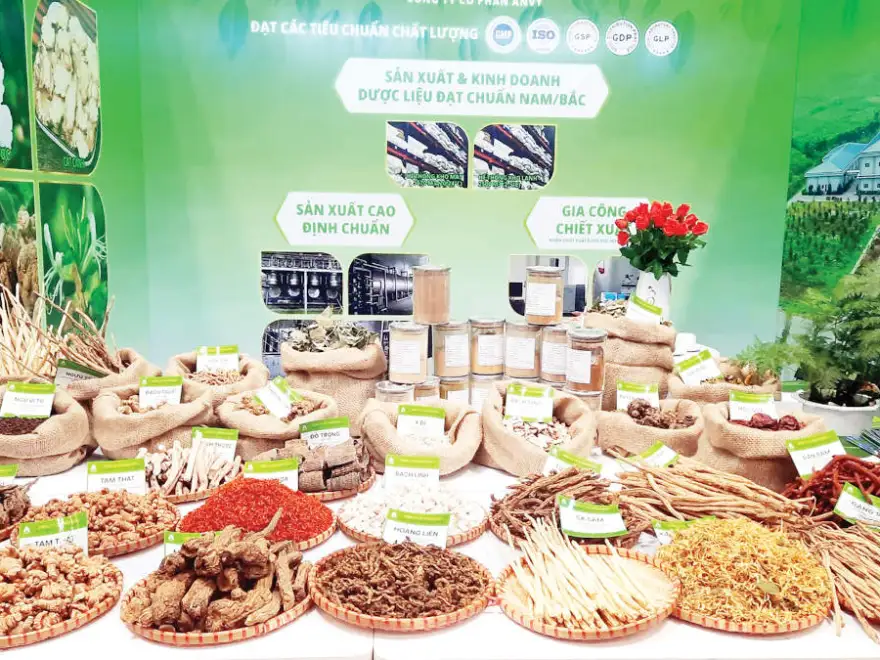
The Vietnam Cooperative Alliance and the Trade Promotion Agency under the Ministry of Industry and Trade jointly hosted the 2025 Herbal Medicine Trade Connectivity, Exhibition and Product Showcase Conference, featuring participation from the National Institute of Medicinal Materials (Ministry of Health), domestic and international trade promotion entities, Vietnamese pharmaceutical corporations, and herbal medicine cooperatives from across the nation.
Vietnam’s Underutilized Medicinal Plant Resources
During opening statements, Mr. Dinh Hong Thai highlighted that Vietnam ranks among Southeast Asia’s most resource-abundant countries regarding medicinal plants, with documentation of more than 5,000 medicinal species, exceeding 1,300 of which are currently harvested and utilized in traditional medicine and processing industries. Herbal medicine represents not only a precious natural asset but also an embodiment of indigenous wisdom, ethnic heritage, and the nation’s capacity for environmentally sustainable economic advancement.
Through Prime Ministerial Decision No. 1976/QD-TTg, the herbal medicine sector undergoes systematic development aimed at creating and expanding dedicated raw material cultivation areas nationwide. Concurrently, Decision No. 1719/QD-TTg concerning the National Target Program for socio-economic advancement in ethnic minority and mountainous regions has attracted investment, generated livelihoods, and enhanced incomes through establishing stable, large-scale, and sustainable herbal growing zones.
Within this structure, cooperatives and cooperative associations fulfill essential functions in developing raw material areas, preserving genetic resources, performing preliminary processing, and providing herbal materials to processing operations—thereby establishing complete value chains founded on indigenous medicinal resources.
Herbal Cooperatives as Value Chain Foundation
Vietnam presently operates over 600 herbal medicine cooperatives, furnishing raw materials to domestic processing facilities and export markets. Recent years have witnessed these cooperatives achieving significant advancement, creating standardized cultivation areas and forming enterprise partnerships to progress toward enhanced processing and integrated value chains.
This framework generates consistent employment and income for local populations while contributing to biodiversity preservation, ecosystem rehabilitation, and the advancement of green agriculture and ecological rural communities.
The northern province of Thai Nguyen exemplifies successful integration among production, research, processing, and consumption. Numerous agricultural cooperatives throughout the province have proactively restructured agricultural patterns, establishing concentrated herbal cultivation zones in districts including Vo Nhai, Dinh Hoa, Phu Luong, Dai Tu, and Dong Hy. Initial achievements have been demonstrated by cooperatives such as Thai Nguyen Green Herbal Cooperative, Dai Tu Medicinal Bio Cooperative, Linh Duong Organic Agriculture Cooperative, and Tam Tra Thai Cooperative, whose products have secured OCOP, VietGAP, and GACP-WHO certifications and are currently accessible through e-commerce platforms.
The Strategic Gateway to Global Halal Markets
A primary conference emphasis involved strategic direction to assist herbal producers in accessing the halal market—a sector distinguished by enormous scale, swift expansion, and demanding standards for quality, safety, and traceability.
According to Ms. Annisa Nhien, CEO of HALAL Vietnam, halal-certified herbal products could function as a strategic gateway for Vietnam to access the worldwide Muslim marketplace. She observed that Vietnam possesses significant strengths in its abundant herbal resources, tropical medicinal plants, valuable indigenous herbs, and its rapidly developing capabilities in traditional medicine and functional food manufacturing.
Obtaining halal certification presents manageable challenges, particularly for herbal products, which naturally align closely with halal principles, Ms. Annisa Nhien emphasized.
Conference experts recommended capitalizing on these advantages by establishing a comprehensive halal herbal ecosystem, encompassing:
- Standardized halal-compliant raw material zones
- Processing facilities certified under GMP and halal standards
- Reliable on-site halal certification organizations
- International partnership and distribution networks
- Consistent trade promotion and market access initiatives
Within this ecosystem, government authorities fulfill facilitating functions through strategic planning and supportive policies, including subsidies for halal certification expenses and export incentives—while enterprises and cooperatives serve as primary drivers of innovation and execution.
Source:
Tariq, H. T. (2026). Vietnam’s Halal herbal medicine industry: Scaling from local cooperatives to global halal value chains. HalalTimes.
https://www.halaltimes.com/vietnams-halal-herbal-medicine-industry-global-value-chains/