The Lasting Legacy of Uthman ibn Affan: A Charity That Endures for Centuries
Uthman ibn Affan and His Generosity
Uthman ibn Affan was one of the closest companions of the Prophet Muhammad and later became the third caliph (a political and religious leader) in Islamic history. He was known not only for his leadership but also for his remarkable generosity and commitment to supporting the Muslim community. Historical records describe him as a wealthy merchant who consistently used his wealth for charitable purposes and for the welfare of society.
Throughout his life, Uthman donated large amounts of wealth to support public needs. For example, during the Battle of Tabuk, he contributed hundreds of camels, horses, and a large amount of gold to support the Muslim army. On another occasion, when a food shortage threatened parts of Arabia, he reportedly donated hundreds of tons of wheat to help feed people in need. These actions illustrate how he viewed wealth as a means to serve others rather than as a personal possession.
Among the many stories of his generosity, one of the most famous is his purchase and endowment of a well in the city of Medina. This act of charity would later become one of the most enduring examples of philanthropic endowment in Islamic history.
The Story of the Well of Rumah
In the early years of the Muslim community in Medina, the city once experienced a severe drought that made access to clean water extremely difficult. At that time, one of the few reliable sources of drinking water was a well owned by a Jewish man. The well, known as the Well of Rumah (Bi’ru Rumah), produced fresh water that was highly valued by the residents of Medina.
Because this well was the only dependable source of water, people had to purchase water from its owner. Unfortunately, the water was sold at a high price, which placed a heavy burden on the community during a period of hardship.
When the situation was brought to the attention of the Prophet Muhammad, he encouraged his companions to purchase the well and make it accessible for public use.
Prophet Muhammad said, “Who will buy the well of Rumah and dip his bucket in it alongside the buckets of the Muslims, in return for a better one in Paradise?” (Sunan an-Nasa’i, Hadith 3608)
Inspired by this encouragement, Uthman ibn Affan approached the owner of the well and offered to buy it at a generous price. However, the owner refused to sell the entire well because it was his main source of income. Uthman then proposed a creative solution: he would purchase half of the well’s ownership. Under this arrangement, the well would belong to the owner on one day and to Uthman on the next.
The owner agreed to this proposal. Once Uthman obtained partial ownership, he announced that people could draw water freely on the days when the well belonged to him. As a result, residents of Medina began collecting enough water on those days to last for two days. When the well returned to the owner’s control, there were very few buyers.
Eventually, the owner realized that the business was no longer profitable and decided to sell the remaining half of the well to Uthman. After acquiring full ownership, Uthman dedicated the well as a waqf, a charitable endowment intended to benefit the public indefinitely.
The Waqf That Continues to Benefit People Today
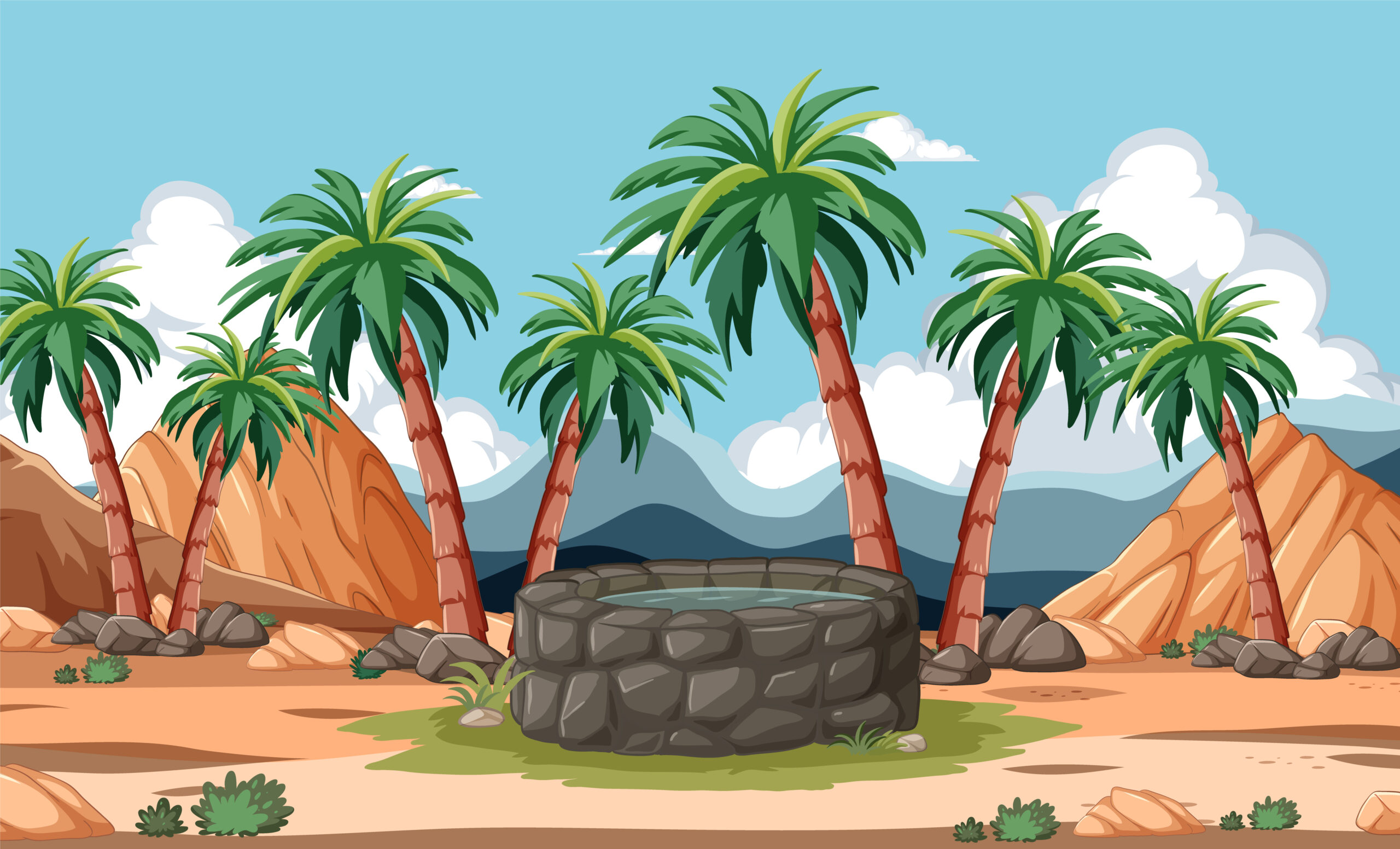
Over time, the land surrounding the Well of Rumah gradually developed into a flourishing date palm plantation. As the area was cultivated over generations, hundreds of palm trees were planted around the well, eventually growing into an orchard that today is reported to contain more than 1,500 productive date palms. The management of this endowment continued through different historical periods, including the era of the Ottoman Caliphate, when the plantation began to be managed in a more organized and systematic manner. Today, the property is overseen by the Saudi Ministry of Awqaf (Endowments), ensuring that the original charitable purpose of the waqf is preserved.
Situated in a fertile agricultural region surrounded by lush palm groves, the Well of Uthman ibn Affan has become a lasting symbol of generosity and communal welfare in Islamic tradition. The gentle flow of water from the well, combined with the shade of the surrounding date palms, creates a peaceful atmosphere that reflects both the simplicity and spiritual richness of early Islamic society. Over the centuries, the site has been carefully preserved and maintained, allowing it to retain its historical authenticity as well as its religious significance.
Today, the well continues to attract pilgrims, visitors, and students of Islamic history who wish to witness a living example of a charitable endowment that has endured for centuries. Beyond its historical importance, the site also offers a serene environment for reflection and contemplation, reminding visitors of the enduring values of generosity, social responsibility, and community welfare that have long been associated with the city of Madinah.
Lessons from the Story of Uthman’s Charity
The story of the Well of Rumah demonstrates how acts of charity can create long-lasting social impact when they are designed to be sustainable. In Islamic tradition, this type of charity is known as waqf, a form of endowment intended to continuously benefit the public.
Uthman ibn Affan’s decision to dedicate the well for public use transformed a basic resource, water, into a long-term social asset that has supported generations of people. His actions also illustrate an important ethical principle: wealth can be used not only for personal gain but also as a means of improving the welfare of others.
Even centuries later, the benefits of this charitable act continue to reach communities, travelers, and people in need. For many, the story serves as an inspiring reminder that a single act of generosity can have an impact far beyond one lifetime.
References
Anas, A. (2016, July 10). Kisah sahabat Nabi Utsman bin Affan yang punya rekening bank. Liputan6. https://www.liputan6.com/islami/read/2549182/kisah-sahabat-nabi-utsman-bin-affan-yang-punya-rekening-bank
Awqaf Australia. (n.d.). A billion-dollar waqf empire: The gardens of Uthman RA. https://www.awqaf.org.au/notable-waqfs/a-billion-dollar-waqf-empire
Eliyah. (2024, September 19). Wakaf dari zaman Nabi masih ada yang beroperasi hingga sekarang. Al Azhar Peduli. https://alazharpeduli.or.id/publikasi/artikel-berita/p/hah-wakaf-dari-zaman-nabi-masih-ada-yang-beroperasi-hingga-sekarang
Madain Project. (n.d.). Well of Rumah. Madain Project. https://madainproject.com/well_of_rumah
Qatrunnada, J. N. (2024, January 22). Segini kekayaan Utsman bin Affan yang terus bertambah sampai sekarang. DetikJatim. https://www.detik.com/jatim/berita/d-7153567/segini-kekayaan-utsman-bin-affan-yang-terus-bertambah-sampai-sekarang
Redaksi OCBC. (2024, June 5). Utsman bin Affan: Sahabat Nabi Muhammad yang kekayaannya abadi. OCBC Indonesia. https://www.ocbc.id/id/article/2024/06/05/utsman-bin-affan-sahabat-nabi-muhammad-yang-kekayaannya-abadi
Wadi Trip. (n.d.). Farm and well of Othman bin Affan. https://waditrip.sa/tour/farm-and-well-of-othman-bin-affan/