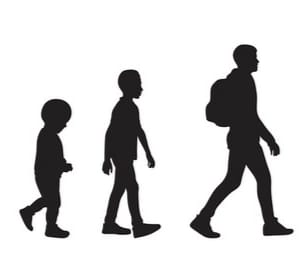
Baligh: From Transition to Responsibility in Adolescent
Introduction: Understanding Baligh in Islam
Baligh is an important stage in human life, especially in Islam. It marks the transition from childhood to adulthood, not only in terms of physical development but also in moral and religious responsibility. In Islamic teachings, baligh is more than just puberty. At this stage, a person begins to carry full responsibility for their actions, which are now counted as sins or rewards.
Signs and Age of Baligh
In general, baligh occurs between the ages of 10 and 15. It is usually marked by biological changes, such as wet dreams in males and menstruation in females. However, if these signs do not appear, a person is still considered baligh by the age of 15. This shows that baligh is not only defined by physical changes but also by an age limit recognized in Islamic teachings.
Physical and Psychological Changes in Adolescence
At the stage of baligh, individuals go through major changes. Physically, their bodies grow rapidly and their reproductive organs develop. At the same time, psychological changes also begin to appear. Adolescents may experience emotional ups and downs, develop a desire for independence, and start questioning their identity.
Because of these changes, this stage is often linked with confusion and emotional instability. Many adolescents are still trying to understand themselves and their place in the world, which is why guidance and support become very important during this period.
Baligh and Religious Responsibility
In Islam, reaching baligh means that a person is now fully responsible for practicing their religion. Acts of worship such as prayer and fasting are no longer seen as practice, but as personal obligations.
According to Ibn Qayyim Al-Jawziyyah, this stage also involves the development of faith, the practice of religious duties, good moral behavior, self-control, and social responsibility. These aspects are closely connected and play an important role in shaping a balanced individual.
From Baligh to Self-Awareness
Entering the stage of baligh does not only bring physical maturity, but also deeper psychological development. Adolescents begin to ask important questions about themselves, such as who they are, what they want in life, and how they should behave in society.
This shows that baligh is not just a biological phase, but also the starting point of self-awareness. During this time, adolescents often face pressure from family, friends, and their environment, which can affect how they think and make decisions.
Because of this, the ability to understand and manage oneself becomes very important. In this context, self-awareness helps adolescents recognize their thoughts, feelings, and behaviors more clearly.
The Role of Self-Awareness in Adolescents
Self-awareness is the ability to understand oneself, including emotions, thoughts, and actions. This ability helps adolescents manage their emotions, recognize their strengths and weaknesses, and make more thoughtful decisions.
Adolescents with good self-awareness are usually better at controlling their behavior and avoiding negative influences. This is especially important during the baligh stage, when individuals are more exposed to external pressures.
Religiosity and the Development of Self-Awareness
Research shows that religiosity plays an important role in developing self-awareness in adolescents. During the process of finding their identity, religious values can provide guidance and a sense of stability.
Higher levels of religiosity are often linked to stronger self-awareness. This is because religious teachings encourage self-reflection, self-control, and good moral behavior. In Islam, practices such as introspection (muhasabah) help individuals reflect on their actions and improve themselves.
In this way, religiosity is not only about fulfilling religious duties, but also about supporting personal growth and emotional maturity.
Conclusion
In conclusion, baligh is a crucial stage that involves more than just physical changes. It also marks the beginning of religious responsibility and the development of self-awareness.
The connection between religiosity and self-awareness is especially important in helping adolescents deal with the challenges of this stage. With strong religious values and a better understanding of themselves, adolescents can grow into responsible and well-balanced individuals.
Therefore, support from parents, education, and society is essential to guide adolescents through this phase, so they can develop not only as religious individuals but also as self-aware and emotionally mature people.
References:
Syaiful, Tamam, A. M., & Alim, A. (2024). Konsep usia baligh dan perkembangan religiusitas perspektif Ibnu Qayyim Al-Jauziyyah. Tawazun: Jurnal Pendidikan Islam, 17(2), 515–528. https://doi.org/10.32832/tawazun.v17i2.17528
Lailatut Tarwiyyah, H. . (2022). Pengaruh Religiusitas dalam Membangun Self-Awareness pada Remaja: Literature Review. Jurnal Psimawa : Diskursus Ilmu Psikologi Dan Pendidikan, 5(2), 79 – 85. https://doi.org/10.36761/jp.v5i2.2112