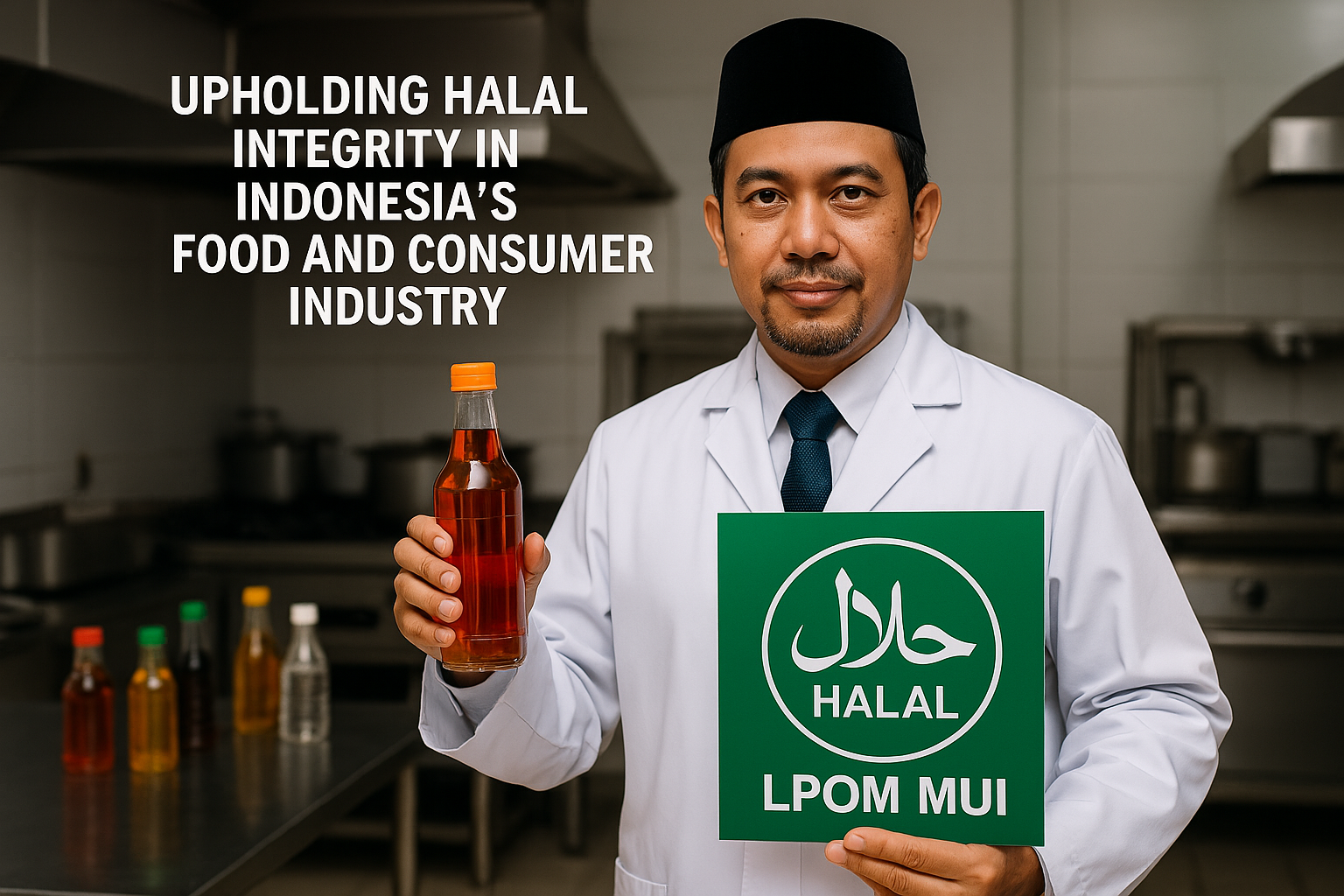
LPOM MUI: Upholding Halal Integrity in Indonesia’s Food and Consumer Industry
Kawaguchiko, SouqTimes – As Indonesia strengthens its position as a global leader in the halal industry, ensuring halal integrity across food, pharmaceuticals, and cosmetics has become a national priority. One institution that has played a crucial role in this effort is the Lembaga Pengkajian Pangan, Obat-obatan, dan Kosmetika Majelis Ulama Indonesia (LPOM MUI). Since its establishment in 1989, LPOM MUI has been at the forefront of halal certification, scientific research, and consumer protection, ensuring that products circulating in Indonesia comply with Islamic law.
Indonesia, home to the world’s largest Muslim population, has long recognized the importance of halal certification in protecting Muslim consumers. With a rising demand for halal-certified products globally, LPOM MUI has not only set national standards for halal compliance but has also contributed to shaping international halal certification frameworks.
The Role of LPOM MUI in Indonesia’s Halal Certification System
Before the implementation of Indonesia’s Halal Product Assurance Law (UU JPH No. 33/2014), LPOM MUI was the sole authority responsible for halal certification, product assessment, and issuing fatwas on halal status. Today, its role has evolved to complement the government’s halal regulatory body, Badan Penyelenggara Jaminan Produk Halal (BPJPH). Despite this transition, LPOM MUI remains a key player in halal certification, primarily focusing on scientific evaluation and laboratory-based halal testing.
Halal Certification Process Under LPOM MUI
LPOM MUI follows a rigorous and structured process to certify halal products. The key steps in the certification process include:
- Ingredient and Process Evaluation
- LPOM MUI analyzes all ingredients used in a product to ensure that they do not contain haram (forbidden) substances such as alcohol or pork derivatives.
- Each ingredient is traced back to its source to verify its halal status, considering both raw materials and production processes.
- On-Site Audits and Verification
- Halal auditors conduct thorough inspections of manufacturing facilities to ensure they comply with Islamic guidelines.
- The entire production chain, including equipment, processing methods, and storage conditions, is examined to prevent cross-contamination with non-halal substances.
- Implementation of Halal Assurance System (HAS)
- Companies seeking certification must establish an internal halal assurance system, ensuring long-term compliance beyond the initial certification.
- LPOM MUI provides training and guidance for businesses to maintain halal integrity in their production processes.
- Issuance of Halal Fatwa
- After the verification and testing phases, LPOM MUI submits its findings to MUI’s Fatwa Commission, which ultimately determines whether a product can receive halal certification.
- If approved, the product is granted an official Halal Certificate, allowing it to carry the MUI Halal logo.
Adapting to Indonesia’s New Halal Regulatory Framework
The introduction of Indonesia’s Halal Product Assurance System (JPH) in 2019 marked a significant shift in the country’s halal certification landscape. Under this new system, BPJPH became the central authority responsible for issuing halal certificates, while LPOM MUI transitioned into an official Halal Inspection Body (Lembaga Pemeriksa Halal – LPH).
Despite these regulatory changes, LPOM MUI continues to play a critical role in ensuring that products meet halal standards through its scientific expertise, auditing capabilities, and laboratory testing. By collaborating with BPJPH and other stakeholders, LPOM MUI helps maintain a seamless transition and alignment with Indonesia’s new halal framework.
Impact of Mandatory Halal Certification
As part of Indonesia’s commitment to strengthening its halal ecosystem, the government has introduced mandatory halal certification for all food and beverage products, which took effect on October 17, 2024. This regulation means that all businesses selling food, beverages, pharmaceuticals, and cosmetics must obtain halal certification to continue operating in the country.
To support businesses, especially Micro, Small, and Medium Enterprises (MSMEs), LPOM MUI and BPJPH have provided training, subsidies, and a grace period until 2026 for smaller businesses to complete their certification.
Challenges in Halal Certification and LPOM MUI’s Efforts
As Indonesia strives to become a global halal hub, several challenges remain in implementing an effective halal certification system. LPOM MUI has been actively working to address these issues:
1. Rising Global Demand for Halal Products
With Muslim consumer spending expected to reach $2.4 trillion by 2024, there is increasing pressure on halal certification bodies to keep up with demand. LPOM MUI is expanding its research facilities and digitalizing its certification process to ensure faster and more efficient halal verification.
2. Ensuring SME Compliance
Many Micro, Small, and Medium Enterprises (MSMEs) struggle with the cost and complexity of halal certification. LPOM MUI has introduced simplified certification programs and subsidies to support smaller businesses in achieving halal compliance.
3. Strengthening Global Recognition
To enhance the international acceptance of Indonesian halal-certified products, LPOM MUI has signed agreements with foreign halal certification bodies in countries such as Malaysia, Saudi Arabia, the United States, and Europe. These agreements help facilitate trade and ensure mutual recognition of halal standards.
Future Outlook: Strengthening Indonesia’s Halal Industry
Indonesia aims to position itself as a global leader in the halal economy, and LPOM MUI remains a key pillar in achieving this vision. Moving forward, LPOM MUI is focusing on:
- Expanding Research and Innovation: Investing in scientific research and technology to improve halal testing methods, particularly in detecting non-halal contaminants in complex supply chains.
- Enhancing Digitalization: Implementing AI-driven halal certification processes and blockchain technology to improve transparency and traceability.
- Global Collaboration: Strengthening partnerships with international halal certification organizations to boost Indonesia’s halal exports.
With Indonesia’s halal economy projected to grow significantly, LPOM MUI’s continued efforts in ensuring halal integrity, consumer protection, and international recognition will be crucial in shaping the future of the halal industry.
Conclusion
For over three decades, LPOM MUI has been a guardian of halal integrity in Indonesia, ensuring that food, pharmaceuticals, and cosmetics meet Islamic guidelines and consumer safety standards. Despite evolving regulatory changes, the institution remains a trusted authority in scientific research, halal inspection, and compliance monitoring.
As Indonesia enforces mandatory halal certification and strengthens its global halal trade network, LPOM MUI’s role will continue to be instrumental in maintaining consumer trust, supporting business compliance, and elevating Indonesia’s reputation as a world leader in the halal industry.
With continuous innovation, collaboration, and scientific excellence, LPOM MUI is not only safeguarding halal integrity within Indonesia but also shaping the future of halal certification on a global scale.
Muhammad Raihan Adhika
SouqTimes
Source:
Siddiq, A., Mashudi, M., Junaidi, M. A., & Maula, I. (2021). Exploring the Interaction among MUI, Fatwa Commission and LP POM MUI on Halal Products (A Study on Public Response to Halal Product Certification and Its Factors). Multicultural Education, 7(12).
Ilmi, A. R. F. (2024). Public Response to Halal Certification: A Study of the Interaction between MUI Fatwa and LP POM MUI. International Journal of Islamic Business and Economics (IJIBEC), 8(1), 140-158.
Nusran, M. (2013). Analysis Of System Dynamics OnThe Role Of LPPOM MUI And Government In Implementation Of Halal Certification In Indonesia.
LPOM MUI (2025). Tentang kami. LPOM MUI. https://halalmui.org/