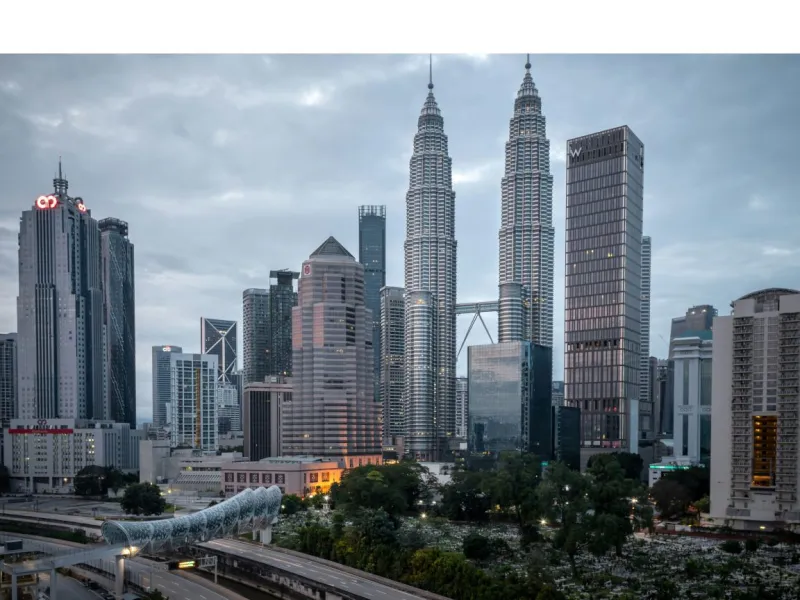
Malaysia’s Economic Renaissance: Dramatic Rise in Global Competitiveness Rankings

Source: Halal Times
Bandung, Indonesia – Malaysia has achieved a remarkable economic milestone, advancing dramatically in the global competitiveness arena with its best performance in half a decade. The Southeast Asian nation has leaped forward by eleven positions to claim the 23rd spot in the prestigious World Competitiveness Ranking for 2025, demonstrating renewed economic vitality and strategic policy effectiveness.
The Institute for Management Development Assessment
The annual World Competitiveness Ranking, conducted by Switzerland’s Institute for Management Development, serves as a comprehensive evaluation of 69 global economies. This influential assessment examines nations across four critical dimensions: economic performance, government efficiency, business efficiency, and infrastructure development. The ranking system has established itself as a crucial indicator of a country’s capacity to foster resilient, dynamic, and business-friendly environments.
Malaysia’s impressive advancement represents its strongest showing since 2020, signaling a significant turnaround in the nation’s competitive positioning on the world stage. This improvement reflects growing investor confidence and validates the effectiveness of the country’s MADANI Economic Framework implementation.
Analyzing the Performance Drivers
The Ministry of Investment, Trade and Industry has attributed Malaysia’s competitive surge to several strategic initiatives and structural improvements across key economic sectors:
Economic Fundamentals Excellence
Malaysia achieved an outstanding 4th place globally in economic performance, demonstrating the strength of its macroeconomic foundations. This exceptional ranking reflects improved trade balance dynamics, sustained consumer demand resilience, and effective economic management policies that have positioned the country favorably against international peers.
Government Efficiency Transformation
The public sector’s effectiveness saw substantial improvement, with Malaysia climbing eight positions in government efficiency rankings. This advancement stems from comprehensive institutional framework enhancements, significant reduction in bureaucratic obstacles, and increased transparency initiatives across government operations.
Business Environment Enhancement
Corporate sector dynamics also experienced notable improvement, with business efficiency rankings rising by eight positions. This progress reflects enhanced labor market productivity, increased entrepreneurial flexibility, and accelerated digital transformation adoption among Malaysian enterprises.
International Trade Leadership
Perhaps most remarkably, Malaysia’s international trade competitiveness soared eleven positions to secure 6th place globally. This exceptional performance was driven by several key factors:
- Market Diversification Strategy: Successful expansion into new export markets reduced dependency on traditional trading partners
- Export Growth Momentum: Robust expansion in both goods and services exports demonstrated Malaysia’s competitive advantage across multiple sectors
- Tourism Recovery: Strong rebound in tourism receipts contributed significantly to overall trade performance
Strategic Vision and Leadership Perspective
Trade and Industry Minister Tengku Datuk Seri Zafrul Tengku Abdul Aziz emphasized that Malaysia’s competitive advancement represents deliberate strategic planning rather than coincidental improvement. He highlighted how policy reforms have successfully aligned bureaucratic processes with industrial strategy objectives, creating synergies between federal and state government initiatives while strengthening public-private sector collaboration.
The Minister articulated Malaysia’s ambitious long-term vision, stating the nation’s commitment to achieving top 12 global competitiveness status by 2033. He characterized the current achievement as confirmation that Malaysia is progressing effectively toward this strategic objective.
Economic Framework Impact
The MADANI Economic Framework has emerged as a cornerstone of Malaysia’s competitive transformation. This comprehensive policy approach emphasizes sustainable development principles while maintaining economic dynamism and promoting social inclusivity. The framework’s implementation has contributed significantly to Malaysia’s improved international standing and enhanced investor appeal.
Sectoral Growth Opportunities
Malaysia’s enhanced competitiveness profile has strengthened its position as a premier regional investment destination, particularly in several high-growth sectors:
Green Energy Development
The nation’s commitment to sustainable energy solutions has attracted significant international investment and positioned Malaysia as a leader in Southeast Asian renewable energy development.
Advanced Manufacturing
Strategic investments in manufacturing technology and infrastructure have enhanced Malaysia’s competitiveness in high-value production sectors.
Islamic Finance Leadership
Malaysia continues to leverage its position as a global Islamic finance hub, attracting investment and expertise in Shariah-compliant financial services.
Digital Economy Expansion
Comprehensive digitalization initiatives have improved Malaysia’s technology infrastructure and created new opportunities for innovation-driven economic growth.
Regional and Global Implications
Malaysia’s competitive advancement has broader implications for Southeast Asian economic development and global investment patterns. The nation’s success demonstrates how strategic policy implementation can rapidly transform economic competitiveness, providing a model for other developing economies seeking to enhance their global positioning.
The improvement also reinforces ASEAN’s collective economic strength and highlights the region’s growing importance in global supply chains and investment flows.
Future Trajectory and Challenges
While celebrating this significant achievement, Malaysia faces the challenge of sustaining competitive momentum amid evolving global economic conditions. Continued implementation of the MADANI framework, along with adaptive policy responses to international developments, will be crucial for maintaining upward trajectory toward the 2033 competitiveness target.
The nation’s success in balancing economic growth with sustainability objectives and social inclusivity provides a foundation for sustained competitive advantage. However, ongoing attention to innovation, infrastructure development, and human capital enhancement will be essential for achieving long-term competitiveness goals.
Conclusion
Malaysia’s eleven-position leap in global competitiveness rankings represents more than statistical improvement—it reflects a fundamental transformation in the nation’s economic approach and strategic positioning. Through effective policy implementation, strategic reforms, and coordinated government-business collaboration, Malaysia has demonstrated its capacity to compete effectively in the global economy while maintaining commitment to sustainable and inclusive development principles.
This achievement establishes a strong foundation for Malaysia’s continued economic advancement and validates the strategic direction established under the MADANI Economic Framework. As the nation progresses toward its 2033 competitiveness objectives, this milestone serves as both celebration of current success and motivation for continued excellence in economic management and strategic planning.
Original article:
halaltimes.com. (n.d.). Malaysia Climbs 11 Spots in Global Competitiveness Ranking 2025. Retrieved June 23, 2025, from https://www.halaltimes.com/malaysia-climbs-11-spots-in-global-competitiveness-ranking-2025/