Vietnamese Companies Urged to Tap into Profitable Halal Markets in Gulf States and South Asia
Vietnamese exporters are being encouraged to pursue opportunities in the Muslim consumer market, which spans over two billion people, nearly a quarter of the world’s population, and generates trillions of dollars in annual revenue.
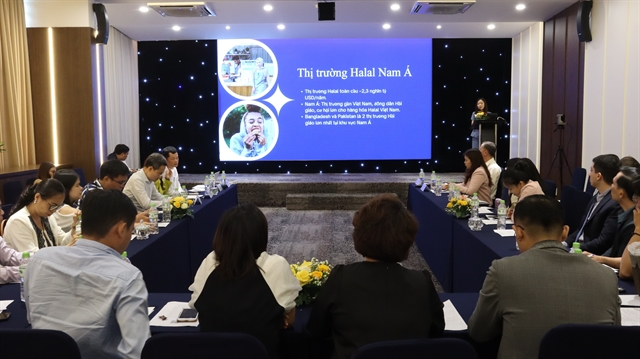
At a July 14 business seminar in Ho Chi Minh City focused on halal market opportunities in the Gulf Cooperation Council and South Asia regions, officials highlighted the potential for Vietnamese companies in agriculture, food production, cosmetics, and textiles, provided they can comply with halal standards and understand religious and cultural requirements.
Đỗ Quốc Hưng from the Ministry of Industry and Trade’s Department of Overseas Markets described halal exports as a strategic avenue for Vietnamese businesses as the country seeks to expand into new markets.
GCC Market Opportunities
The GCC countries—Saudi Arabia, UAE, Qatar, Kuwait, Bahrain, and Oman—represent particularly attractive markets due to high import demand for food, beverages, cosmetics, and pharmaceuticals. These nations serve as a regional halal distribution center with citizens earning between $40,000-$80,000 annually.
Vietnam’s trade volume with the GCC reached $18 billion in 2024, with $7.5 billion in exports, and this figure is expected to increase once the Vietnam-UAE trade agreement becomes active.
According to Nguyễn Minh Phương from the West Asia-Africa division, 90% of food consumed in GCC countries is imported due to limited domestic production. Consumers in these markets prioritize premium, branded products with verified halal certification and are less concerned about pricing, while also valuing product origin and attractive packaging.
Vietnamese Product Competitiveness
Vietnam’s competitive products for the GCC include processed foods like seafood and instant noodles, agricultural exports such as rice, coffee, and cashews (particularly popular in the UAE and Saudi Arabia), and non-food items including natural cosmetics and sustainable textiles.
Several Vietnamese firms including Vĩnh Hoàn, Cầu Tre, and Trung Nguyên have already secured halal certification and are selling to markets like Malaysia, Indonesia, and the UAE, establishing a foundation for broader market expansion.
South Asian Market Potential
Regarding South Asia, Lê Thị Mai Anh noted the region’s 600 million Muslim consumers represent enormous potential, with halal food spending estimated at $70-100 billion yearly. Pakistan and Bangladesh are identified as primary target markets.
Consumer preferences in South Asia are evolving from fresh to processed foods, with growing demand for cosmetics and health products driven by an expanding young middle class, resulting in 5-7% annual consumption growth.
South Asian halal consumers are more price-sensitive but favor natural and organic products, prefer smaller package sizes, and increasingly purchase online. The region also shows strong demand for light manufacturing materials including fibers, textiles, and fragrances.
Market Challenges and Barriers
However, experts cautioned about significant market challenges, including complicated and expensive certification procedures, cultural and taste preferences variations, intense competition, and logistical and regulatory obstacles.
Each country maintains its own halal certification authority with varying requirements, while customs procedures can be lengthy and payment terms may be unfavorable for exporters.
Success Strategies and Certification Requirements
To succeed in these markets, Vietnamese businesses should utilize trade promotion networks, attend international exhibitions, and partner with local companies to stay current with changing consumer demands and technical specifications.
Nguyễn Thị Ngọc Hằng from Halal Certification Agency Vietnam emphasized that halal certification extends beyond simply avoiding pork, requiring comprehensive verification of ingredients, production processes, packaging, shipping, and storage methods.
Certification is granted per individual product rather than for entire companies or product lines. Meeting halal requirements not only provides access to Muslim consumers but also opens opportunities in premium non-Muslim markets where transparency and product safety are increasingly important.
The seminar was hosted by the Ho Chi Minh City Centre for International Integration Support and the foreign market development department.
Original Article:
Vietnam News. (2025, July 29). Vietnamese businesses told to explore lucrative GCC, South Asia halal markets. Vietnam News. https://vietnamnews.vn/economy/1721428/vietnamese-businesses-told-to-explore-lucrative-gcc-south-asia-halal-markets.html