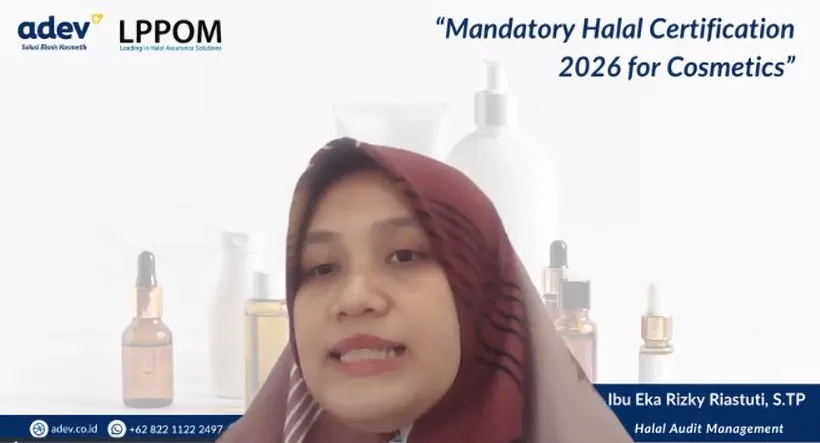
Indonesia’s Beauty Industry Faces Halal Certification Deadline by 2026
JAKARTA – Indonesia is on the brink of a major shift in its beauty sector. Beginning in October 2026, every cosmetic product sold in the country will be required to obtain halal certification. This mandate, rooted in Law No. 33 of 2014 on Halal Product Assurance (UU JPH), reflects not only regulatory compliance but also the growing demand of Indonesia’s Muslim-majority consumers.
Why Halal Matters in Cosmetics
For businesses, the regulation could initially appear as an additional layer of bureaucracy. Yet in practice, it represents a powerful opportunity to win consumer trust in the world’s largest Muslim market. As awareness grows, halal certification has become less of a marketing advantage and more of a non-negotiable standard.
For Muslims, cosmetics are tied not only to lifestyle but also to faith. A product that leaves behind a waterproof layer, for instance, may invalidate ablution if it prevents water from reaching the skin. This connection between cosmetics and worship highlights why halal status in beauty products carries deeper meaning than aesthetics alone.
Hidden Challenges Behind the Label
Ensuring cosmetics meet halal standards is a complex task. According to Eka Rizky Riastuti of LPPOM, two critical aspects must always be reviewed: the ingredients used and the physical properties of the product.
Collagen illustrates this challenge well. While it can be sourced from halal origins such as cows or fish, it is also commonly derived from pigs—strictly prohibited in Islam. Similarly, some ingredients sourced from plants or microbes might appear safe, yet the solvents or fermentation processes involved in production could introduce non-halal elements.
Meanwhile, the rising popularity of waterproof products adds another layer of concern. Long-lasting formulas appeal to modern consumers, but they may also interfere with religious practices if they block water absorption. To address this, halal laboratories conduct water permeability tests as part of their verification process.
Preparing the Industry for 2026
With the deadline approaching, cosmetic producers are being urged to adjust early. Compliance requires integrating the Halal Product Assurance System (SJPH) into every stage of production—from sourcing raw materials to monitoring supply chains and ensuring traceability.
Organizations like LPPOM are providing extensive support, offering consultation, online training, and even free certification programs to help businesses adapt. Such initiatives are designed not only to simplify the process but also to prevent a last-minute rush before October 2026.
Trust as the New Currency
Halal certification is more than a legal requirement; it is a long-term investment in credibility. For consumers, it provides peace of mind in choosing products that align with their faith. For companies, it opens access to both domestic and global halal markets that are expanding rapidly.
As the deadline draws closer, the central question lingers: will the cosmetics industry be ready? Those who act swiftly may strengthen their brand reputation and capture loyal consumers, while those who hesitate risk falling behind in a market where halal is no longer optional but essential.
Original Article:
Halal MUI. (2025, September 2). Mulai 2026, Semua Kosmetik Harus Halal: Konsumen Muslim Harus Tahu Ini!. Retrieved from https://halalmui.org/mulai-2026-semua-kosmetik-harus-halal-konsumen-muslim-harus-tahu-ini/