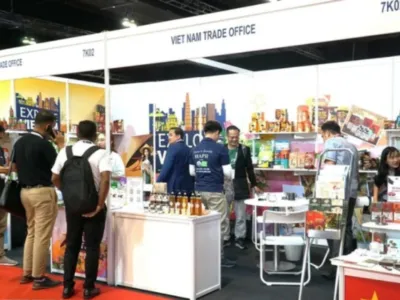
Vietnam Positions Itself as a Rising Global Halal Hub
JAKARTA – Ho Chi Minh City, September 5, 2025 — Vietnam is stepping into the spotlight as a promising player in the global halal economy, with experts highlighting the country’s competitive costs, strong agricultural base, and strategic location as advantages to becoming a bridge between Asia and the Middle East.
The discussion took place at the forum “Market Trends and Export Opportunities for Vietnamese Agricultural and Processed Food Products to Halal Markets” during the Vietnam International Sourcing Expo 2025, where government officials, business leaders, and international experts gathered to explore strategies for market expansion.
Growing Demand in the Middle East
Mohammed Alfawaz, chairman of Saudi Food Industry, noted that Vietnam has already launched its own halal certification body, HALCERT, and is moving toward international recognition agreements. With Saudi Arabia’s halal market valued at around US$60 billion in 2024—while depending on imports for up to 95 percent of its food needs—the demand for trusted halal-certified suppliers is enormous.
As Gulf countries diversify sourcing away from traditional suppliers like Malaysia, Brazil, and India, Vietnam stands out with its cost advantages and agricultural abundance, particularly in seafood, farm produce, and processed foods. Experts see potential for the country to evolve into a significant halal trade hub.
Global forecasts reinforce this opportunity: halal food spending is projected to hit US$7.7 trillion in 2025 and soar to US$10 trillion by 2028.
Challenges Holding Vietnam Back
Despite its advantages, Vietnam still faces hurdles. Ho Thi Quyen, deputy director of the Ho Chi Minh City Investment and Trade Promotion Center, pointed to fragmented certification systems, a lack of internationally recognized halal authorities, and limited coordination across agencies.
She also stressed the shortage of skilled professionals across the halal value chain—from production and logistics to marketing and distribution—making it difficult for businesses to fully comply with global halal standards.
Pham The Cuong, trade counselor at Vietnam’s Trade Office in Indonesia, added that many small- and medium-sized enterprises face tight finances, weak management capacity, and limited awareness of halal certification, preventing them from entering this lucrative market.
A “Golden Passport” to Muslim Markets
Still, experts argue that halal certification could be transformative for Vietnam’s exports, serving as a “golden passport” to a Muslim consumer base of more than two billion.
Cuong noted that Indonesia’s thriving e-commerce sector could be a major entry point for certified Vietnamese products, while partnerships with local distributors—who hold the necessary licenses and market knowledge—remain the most effective strategy for sustainable growth.
Looking Ahead
As global demand for halal products accelerates, Vietnam has both opportunities and challenges. By strengthening certification standards, building expertise across the halal ecosystem, and supporting SMEs, the country could solidify its role as a regional hub and a competitive supplier to Middle Eastern and global markets.
Original Articles:
Tuoitre News. (2025, September 11). Vietnam emerging as potential global halal hub: experts. Retrieved from https://news.tuoitre.vn/vietnam-emerging-as-potential-global-halal-hub-experts-103250906115235485.htm