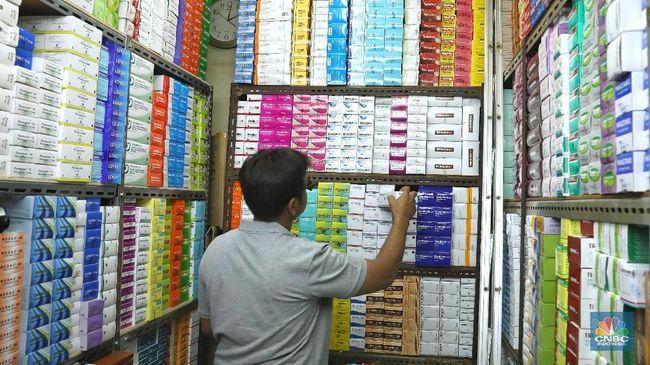
Indonesian Pharmaceutical Sector Performance Analysis: First Half 2025
JAKARTA – The Indonesian pharmaceutical industry experienced challenging financial conditions during the first semester of 2025, with several publicly traded companies reporting deteriorating profitability metrics. This analysis examines the financial health of major pharmaceutical firms and identifies key performance indicators across the sector.
Critical Financial Challenges
Significant Losses
PT Pyridam Farma Tbk (PYFA) recorded the most substantial financial setback among pharmaceutical companies, with losses doubling from IDR 102.28 billion in the first half of 2024 to IDR 213.20 billion in the corresponding period of 2025. This dramatic deterioration occurred despite remarkable revenue growth of 240% year-over-year, climbing from IDR 40.32 billion to IDR 1.38 trillion.
The primary driver of PYFA’s expanding losses was severe cost pressure across multiple operational categories. The cost of goods sold surged nearly fourfold, escalating from IDR 260.47 billion to IDR 1.09 trillion. General and administrative expenses increased to IDR 227.22 billion, while sales and marketing costs rose to IDR 126.29 billion. Financial expenses nearly doubled from IDR 62.31 billion to IDR 151.72 billion, creating an unsustainable cost structure that overwhelmed revenue gains.
State-Owned Enterprise Performance
PT Indofarma Tbk (INAF), a state-controlled pharmaceutical manufacturer, reported losses of IDR 43.5 billion during the first half of 2025. However, unlike PYFA, INAF demonstrated improvement by reducing its losses substantially from the IDR 102 billion deficit recorded in the same period of 2024, suggesting ongoing restructuring efforts may be taking effect.
Declining Profitability Among Established Players
PT Tempo Scan Pacific Tbk (TSPC) generated profits of IDR 702.20 billion, representing a 14.48% decline compared to the previous year. This decrease was primarily attributed to a sharp 28% quarter-over-quarter profit drop in the second quarter, combined with modest revenue contraction of 2.63% year-over-year. These figures indicate potential market saturation or increased competitive pressures affecting established pharmaceutical companies.
Positive Performance Indicators
Despite sectoral challenges, three pharmaceutical companies maintained profitability growth, demonstrating resilience in a difficult operating environment.
Strong Quarterly Performance
PT Industri Jamu Dan Farmasi Sido Muncul Tbk (SIDO) achieved the most impressive quarterly profit growth, with earnings surging 57.78% to IDR 367.53 billion in the second quarter. For the entire first semester of 2025, SIDO accumulated total profits of IDR 600.47 billion, representing a marginal 1% year-over-year contraction that nonetheless reflected relative stability.
Steady Growth Leaders
PT Darya-Varia Laboratoria Tbk (DVLA) demonstrated modest but consistent growth, with profits increasing approximately 1% year-over-year to reach IDR 121.44 billion. Meanwhile, PT Kalbe Farma Tbk (KLBF) emerged as the sector’s most resilient performer, posting profit growth exceeding 9% year-over-year to achieve IDR 1.97 trillion, establishing itself as the industry leader in both absolute profit levels and growth sustainability.
Industry Implications
The divergent performance across Indonesian pharmaceutical companies reflects broader challenges within the sector, including cost management difficulties, operational efficiency gaps, and varying abilities to adapt to market conditions. The substantial losses experienced by some firms despite revenue growth highlight the critical importance of cost control and operational optimization in the pharmaceutical industry (Kanavos et al., 2020).
Research indicates that pharmaceutical companies in emerging markets face unique challenges related to supply chain management, regulatory compliance costs, and pricing pressures that can significantly impact profitability (Chaudhuri et al., 2022). The Indonesian market’s characteristics, including healthcare infrastructure development and evolving regulatory frameworks, create additional complexity for pharmaceutical manufacturers (Hendrartini et al., 2019).
Furthermore, studies on pharmaceutical sector performance emphasize that successful companies typically demonstrate superior capabilities in research and development efficiency, production optimization, and strategic market positioning (Schuhmacher et al., 2021). The varying performance levels among Indonesian pharmaceutical firms suggest differential capabilities in these critical areas.
Conclusion
The first half of 2025 presented significant challenges for Indonesia’s pharmaceutical sector, with financial performance ranging from severe losses to modest growth. While companies like KLBF and SIDO demonstrated resilience through effective management and market positioning, others struggled with cost pressures that overwhelmed revenue gains. These divergent outcomes underscore the importance of operational efficiency, cost management, and strategic adaptability in navigating the complex pharmaceutical business environment.
References
Chaudhuri, A., Subramanian, N., & Dora, M. (2022). Circular economy and digital capabilities of SMEs for providing value to customers: Combined resource-based view and ambidexterity perspective. Journal of Business Research, 142, 32-44.
Schuhmacher, A., Wilisch, L., Kuss, M., Kandelbauer, A., Hinder, M., & Gassmann, O. (2021). R&D productivity in the biopharmaceutical industry: Shaping and adapting the R&D model. Drug Discovery Today, 26(2), 2619-2624.
Original Article:
CNBC Indonesia. (2025, October 10). Emiten Farmasi Semester I/2025 Sakit-Sakitan, Siapa Paling Sehat? Retrieved from https://www.cnbcindonesia.com/research/20250814151643-128-658001/emiten-farmasi-semester-i-2025-sakit-sakitan-siapa-paling-sehat
MNS. (2025, October 10). Pelemahan Rupiah Bikin Saham Farmasi Berada di Zona Merah. Retrieved from https://www.msn.com/id-id/ekonomi/pasarpasar/pelemahan-rupiah-bikin-saham-farmasi-berada-di-zona-merah/ar-AA1y7r9V?ocid=finance-verthp-feeds&apiversion=v2&noservercache=1&domshim=1&renderwebcomponents=1&wcseo=1&batchservertelemetry=1&noservertelemetry=1


