Structural Deficiencies Obstruct Bangladesh’s Halal Industry Growth Potential
Experts demand integrated ecosystem for export expansion
Non-compliance with international halal standards, inadequate logistics, shortage of skilled manpower rank among key bottlenecks hindering growth of Bangladesh’s promising halal sector, industry experts plus stakeholders stated on Saturday.
Other major obstacles included tariff plus certification challenges alongside lack of modern laboratories. Participants advocated for a coordinated ecosystem to support halal industry growth within the country.
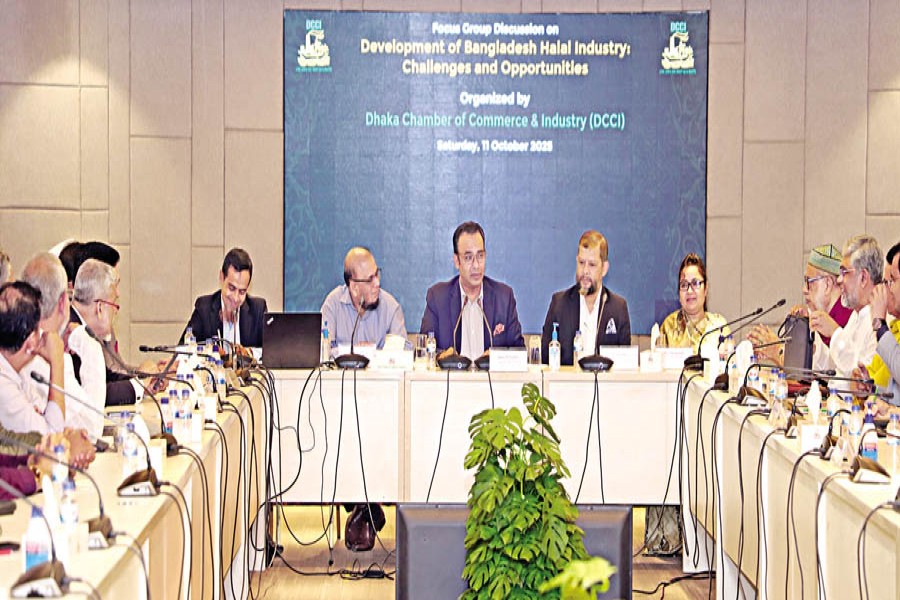
These observations emerged during a focus group discussion titled ‘Development of Bangladesh Halal Industry: Challenges and Prospects’, organized by the Dhaka Chamber of Commerce & Industry (DCCI) at its office in the capital.
Export earnings lag global market potential
Experts noted that despite the global halal market reaching an estimated value of US$3 trillion, Bangladesh’s export earnings from the sector remain below US$1 billion.
In his welcome address, DCCI Senior Vice President Razeev H Chowdhury said Bangladesh has yet to fully capitalize on the halal industry’s potential due to absence of a unified halal ecosystem plus lack of an independent authority for issuing globally accredited halal certifications.
The rapidly growing global halal industry is currently valued at about US$3 trillion, projected to reach US$9.45 trillion by 2034, he stated, adding that Bangladesh’s halal exports are limited to around US$850 million, mostly in agro-based products.
Chowdhury stressed the urgent need for an independent halal certification board plus joint public-private collaboration to establish internationally accredited testing laboratories throughout the country.
Multiple structural weaknesses identified
In his keynote presentation, Dr. Mominul Islam, Assistant Professor at IUBAT, identified multiple structural plus institutional shortcomings in the current system.
He pointed out that both the Islamic Foundation plus the Bangladesh Standards and Testing Institution (BSTI) issue halal certifications, often leading to procedural complexities plus inefficiencies.
Dr. Islam further identified other critical barriers including lack of modern equipment in testing labs, weak international branding, limited SME participation, absence of a unified national halal policy, inadequate supply chain infrastructure.
Digital systems proposed for quality assurance
Md Abul Kalam Azad, Assistant Manager (Export) at Paragon Group, advocated for a digital certification plus compliance auditing system to ensure halal product quality.
Sayadul Haq Bhuiyan, AGM plus Head of Supply Chain at Bengal Meat, emphasized value addition plus blockchain technology use to trace animal life cycles used in meat production. He also underscored the need for certification authorities in Bangladesh to meet international accreditation standards.
Multi-agency coordination required
Md. Abu Saleh Patwary, Deputy Director at the Islamic Foundation, noted that no single government body is fully capable of managing halal certification independently, necessitating multi-agency coordination. He emphasized the importance of stronger government oversight to ensure quality of halal-certified products.
Growth rate disparity concerns officials
Baby Rani Karmakar, Director General-1 (Joint Secretary) at the Export Promotion Bureau (EPB), said that while the global halal market grows at around 12 percent annually, Bangladesh lags behind. She called for coordinated efforts to increase the country’s global market share.
Md. Ariful Hoque, Director General (Joint Secretary), International Investment Promotion at BIDA, said the halal sector could play pivotal roles in post-LDC export diversification. He added that the government actively considers establishing a dedicated halal industry economic zone.
Rural women represent untapped potential
During the open-floor discussion, M. Abu Hurairah, former Vice President of DCCI, highlighted economic transformation in rural Bangladesh, with women increasingly involved in productive sectors.
He proposed offering small-scale financial incentives at low interest rates to encourage rural women’s participation in animal husbandry, potentially boosting halal food exports.
Among others, DCCI Director Enamul Haque Patwary plus former Senior Vice President Alhaj Abdus Salam also spoke.
DCCI Vice President Md. Salem Sulaiman, board of directors members, key stakeholders from both public plus private sectors were also present.
Strategic imperatives for market competitiveness
The discussion underscored Bangladesh’s paradoxical position—a Muslim-majority nation with natural advantages in halal production yet struggling to capture meaningful global market share. The fragmented certification landscape, where multiple government bodies issue competing credentials without international recognition, exemplifies broader governance challenges hindering export competitiveness.
The proposed solutions—independent certification authorities, digital traceability systems, specialized economic zones, rural women’s empowerment—represent comprehensive approaches addressing technical, institutional, social dimensions of halal industry development. As the global market accelerates toward US$9.45 trillion by 2034, Bangladesh faces a narrowing window to establish credible halal credentials before regional competitors solidify their positions within the lucrative sector.
Original Article:
FE Report. (2025, October 12). Structural gaps holding back BD’s halal industry: Experts. Retrieved from https://thefinancialexpress.com.bd/trade/structural-gaps-holding-back-bds-halal-industry-experts-1760199864