Indonesia’s 2026 Halal Certification Requirement: What International Exporters Need to Know
Understanding the Regulatory Shift
The Indonesian government has established a mandatory compliance system affecting food, beverages, cosmetics, chemicals, and various consumer goods entering the country. This initiative stems from the 2014 Halal Product Assurance Law, which transferred certification oversight from the Indonesian Ulema Council to BPJPH, the state-run halal certification authority.
The regulation impacts the world’s largest Muslim-majority nation, home to 278 million people. Companies that fail to obtain proper certification will need to label their products as “Non-Halal” or withdraw them from Indonesian distribution channels entirely.
Timeline and Affected Parties
While large Indonesian manufacturers faced earlier compliance deadlines in 2024, three groups received extended timelines through mid-October 2026:
- International companies exporting food and beverages to Indonesia
- Small and micro-sized domestic enterprises
- Manufacturers of non-food items including cosmetics, chemicals, and pharmaceutical products
This grace period ends definitively on October 17, 2026, after which enforcement becomes mandatory.
Three Critical Requirements for Market Access
Digital Registration Platform
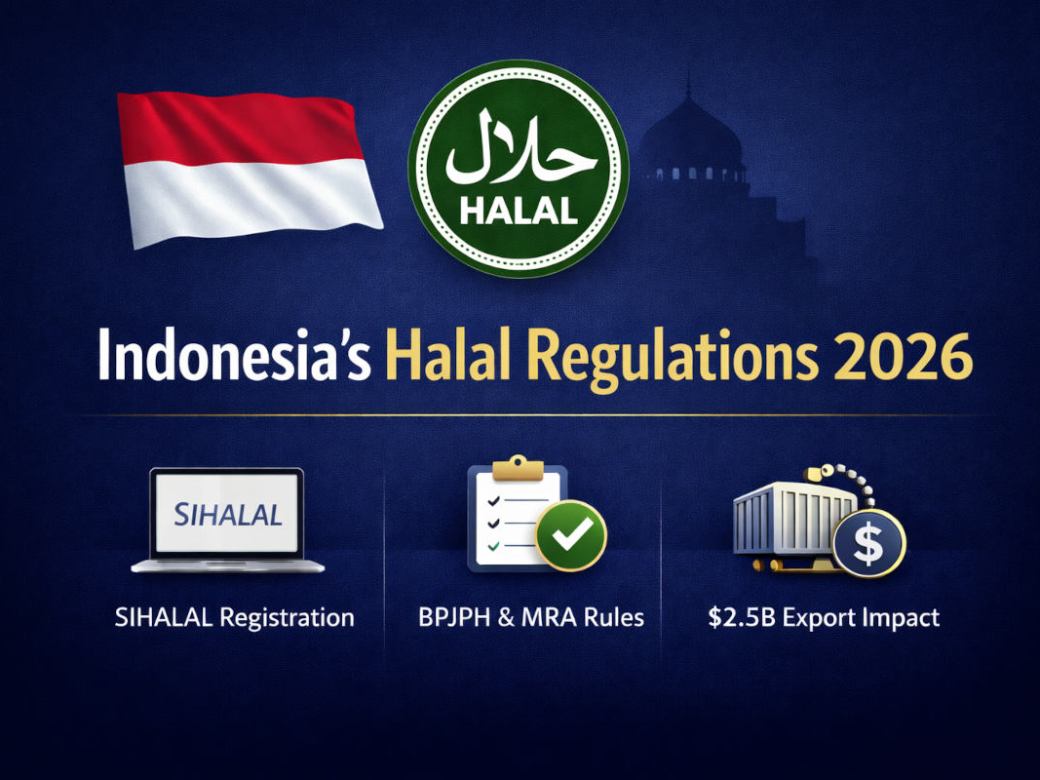
Foreign manufacturers must navigate SIHALAL, Indonesia’s centralized digital certification system. International companies cannot complete this registration independently—they must work through either an Indonesian-based representative or an authorized importer who manages the application process.
The advantage of successful registration is permanence: once approved, the SIHALAL certification continues as long as the underlying foreign halal certificate remains current.
Recognized Certification Bodies
Indonesia only accepts halal certificates from certification organizations that maintain formal recognition agreements with BPJPH. Exporters must verify their certifying body appears on Indonesia’s approved list before beginning the application process.
Many multinational companies have encountered problems at this stage, discovering too late that their existing halal certification cannot be transferred to the Indonesian system.
Complete Supply Chain Standards
Indonesian regulations examine more than product ingredients. The Halal Product Process framework requires compliance across the entire distribution system, including warehouse segregation from non-halal items, transport vehicle cleaning protocols, and logistics partner certification.
This transforms halal certification from a product label into an operational requirement affecting warehousing, shipping, and distribution partners.
Market Implications
Trade analysts estimate approximately $2.5 billion in annual exports from the United States, European Union, and Australia will need to adapt to these requirements. Industries facing significant impact include packaged food products, nutritional supplements, skincare items, and health-related consumer goods.
Strategic Considerations
Indonesia’s regulatory agency has indicated potential processing delays as international companies accelerate their applications approaching the October deadline. Companies completing registration during the first half of 2026 position themselves advantageously for:
- Streamlined entry into retail distribution networks
- Preferential product placement opportunities
- Reduced uncertainty for local distribution partners
- Enhanced credibility with Indonesian regulatory authorities and consumers
The Broader Context
This mandate represents more than regional policy—it establishes Indonesia as a regulatory gateway for the global halal economy. Companies must evaluate whether to pursue early compliance as a competitive advantage or risk delayed market entry while competitors establish presence.
For international businesses targeting Indonesian consumers, halal certification has evolved from optional enhancement to fundamental market access.
Original Article:
Halal Times. (2026, January 23). Indonesia’s 2026 Halal Mandate: The Definitive Guide for Global Exporters. Retrieved from https://www.halaltimes.com/indonesias-2026-halal-mandate-the-definitive-guide-for-global-exporters/