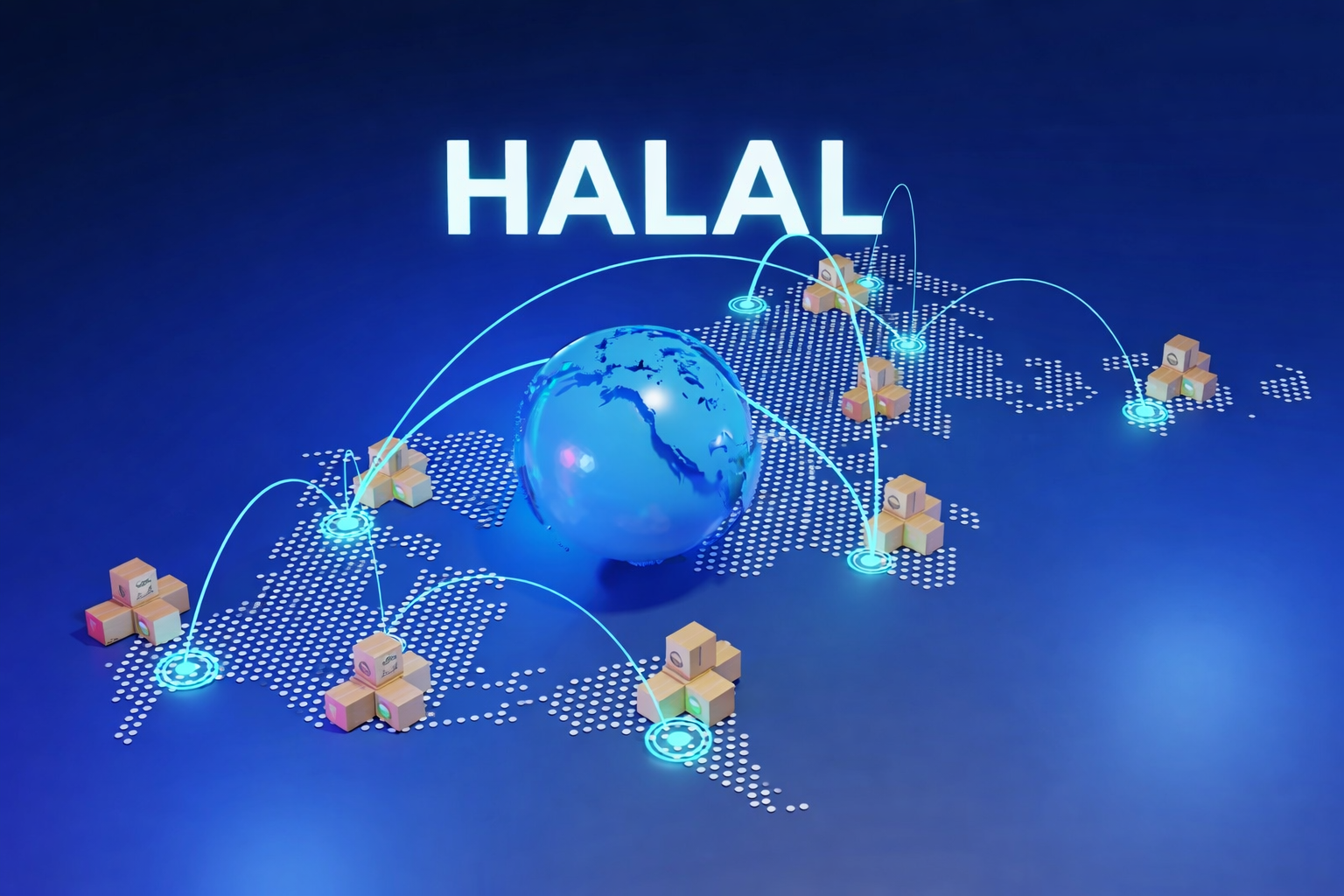
Differences in Halal Regulations and the Challenge of International Certification: Causes and Adaptation Strategies
In recent years, the halal industry has grown rapidly as more Muslims become aware of the importance of consuming halal products. Halal certification plays an important role in ensuring that products follow Islamic principles (Riaz & Chaudry, 2004). However, in reality, halal regulations are different in each country. In addition, halal-certified products from one country are not always accepted in another country. This situation creates challenges in international trade and requires a deeper understanding of the reasons behind it.
Why Do Halal Regulations Differ Between Countries?
The differences in halal regulations are caused by several important factors.
First, there are differences in Islamic interpretations. Even though halal rules come from the same sources (the Qur’an and Hadith), scholars may have different opinions about technical issues, such as slaughtering methods, food ingredients, and contamination limits (Bonne & Verbeke, 2008).
Second, there are differences in government policies and legal systems. Some countries, like Indonesia through Badan Penyelenggara Jaminan Produk Halal, require halal certification by law, while others apply more flexible approaches.
Third, social and demographic factors also play a role. Countries with large Muslim populations usually demand stricter halal standards, while countries with smaller Muslim populations tend to apply more flexible approaches.
Fourth, economic factors are important. Strict halal systems, such as having separate production facilities, can be expensive, which encourages some industries to adopt more practical solutions.
Fifth, there is the issue of national sovereignty. Each country wants to maintain control over its own standards to protect consumers and ensure compliance with domestic regulations (Latif et al., 2014).
Why Are Foreign Halal Certifications Not Always Accepted?
There are several reasons why halal certificates from one country are not always accepted in another.
First, there are different standards and procedures, which can create uncertainty about whether certifications are equivalent (Latif et al., 2014).
Second, there is a lack of mutual recognition agreements (MRA). Without formal agreements, foreign halal certificates may not be legally recognized (Standards and Metrology Institute for Islamic Countries, 2019).
Third, there is the issue of trust. Countries must ensure that certification bodies from other nations are credible and maintain strict standards.
Fourth, there are concerns about the halal supply chain, as halal integrity must be maintained not only during production but also throughout storage and transportation (Tieman, 2011).
Fifth, governments must ensure consumer protection, meaning all products must meet national standards before entering the domestic market.
How Can We Adapt to These Differences?
Even though these challenges exist, there are several ways to adapt.
First, countries can work toward harmonizing halal standards at the international level through organizations such as Standards and Metrology Institute for Islamic Countries.
Second, companies can apply for multiple halal certifications to access global markets more effectively.
Third, businesses can build partnerships with local certification bodies to improve trust and simplify the certification process.
Fourth, companies can adjust their production processes to meet the requirements of the target country.
Fifth, improving transparency and traceability is essential to maintain halal integrity across the supply chain (Tieman, 2011).
Conclusion
Differences in halal regulations between countries are influenced by religious interpretation, government policies, social conditions, and economic factors. These differences explain why halal certifications from one country are not always accepted in another.
However, these challenges can be managed through proper adaptation strategies, such as harmonizing standards, obtaining multiple certifications, and improving transparency. With these efforts, the global halal industry can continue to grow and become more integrated in the future.