How Poland Became One of Europe’s Biggest Halal Meat Suppliers
JAKARTA (23/09/2026)
Poland sits at the heart of Central Europe. its capital is located in Warsaw, bordered by Germany, the Czech Republic, Slovakia, Ukraine, Belarus, Lithuania, and Russia along the southern edge of the Baltic Sea. Covering 312,696 square kilometers and home to roughly 37.6 million people, Poland is not a country one would immediately associate with the halal industry. Muslims make up only about 0.08% of the population with the amount of 30,000 people. Some sources place the figure as high as 40,000–76,000, still a modest 0.2% of the total population.
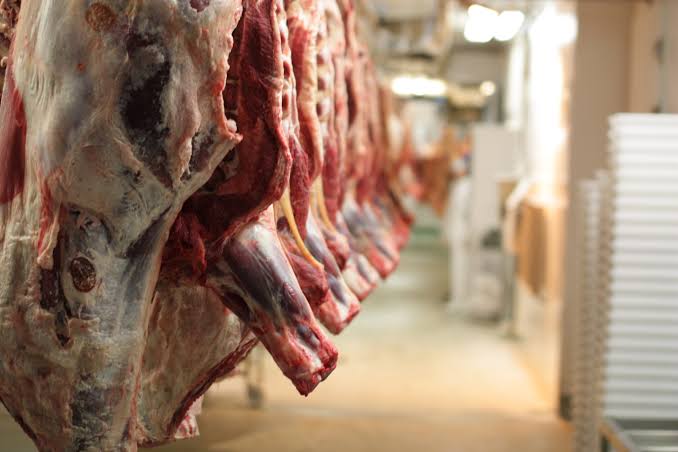
And yet, against these odds, Poland has become the fourth-largest halal meat supplier in Europe, outpacing many countries with far larger Muslim populations. So how did a nation with such a small Muslim community rise to such prominence in the halal meat trade?
The Beginning: France’s Halal Regulation and a New Order in Halal Slaughter
The story begins in 2011, when the French government issued Decree No. 2011-2006 on December 28, implemented the following year. The decree required all slaughterhouses in France to obtain official authorization from their local province. One of the conditions attached to that authorization was a mandate to adopt stunning in the slaughtering process.
For the meat industry as a whole, this was simply a new operational reality. For halal slaughterhouses, however, it posed a far thornier problem: the permissibility of stunning under Islamic law was, at the time, a matter of unsettled debate. Faced with this uncertainty, halal operators split into two camps. Some complied and adopted stunning to stay in business. Others refused, unwilling to compromise on what they saw as a core requirement of halal slaughter (and in doing so) found themselves squeezed out of the French market, forced to look elsewhere to continue their trade.
Poland and the Opportunity in Halal Meat Supply
While France’s new decree was closing doors for halal slaughterhouses, Poland saw an opening. Rather than viewing the displaced Muslim-owned businesses as a burden, Poland welcomed them and backed that welcome with a set of deliberate economic strategies designed to draw halal operators to its shores.
Welcoming Muslim business owners as trusted partners
Where other European countries often treated Muslim entrepreneurs with suspicion, limiting their ability to grow, Poland took a different view. It opened its doors to Muslim business owners not as guests to be tolerated, but as equal partners. This is a posture that cultivated genuine trust and loyalty, encouraging halal operators to invest in long-term partnerships rather than short-term arrangements.
Preserving the right to slaughter without stunning
Because the permissibility of stunning remained contested within Islamic jurisprudence, many halal operators were reluctant to adopt it. They feared it would compromise the halal status of their meat. Poland accommodated this concern by preserving the right to slaughter using conventional, non-stunned methods. This is a flexibility that made the country an especially attractive destination for Muslim entrepreneurs unwilling to make that trade-off elsewhere.
Building large-scale production capacity and strengthening industrial logistics networks
Despite not being a Muslim-majority nation, Poland recognized that the real opportunity in halal meat lay not in serving its own small Muslim population, but in supplying halal meat to Muslim consumers across the rest of Europe. To capture that opportunity, Poland built a meat industry ecosystem geared for high, stable production capacity, backed by reliable supply chains and robust logistics infrastructure laying the groundwork for a distribution network capable of serving Muslim communities well beyond its own borders.
Key Challenges
Poland’s rise in the halal meat market was not without obstacles. Over the years, the industry has had to navigate a number of internal and external pressures.
Complex and ever-changing halal regulations
Strong demand notwithstanding, halal meat cannot simply flow out of Poland unimpeded. Numerous certification standards must be met to obtain halal certification in the first place. This is a considerable challenge for a Muslim-minority country. Compounding this, export destinations often enforce halal standards stricter than Poland’s own, requiring exporters to continually adapt to requirements that are frequently complex and subject to change.
Avian flu and African Swine Fever outbreaks
Poland’s meat industry has also had to weather recurring animal disease outbreaks. African Swine Fever, first detected in 2014, resurged significantly in 2019. While the virus primarily affects pigs rather than the livestock used in halal production, the periodic inspections it necessitated remained a critical concern across the meat sector, including halal operations. Avian flu presented a second challenge, striking the poultry sector in 2016–2017 and again in 2020–2021. Each outbreak triggered tighter biosecurity measures and import restrictions from trading partners, disrupting the steady flow of exports the industry depends on.
The COVID-19 pandemic
Just as the industry was recovering from these disease outbreaks, the COVID-19 pandemic emerged in late 2019, triggering sweeping disruptions across the global economy and Poland’s halal meat industry was no exception. Border closures, supply chain bottlenecks, and shifting international demand placed additional strain on an industry that depends heavily on exports to sustain its growth. Even so, demand for halal meat continued to climb.
Where Poland Stands Today
Despite these setbacks, Poland has achieved remarkable success in expanding its halal meat market across Europe and beyond, cementing its place among the continent’s top four halal meat suppliers, ahead of many countries with considerably larger Muslim populations and higher domestic demand. In 2020 alone, Poland exported €5 billion worth of halal meat to countries including Germany, France, Spain, and the United Kingdom, with demand reaching as far as the United Arab Emirates.
Poland’s success tells a compelling story: a thriving halal industry does not require a large domestic Muslim population to take root. It can just as easily be built on the ability to recognize market opportunity and the willingness to pursue it with creativity. Poland’s openness and flexibility toward Muslim entrepreneurs cultivated deep loyalty among halal slaughterhouses. This caused the loyalty that, in turn, became the foundation for lasting, long-term partnerships.
Written by: Alhayya Maritza & Naflah Azizah Wibowo
Reference:
Alqurashi, R. M., Sikora, D., Rzymski, P., & Poniedziałek, B. (2026). Cultured meat and its acceptability in Muslim societies: A narrative perspective on halal perspectives and regulatory challenges. Foods, 15(8), 1288.
Mroczek, R. (2021). Religious slaughter of animals in Poland. Zagadnienia Ekonomiki Rolnej/Problems of Agricultural Economics, (1).
ABNA 24. (2026). France Politicized Halal; Poland Turned It into an Economic Opportunity. Retrieved September 23, 2026, from https://en.abna24.com/news/1859590/France-Politicized-Halal-Poland-Turned-It-into-an-Economic-Opportunity
Notes from Poland. (2022). Poland among Europe’s leaders in kosher and halal meat, despite uncertainty around ritual slaughter. Retrieved September 23, 2026, from https://notesfrompoland.com/2022/02/21/poland-among-europes-leaders-in-kosher-and-halal-meat-despite-uncertainty-around-ritual-slaughter/
Polskie Radio Dla Zagranicy. (2026).Poland’s Muslim Population Grows With Labor Migration. Retrieved September 23, 2026, from https://www.polskieradio.pl/395/7789/artykul/3686633,polands-muslim-population-grows-with-labor-migration