Malaysia Anticipates Enhanced Bilateral Cooperation Under Lee Jae Myung’s Leadership
Source: Seoul City
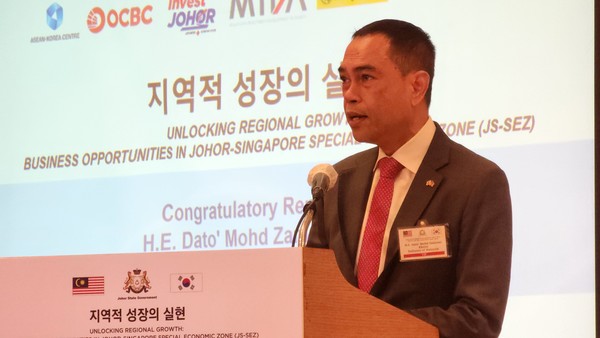
JAKARTA – Malaysia’s diplomatic representative in Seoul has expressed strong optimism about the future of bilateral relations with South Korea under the newly established Lee Jae Myung administration. The Malaysian government remains committed to ensuring that economic commitments and strategic agreements established during high-level diplomatic exchanges continue to advance, according to the country’s ambassador to Korea.
Diplomatic Engagement and Strategic Partnership
Dato Mohd Zamruni Khalid, Malaysia’s Ambassador to Korea, emphasized Malaysia’s dedication to fulfilling the economic and strategic commitments made by Korean enterprises during Prime Minister Datuk Seri Anwar Ibrahim’s official visit to South Korea in the previous year. The ambassador highlighted the importance of maintaining momentum in bilateral cooperation as the Lee administration takes office.
“Malaysia looks forward to establishing close working relationships with the Lee Jae Myung administration,” Ambassador Khalid stated, characterizing the strategic partnership as extending beyond mere transactional exchanges. He noted that Malaysia was among the initial countries to engage with President Lee, with both leaders pledging to strengthen existing ties.
The diplomatic engagement was evidenced by President Lee’s phone conversation with Malaysian Prime Minister Anwar Ibrahim on June 23, making Ibrahim the seventh international leader to communicate with South Korea’s new president following his inauguration.
Free Trade Agreement Progress
A significant milestone in Malaysia-Korea relations is the approaching completion of their bilateral Free Trade Agreement (FTA), which is anticipated to be finalized by the end of 2025. This agreement is expected to enhance trade relations and improve regional connectivity between the two nations.
Malaysia and South Korea elevated their diplomatic relationship to a strategic partnership level in 2024, focusing on deepening collaboration in Environmental, Social, and Governance (ESG)-based investments, digital and green technology sectors, and the halal market ecosystem.
Both countries have established goals to conclude the FTA by 2025, with expected benefits for businesses and small-to-medium enterprises (SMEs), while boosting the digital economy, bioeconomy, and supply chain resilience across the region.
Investment Commitments and Political Stability
Ambassador Khalid referenced substantial investment pledges totaling $7.6 billion made by Korean companies, according to Malaysia’s Ministry of Investment, Trade and Industry. He emphasized that the realization of these commitments depends significantly on South Korea’s political stability under the Lee administration, suggesting that without such stability, major bilateral agreements could face implementation challenges.
A notable example of these investment commitments includes Hyundai Motor’s plans to invest approximately $480 million from 2025 onward to upgrade its Malaysian manufacturing facility in partnership with Inokom. This investment aims to enhance production capabilities for multi-purpose vehicles (MPVs), minivans, and sport utility vehicles (SUVs), beginning with an annual production target of 20,000 units and serving both Malaysian and broader Southeast Asian markets while supporting local electric vehicle ecosystem development.
“Following the high-level visit, significant efforts have been dedicated to ensuring these corporate pledges are successfully implemented,” the ambassador noted, expressing expectations that political stability under the new Lee administration will facilitate the fulfillment of commitments and bilateral agreements.
Market Diversification and Halal Industry Opportunities
With more than 400 Korean companies currently operating across various sectors in Malaysia, Ambassador Khalid encouraged further diversification of Korean investment destinations. He positioned Malaysia as a strategic halal industry hub for South Korean exports on a global scale, extending beyond countries with predominantly Muslim populations.
“Many Korean enterprises remain unaware of this significant potential,” the ambassador observed, highlighting Malaysia’s financial sector strengths and opportunities for joint venture partnerships.
The ambassador emphasized Malaysia’s role as a gateway for Korean companies seeking to access the global halal market, representing an underutilized opportunity for bilateral economic cooperation.
ASEAN Cooperation and Regional Integration
Ambassador Khalid expressed hopes for the adoption of the Comprehensive Plan of Action for the ASEAN-South Korea Comprehensive Strategic Partnership, which was agreed upon during the ASEAN Ministerial Meeting. He described this development as “another significant milestone” in regional cooperation.
“Malaysia believes that development should encompass both inclusivity and sustainability,” the ambassador stated, referencing Malaysia’s 2025 ASEAN chairmanship and its theme of “Inclusivity and Sustainability.”
He emphasized ASEAN’s environmental objectives, stating, “The goal is for ASEAN to become an environmentally secure zone, and Malaysia is enthusiastic about collaborating with South Korea on this initiative.” This cooperation aligns with the ASEAN Community Vision 2045 and encourages Korean companies to actively participate in maritime security, climate resilience, digital connectivity, and green technology initiatives.
Cultural Exchange and Tourism Promotion
Beyond economic cooperation, Ambassador Khalid highlighted cultural exchange and ASEAN connections as growing priorities in bilateral relations. He expressed desire for greater Korean familiarity with Malaysian culture, cuisine, and values.
The ambassador also emphasized tourism potential in various Malaysian regions, including Sabah, Sarawak, Malacca, Kuala Lumpur, and his home state of Terengganu, suggesting opportunities for increased people-to-people exchanges between the two nations.
Future Outlook
The diplomatic dialogue reflects Malaysia’s strategic approach to maintaining and expanding its relationship with South Korea under new political leadership. The emphasis on political stability, economic cooperation, and regional integration demonstrates both countries’ commitment to deepening their partnership across multiple sectors.
As both nations work toward finalizing their FTA and implementing substantial investment commitments, the success of these initiatives will likely serve as indicators of the strength and durability of Malaysia-Korea strategic cooperation in the years ahead.
Original article:
koreaherald.com. (n.d.).Malaysia optimistic about ties with Lee Jae Myung administration: envoy. Retrieved July 30, 2025, from https://www.koreaherald.com/article/10542124


