Thailand Pursues Strategic Pivot to Global Halal Markets Amid Trade Challenges
Source: Daily Mirror
JAKARTA – Thailand is embarking on an ambitious economic transformation by positioning itself as a significant player in the global halal economy, a strategic shift designed to reduce trade dependencies and unlock new growth opportunities. This initiative gained momentum during the Mega Halal Bangkok 2025 conference, where government leaders and industry experts outlined comprehensive plans to integrate Thai businesses into the rapidly expanding Islamic commerce sector.
Leadership Vision for Halal Market Integration
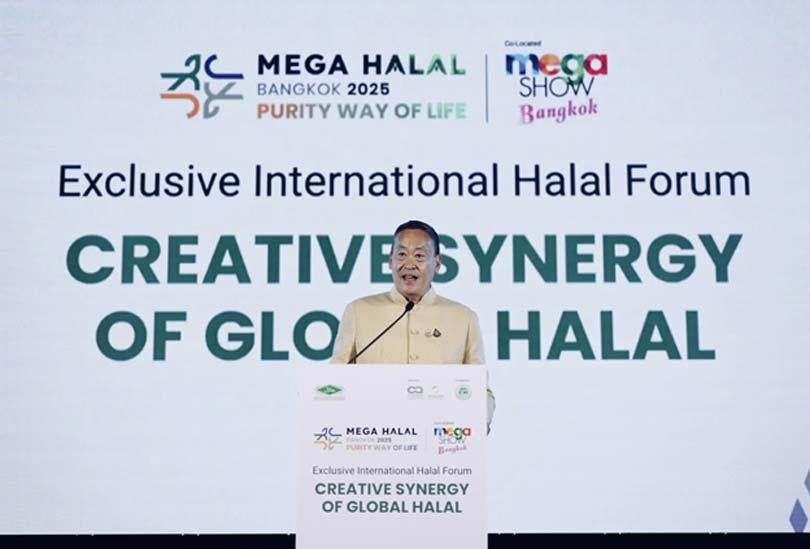
Former Prime Minister Srettha Thavisin emerged as a prominent advocate for Thailand’s halal economy strategy during his keynote address at the four-day conference held from July 15-18, 2025. His presentation emphasized the transformative potential of accessing markets serving over two billion Muslim consumers worldwide, positioning halal trade as a critical engine for Thailand’s economic diversification efforts.
Thavisin’s address highlighted the urgent need for ASEAN nations to coordinate their approach to halal market penetration, recognizing that regional collaboration could amplify individual countries’ competitive advantages. His vision extends beyond mere market access to encompass comprehensive economic restructuring that leverages Thailand’s existing strengths while addressing current trade vulnerabilities.
The former Prime Minister’s advocacy reflects growing recognition within Thai political and business circles that traditional export strategies require fundamental reassessment in response to changing global trade dynamics and emerging market opportunities.
Addressing Competitive Disadvantages in Traditional Markets
Thailand faces significant challenges in maintaining competitiveness within established export markets, particularly the United States. Current trade conditions impose para-tariffs as high as 36% on Thai exports, creating substantial cost disadvantages compared to regional competitors like Vietnam, which faces only 20% tariff rates.
These disparities have prompted Thai policymakers to explore alternative market strategies that reduce dependence on traditional Western export destinations. The halal economy presents an attractive alternative, offering access to diverse geographic markets across the Middle East, Africa, Southeast Asia, and other regions with substantial Muslim populations.
The shift toward halal markets represents more than simple geographic diversification—it involves fundamental changes in production standards, certification processes, and marketing approaches that could enhance Thailand’s overall export competitiveness across multiple sectors.
Substantial Economic Performance in Islamic Markets
Thailand’s halal sector has already demonstrated impressive economic performance, with food exports to Organization of Islamic Cooperation (OIC) member countries exceeding $7.1 billion in early 2024 alone. This substantial figure underscores the sector’s existing economic importance and suggests significant potential for further expansion.
The current performance levels indicate that Thai businesses possess the capability to meet international halal standards and compete effectively in Muslim-majority markets. However, realizing the sector’s full potential requires coordinated support from government agencies, industry associations, and international certification bodies.
These export figures also demonstrate that Thailand’s halal strategy builds upon established foundations rather than attempting to create entirely new market relationships, providing a more realistic pathway for sustainable growth.
International Collaboration and Certification Framework
The Mega Halal Bangkok 2025 conference brought together leading halal certification bodies from Europe, Asia, the Middle East, and Africa, creating opportunities for developing mutual recognition frameworks and streamlined trade cooperation mechanisms. This international collaboration addresses one of the most significant barriers to halal trade expansion: inconsistent certification standards across different markets.
Distinguished participants included representatives from Saudi Arabia’s SASO (Saudi Standards, Metrology and Quality Organization), Turkey’s HAK (Halal Accreditation Agency), the UAE’s EIAC (Emirates International Accreditation Centre), and Thailand’s CICOT (Central Islamic Committee of Thailand), demonstrating the high-level international engagement surrounding Thailand’s halal initiative.
These partnerships could facilitate the development of harmonized certification processes that reduce compliance costs for Thai exporters while ensuring product integrity meets the most stringent international halal requirements.
Policy Support and Infrastructure Development
Thavisin emphasized the critical importance of enhanced public sector support for entrepreneurs and small-to-medium enterprises seeking to enter halal markets. His recommendations include improved access to capital through specialized financing programs and streamlined trade facilitation measures that reduce bureaucratic barriers.
The policy framework envisions comprehensive support systems that address various challenges faced by businesses transitioning to halal production, including technical assistance for certification processes, market intelligence services, and promotional support for international market penetration.
Government support extends beyond financial assistance to encompass regulatory reforms that simplify halal certification procedures while maintaining rigorous quality standards essential for building consumer trust in international markets.
Regional Economic Integration Strategy
Thailand’s halal economy initiative reflects broader ASEAN integration objectives, with Thavisin specifically calling for coordinated regional efforts to maximize collective bargaining power in global halal markets. This approach recognizes that individual Southeast Asian nations may lack the scale necessary to influence international trade terms effectively.
Regional coordination could involve harmonizing certification standards, developing joint marketing initiatives, and creating integrated supply chains that leverage each country’s comparative advantages. Such collaboration could transform ASEAN into a dominant force in global halal trade rather than individual countries competing against each other.
The strategy also acknowledges that successful halal market penetration requires sustained commitment and resources that may exceed individual nations’ capabilities, making regional cooperation essential for long-term success.
Market Diversification and Risk Management
Thailand’s pivot toward halal markets represents a sophisticated risk management strategy designed to reduce dependence on volatile traditional export markets while capitalizing on demographic trends favoring halal consumption. The global Muslim population’s growth trajectory suggests sustained demand expansion for halal products across multiple decades.
Geographic diversification through halal market access provides Thailand with alternative revenue sources that may prove more stable than traditional markets subject to trade tensions, protectionist policies, and economic uncertainty. This diversification could enhance Thailand’s overall economic resilience while creating new growth opportunities.
The strategy also positions Thailand to benefit from the increasing global acceptance of halal products among non-Muslim consumers who associate halal certification with quality, safety, and ethical production practices.
Challenges and Implementation Considerations
Despite significant opportunities, Thailand’s halal economy strategy faces substantial implementation challenges, including the need for widespread industry education about halal requirements, investment in certification infrastructure, and development of specialized supply chains that maintain halal integrity throughout production and distribution processes.
Success requires coordinated efforts across multiple sectors, from agriculture and food processing to logistics and marketing, demanding substantial coordination among government agencies, industry associations, and private enterprises. The complexity of this coordination could slow implementation and reduce initial impact.
International competition from established halal exporters, particularly Malaysia and Indonesia, presents additional challenges that require Thailand to identify unique competitive advantages and market positioning strategies that differentiate Thai products in crowded global markets.
Future Prospects and Economic Impact
Thailand’s halal economy initiative represents a forward-looking approach to economic development that could transform the country’s export profile and enhance its position in global trade networks. Success could establish Thailand as a major halal hub serving Southeast Asian production capabilities to global Muslim markets.
The initiative’s potential impact extends beyond immediate export revenues to encompass industrial modernization, supply chain development, and enhanced international trade relationships that could benefit Thailand’s broader economy. These secondary effects may prove as valuable as direct halal export revenues.
Long-term success could position Thailand as a model for other non-Muslim majority countries seeking to access halal markets, potentially creating opportunities for Thailand to export expertise, technology, and services related to halal production and certification.
Conclusion: Strategic Economic Transformation
Thailand’s commitment to developing its halal economy represents more than market diversification—it embodies a comprehensive approach to economic transformation that addresses current trade challenges while positioning the country for future growth opportunities. The combination of existing export capabilities, government support, and international collaboration creates a foundation for sustainable development in this expanding sector.
The success of this initiative will depend on effective implementation of supportive policies, sustained commitment from both public and private sectors, and Thailand’s ability to differentiate its offerings in competitive global markets. However, the substantial economic potential and strategic advantages suggest that this pivot toward halal markets could significantly enhance Thailand’s long-term economic prospects and regional influence.
Original article:
dailymirror.lk. (n.d.). Thailand eyes halal economy to boost trade. Retrieved August 1, 2025, from https://www.dailymirror.lk/print/press_releases/Thailand-eyes-halal-economy-to-boost-trade/335-315385