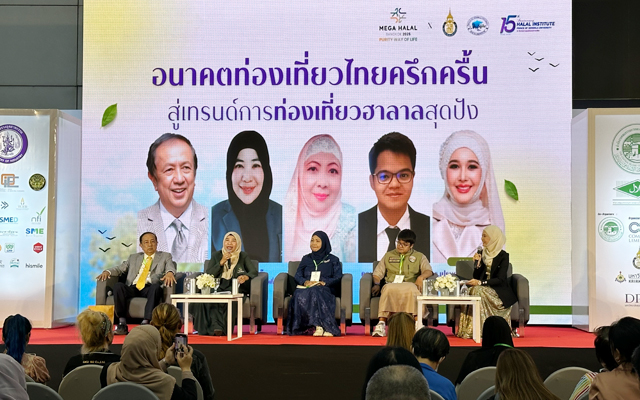
Thailand’s Halal Tourism Boom: Small Fixes, Big Market Opportunities
Something interesting happened at the Mega Halal 2025 Bangkok trade show. Non-Muslim business owners started asking how to welcome halal guests. After nearly three decades promoting Muslim-friendly travel in Thailand, Aida Oujah from the Thai-ASEAN Halal Tourism Trade Association has never seen this level of mainstream interest.
The shift makes business sense. Muslim travelers represent a massive, underserved market segment that spends significantly on travel. Hotels and tour operators are realizing they’re missing out on serious revenue by not accommodating basic religious requirements.
“Today, non-Muslim business owners are approaching us to learn how to welcome halal guests,” Oujah revealed at the BITEC Bangna conference. The question isn’t whether Thailand should pursue halal tourism – it’s how quickly the industry can adapt.
Bidets Matter More Than You Think
Forget elaborate prayer rooms or complete menu overhauls. Muslim travelers care most about simple bathroom amenities that most Western hotels overlook entirely. Bidets aren’t luxury items for Muslim guests – they’re essential for religious cleanliness requirements.
“The bidet is important. If there’s no water in the bathroom, it’s a big issue, especially for Muslim women,” Oujah emphasized. Hotels spending thousands on fancy amenities often miss this basic requirement that determines whether Muslim families can comfortably stay.
Other small changes make huge differences. Prayer direction signage, same-gender massage therapists, and modest swimwear areas, these modifications require minimal investment while opening access to an entire market segment.
Premrapee Punwangdeeyukul from SPC Factory All Supply put it perfectly: “Halal is an opportunity, not a limitation. Muslim-friendly doesn’t mean changing everything – just paying attention to details that matter.”
They Still Want to See Wat Arun
Muslim tourists frequently express disappointment when iconic Buddhist temples like Wat Arun or Wat Chalong aren’t included in their itineraries. Many feel their Thailand visit remains incomplete without experiencing these cultural landmarks. That’s what surprised industry veterans.
“Muslim travelers mostly want the same itineraries as other tourists. Religious requirements create only about 30% differences in the program,” Oujah noted. Tour operators often overcomplicate halal tourism by assuming Muslim travelers need completely different experiences.
The insight challenges assumptions about cultural sensitivity. Muslim tourists appreciate religious accommodation while still seeking authentic Thai cultural experiences, including visits to Buddhist temples and traditional performances.
Fake Halal Labels Are Everywhere
Travel blogger Sakarin Sadlah runs the popular “Praying in a Foreign Land” Facebook page and sees the halal tourism industry’s biggest problem firsthand: opportunistic vendors slapping fake halal stickers on everything.
“The biggest issue we face is opportunistic behavior – stickers with no certification. That’s not just misleading; it’s a violation of religious trust. Thailand needs laws to stop this,” Sakarin warned.
Muslims communicate extensively about authentic halal options through social networks. Fake certification gets exposed quickly, damaging Thailand’s reputation among potential visitors who share information across communities.
“Muslims talk among themselves and know when something isn’t truly halal – even if the vendor wears a hijab. Travelers don’t look for the owner’s name Fatimah or Mohammad – they look for the halal symbol,” Oujah added.
Only Two Places Can Actually Certify Halal
Dumrong Poottan, advisor to the National Assembly Speaker, delivered some hard truths about halal certification in Thailand. Only the Halal Science Center at Chulalongkorn University and the Central Islamic Council of Thailand possess legal authority to certify halal products and services.
“Others may promote or market halal, but legal authority matters when it comes to certification,” Dumrong stressed. Businesses seeking legitimate halal status need to work with these recognized institutions rather than unofficial organizations.
The certification bottleneck creates opportunities for fraudulent operators while limiting legitimate businesses’ ability to serve Muslim tourists. Thailand needs streamlined certification processes that maintain religious authenticity while supporting business development.
India’s Rich Muslims Don’t Know Thailand Exists
Dumrong highlighted a massive missed opportunity: India’s Muslim population includes extremely wealthy individuals who don’t realize Thailand offers halal-friendly travel options.
“India is now the most populous country with a sizable Muslim population – its third wealthiest person is Muslim. We only need to capture a portion of this niche but high-value segment, but many don’t know Thailand has halal-friendly travel options because our dominant image in India is nightlife and entertainment. That has to change,” he explained.
Thailand’s international marketing heavily emphasizes nightlife and adult entertainment, which doesn’t appeal to Muslim families seeking halal tourism experiences. The messaging disconnect prevents Thailand from accessing wealthy Muslim travelers from India and other markets.
Wellness Tourism Meets Halal Requirements
Kusuma Kinglek from Aonang Princeville Villa Resort & Spa identified an unexpected synergy: halal tourism aligns perfectly with wellness travel trends that emphasize clean living and mindful consumption.
“Thailand already has the food and culture. We just need to adapt our kitchens and evolve our service standards to conform to halal wellness. The new tourism S-curve of clean living is a mega trend. Halal fits naturally into that,” she observed.
The connection makes strategic sense. Health-conscious travelers and Muslim tourists share similar preferences for ingredient transparency, ethical sourcing, and mindful consumption practices.
Malaysia Becomes Major Competition
The competitive landscape is shifting rapidly. Malaysia, with its 70-80% Muslim population, is emerging as a major source market alongside China. Malaysian Muslims possess significant disposable income and travel extensively throughout Southeast Asia.
Oujah concluded with urgency: Thailand must be prepared to capture this growing Malaysian segment, which requires government commitment beyond private sector initiatives.
Technology Could Solve Everything
Sakarin suggested Thailand needs a local halal verification app similar to Japan’s Halal Navi, which allows travelers to instantly check certification authenticity. The technology solution could address fake certification problems while helping legitimate businesses reach Muslim travelers.
The app concept would complement existing halal snacks available at Foodland and 7-Eleven, creating comprehensive halal tourism infrastructure that builds traveler confidence. For an industry built on trust and religious compliance, technology verification could transform Thailand’s halal tourism credibility while providing competitive advantages over destinations lacking similar systems.
Original Article:
TTG Asia. (2025, September 8). Stakeholders call for stronger halal tourism push in Thailand. TTG Asia. Retrieved from https://www.ttgasia.com/2025/07/23/stakeholders-call-for-stronger-halal-tourism-push-in-thailand/


