Indonesia Pushes for Enhanced Trade with UAE, Focuses on Halal Product Exports
JAKARTA – Indonesia’s Trade Minister Budi Santoso has called for businesses in both Indonesia and the United Arab Emirates to maximize opportunities under the Indonesia-United Arab Emirates Comprehensive Economic Partnership Agreement (IUAE-CEPA), with particular emphasis on expanding halal sector exports.
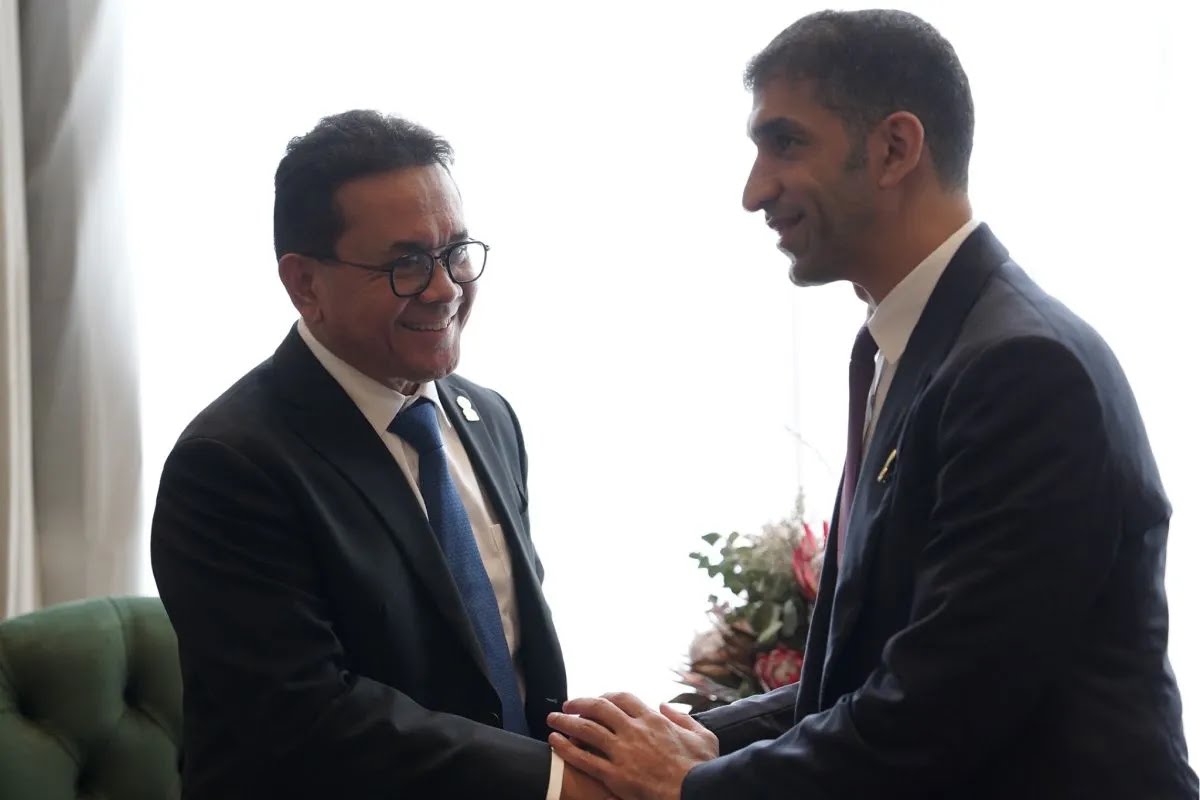
During a bilateral meeting with UAE Minister of Foreign Trade Thani bin Ahmed Al Zeyoudi in Gqeberha, South Africa, Minister Santoso highlighted the agreement’s positive impact on improving trade performance between the two nations.
“We are committed to ensuring the Indonesia-UAE CEPA is implemented smoothly and delivers tangible benefits to businesses in both countries, particularly in promoting halal product exports, digital economy development, and sustainable investment,” Santoso stated in a Jakarta announcement on Tuesday.
Halal Certification Framework Under Discussion
Both ministers discussed progress on a Mutual Recognition Agreement (MRA) concerning halal standards. This relates to both countries’ intention to establish a joint task force that would develop simplified and more efficient halal certification mechanisms, including the creation of a halal traceability system.
The proposed framework aims to streamline the certification process, making it easier for Indonesian halal products to access UAE markets while maintaining rigorous compliance standards. This initiative reflects growing recognition of the halal economy’s strategic importance in bilateral trade relations.
Support Sought for GCC Free Trade Negotiations
Minister Santoso also expressed Indonesia’s hope that the UAE, as a member of the Gulf Cooperation Council (GCC), would support accelerating negotiations for the Indonesia-GCC Free Trade Agreement. These negotiations are targeted for substantial completion by the end of 2025.
“We hope for UAE support in encouraging flexibility on crucial issues such as goods trade and investment, so that Indonesia-GCC FTA negotiations can be concluded with mutually beneficial outcomes,” Santoso said.
The minister’s remarks underscore Indonesia’s broader strategy to strengthen economic ties with Gulf nations, leveraging the UAE’s influential position within the regional bloc to advance trade liberalization efforts.
Bilateral Trade Performance and Trends
The UAE ranks as Indonesia’s 15th largest export destination and 19th largest import source. During the January-August 2025 period, total trade between Indonesia and the UAE reached $3.83 billion, with Indonesian exports totaling $2.43 billion and imports amounting to $1.41 billion.
In 2024, bilateral trade between the two nations recorded $5.07 billion, with Indonesian exports valued at $3.07 billion and imports at $2.01 billion. These figures indicate a healthy trade surplus in Indonesia’s favor, though the year-to-date 2025 data suggests a slight moderation in trade volume compared to the previous year’s pace.
Key Trade Commodities
Indonesia’s primary exports to the UAE encompass jewelry, palm oil, motor vehicles, textiles, and paper products. These goods represent Indonesia’s diverse manufacturing and natural resource capabilities, with processed commodities featuring prominently.
Conversely, Indonesia’s main imports from the UAE consist of oil and natural gas, gold, and aluminum. The import composition reflects the UAE’s strengths in energy resources and precious metals trading.
Strategic Economic Partnership
The IUAE-CEPA, which entered into force recently, represents a comprehensive framework for deepening economic cooperation between the two nations. Beyond traditional trade in goods, the agreement addresses modern economic concerns including digital commerce, services trade, investment protection, and regulatory cooperation.
The emphasis on halal products within this framework acknowledges both nations’ significant Muslim populations and the UAE’s position as a major hub for halal trade and finance in the Middle East. By establishing streamlined certification processes and mutual recognition mechanisms, both countries aim to reduce non-tariff barriers that have historically complicated halal trade.
Digital Economy and Sustainable Investment
Minister Santoso’s reference to digital economy and sustainable investment highlights Indonesia’s ambition to move beyond commodity-based trade toward more sophisticated economic engagement. The digital economy component aligns with Indonesia’s efforts to develop its technology sector and expand e-commerce capabilities, while sustainable investment reflects global trends toward environmental, social, and governance considerations in business relationships.
Implications for Business Communities
For Indonesian exporters, particularly in the halal sector, the minister’s push for IUAE-CEPA optimization signals potential new opportunities. The simplified certification processes under discussion could significantly reduce market entry barriers, making UAE markets more accessible to small and medium enterprises that may have previously found compliance requirements challenging.
Similarly, the digital economy provisions could facilitate cross-border e-commerce, enabling Indonesian businesses to reach UAE consumers more directly. The sustainable investment focus may also attract Emirati capital to Indonesian projects in renewable energy, green manufacturing, and other environmentally conscious sectors.
Regional Trade Architecture
Indonesia’s simultaneous pursuit of the UAE bilateral agreement and the broader Indonesia-GCC FTA reflects a multi-layered approach to trade policy. By securing strong bilateral ties with the UAE while negotiating with the GCC collectively, Indonesia aims to maximize market access across the Gulf region while potentially using the UAE relationship as a model for broader regional cooperation.
The targeted end-2025 completion date for Indonesia-GCC FTA negotiations suggests Indonesian policymakers view this as a priority initiative, likely driven by Gulf nations’ purchasing power, strategic location, and potential as investment sources.
This comprehensive approach to economic diplomacy, combining bilateral agreements, regional negotiations, and sector-specific initiatives like halal certification harmonization, demonstrates Indonesia’s increasingly sophisticated trade strategy as it seeks to strengthen its position in global and regional commerce.
Original Article:
Antara News. (2025, October 14). Mendag dorong optimalisasi IUAE-CEPA, genjot ekspor produk halal. Retrieved from https://www.google.com/amp/s/m.antaranews.com/amp/berita/5174053/mendag-dorong-optimalisasi-iuae-cepa-genjot-ekspor-produk-halal