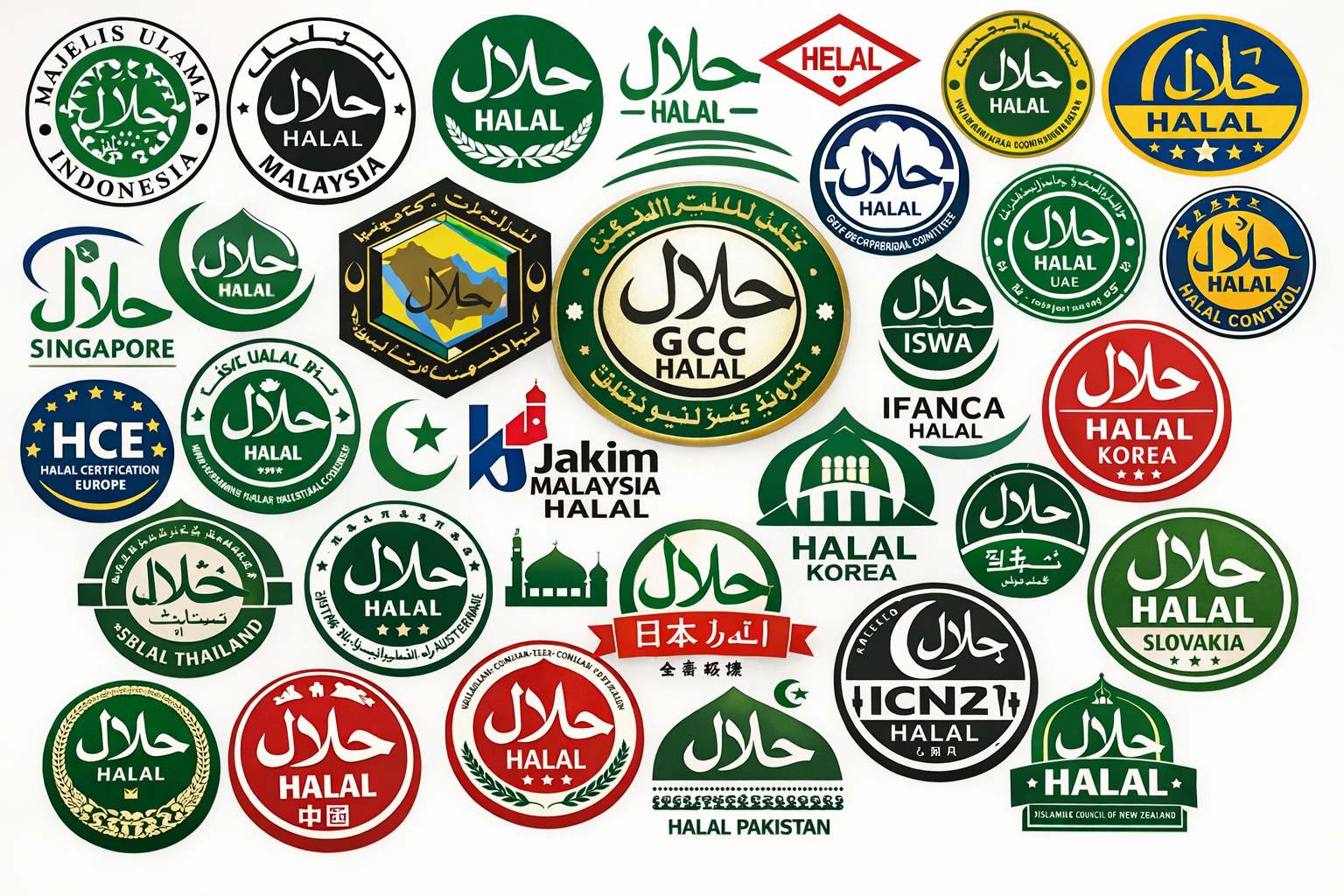
Dynamics and Differences in Halal Certification Across Countries: Challenges and Global Adaptation
As awareness among Muslims regarding the consumption of halal products continues to increase, halal certification has become an essential instrument in ensuring compliance with Islamic principles. However, the implementation of halal standards is not universal. Each country has distinct regulatory characteristics influenced by social, political, economic, and demographic factors. These differences pose particular challenges, especially for Muslim-minority countries such as Japan, in adopting halal certification systems that are generally developed in Muslim-majority contexts.
Halal Certification in Indonesia: Strict and Institutionalized
Indonesia is recognized as one of the countries with the most structured halal certification systems in the world. Through the Badan Penyelenggara Jaminan Produk Halal (BPJPH), the government mandates halal certification for products circulating in the market. This system is supported by formal regulations governing the entire production chain, from raw materials to distribution.
In practice, halal standards in Indonesia emphasize clear separation between halal and non-halal production facilities, along with supervision by qualified Muslim personnel. This approach aims to minimize the risk of cross-contamination and ensure the overall integrity of halal products. However, such stringent requirements may also impose administrative burdens and additional costs on business actors.
Halal Certification in Japan: Adaptive and Community-Based
In contrast to Indonesia, Japan does not have a centralized national halal certification system. Halal certification in Japan is largely decentralized and is often managed by Muslim community-based organizations. This is due to the relatively small Muslim population and the absence of legal obligations regarding halal certification.
This condition has led to the development of more flexible and context-dependent halal standards. In industrial practice, many companies in Japan are unable to provide fully segregated halal production facilities. As an alternative, separation is implemented at the level of production lines or through time-based segregation. While this approach is considered pragmatic, the potential for contamination remains a key concern.
Additionally, structural challenges such as high operational costs and taxation hinder the development of the halal industry in Japan. This situation results in limited availability of halal products and reduces their competitiveness in export markets, particularly in countries with stricter halal standards.
Malaysia: High Standards with a State-Led Approach
Malaysia is widely regarded as a global benchmark in halal certification. The halal system in the country is centrally managed by the Department of Islamic Development Malaysia (JAKIM), which enforces strict standards recognized internationally.
One of Malaysia’s key strengths lies in its comprehensive regulatory framework, including strict requirements for the separation of halal and non-halal production facilities and consistent monitoring. In some cases, physical distance requirements between facilities are also enforced. This approach enhances global trust and strengthens the competitiveness of Malaysian halal products.
Global Comparison and Its Implications
The variation in halal certification systems across countries demonstrates that halal standards are not uniform but rather contextual. In general, three main models can be identified:
1. Strict Regulatory Model (Indonesia, Malaysia)
- State-based and legally enforced
- Highly structured standards
- Suitable for large Muslim-majority markets
2. Adaptive Model (Japan, Muslim-minority countries)
- Flexible and locally oriented
- Often lacks national regulation
- Pragmatic but carries risks in maintaining standard consistency
3. Hybrid Model (Thailand, Singapore)
- Combination of state regulation and industry needs
- More oriented toward global market integration
The implications of these differences are significant, particularly in international trade. For instance, halal products certified in Japan may not be accepted in Indonesia without re-certification. This highlights the importance of global harmonization of halal standards, although achieving such harmonization remains a major challenge.
Conclusion
Halal certification is not only a religious matter but also closely related to economic systems and globalization. Indonesia and Malaysia represent strict and institutionalized approaches, while Japan adopts a more flexible system tailored to its local context. These differences indicate that halal implementation is dynamic and must be adapted to each country’s specific conditions.
Moving forward, collaborative efforts are needed to develop more harmonized global halal standards without disregarding local diversity. Such efforts are essential to ensure that the halal industry can grow in an inclusive and sustainable manner across different regions of the world.