Beyond Numbers: The Ongoing Humanitarian Crisis in Gaza

Source: Halal Times
Kyoto, Japan – Each day begins with the news. For many around the world—whether in Tokyo, Kuala Lumpur, or elsewhere—checking headlines about Gaza has become a solemn habit, more punishment than enlightenment. Names are omitted, faces go unseen. The death toll rises, a number that blurs distinctions between civilians and fighters. The specificity that once mattered is now lost in the fog of war and indifference. For observers thousands of miles away, the horror is real, but their role is passive—reduced to scrolling, reading, and forgetting.
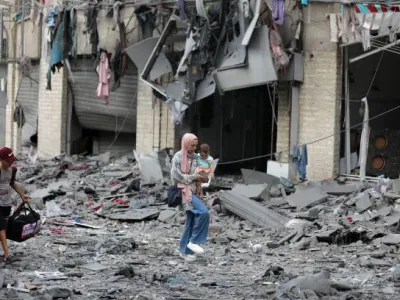
Social media feeds, once curated for entertainment, have turned into galleries of devastation. Videos of missiles and collapsing buildings invade timelines without warning. The visual language of destruction—dust clouds, mangled bodies, crumbled towers—has become brutally familiar. Even without expertise in warfare or physics, the raw power of the blasts is undeniable. Bodies are hurled into the air like broken puppets, and the mind struggles to process the inhumanity of it all.
Gaza’s Incremental Erasure
The ruin of Gaza is chronicled frame by frame, day by day. One day it’s a market, the next, a school. With professional journalists mostly gone—killed or exiled—the footage now comes from ordinary people risking everything to document their reality. The death toll officially sits at 50,000, with some local sources estimating far more. Numbers lose meaning, acting as shields from the brutal reality of torn limbs and lifeless children. These statistics hide a deeper horror, one that many choose not to confront.
Beyond the bombings, Gaza faces a silent war: one against disease, hunger, and thirst. Medical supplies are blocked at borders; hospitals have become ruins. Stories trickle out through smuggled phones—voices cracking with fear and exhaustion. Two million people are trapped without electricity, water, or basic necessities. And yet, they endure, surviving on will alone. Their resilience is astonishing, though one must wonder: is it strength, or is it punishment?
A Life in Contrast
Meanwhile, far from the conflict, lives continue with unsettling normalcy. Dinner tables are full, air conditioners hum, and people debate rising utility bills. Occasionally, Gaza becomes part of the conversation, wedged between bites of roast chicken and sips of cold juice. It’s discussed with detachment, a footnote in a privileged life. And yet, the death toll is tallied like a scorecard—50,000, 70,000, maybe more—with little sense of the personal devastation behind each number.
The Futility of Global Diplomacy
In New York and Geneva, resolutions are drafted, signed, and forgotten. Diplomats in sharp suits issue condemnations and statements, but the missiles never stop. Vetoes fall like clockwork. Across the Arab world, summits unfold in opulent halls, leaders offer theatrical outrage, and then return to comfort. Their declarations ring hollow. For those watching from afar, the sense of powerlessness is overwhelming, a bitter reminder that these leaders do not speak for the people they claim to represent.
The Wider Picture of Muslim Oppression
Gaza is not an isolated tragedy. The list grows: Rohingya in Myanmar, Kashmiris in India, Uighurs in China. In India, Muslim communities face legal battles over land and identity. The pain is global, interconnected. And yet, for many, it remains a matter of analysis, of speculation—never action. A world slowly unravels, and the response is silence.
Elsewhere, people worry about rising tariffs, water shortages, and economic instability. Local issues dominate headlines, even while Gaza’s suffering continues. The contrast is jarring: a world of inconveniences set beside one of annihilation. As Gaza burns, many weigh personal discomforts against collective catastrophe—and often choose apathy.
The Fear of Finality
One haunting question remains: Are today’s Palestinians the last generation in Gaza? The region’s history—marked by blockade, occupation, and systematic erasure—points toward a grim future. The fear of total annihilation hangs heavy. And yet, many choose to look away, unwilling to confront the possibility of a Gaza without its people.
What lingers is not just grief, but a plea—a desperate, incomplete cry for justice. Gaza should not be reduced to numbers or passing news. It is a bleeding wound, a voice demanding attention. While the world may be fated to watch, it must resist the temptation to forget. That final thought—the one the original author could not complete—must now be finished by others. Because silence, too, is complicity.
Original Articles:
halaltimes.com. (n.d.). In the Shadow of Resolutions: Gaza’s Unburied Dead. Retrieved April 9, 2025, from https://www.halaltimes.com/in-the-shadow-of-resolutions-gazas-unburied-dead/