Uttar Pradesh Government Questions Halal Certification Practices in Supreme Court Hearing

Source: Livemint
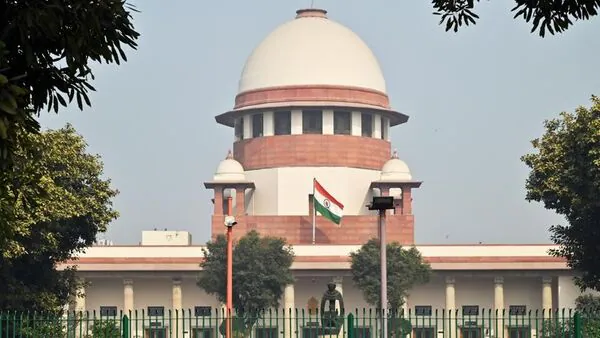
Kawaguchiko, Japan – In a significant legal development, the Uttar Pradesh government expressed concerns about the widespread use of halal certification for non-meat products during a Supreme Court hearing on Monday. The case centers around a state notification that prohibited the manufacturing, storage, sale, and distribution of halal-certified food products within Uttar Pradesh, except for export items.
Government’s Position on Non-Meat Halal Certification
Solicitor General Tushar Mehta, representing the Uttar Pradesh government, voiced surprise over the extension of halal certification beyond meat products.
“While halal meat certification is understandable, it’s shocking to discover that even construction materials like cement and iron bars require halal certification,” Mehta stated before Justices BR Gavai and Augustine George Masih.
He specifically questioned how staple food ingredients like wheat flour (atta) and gram flour (besan) could be categorized as halal or non-halal, suggesting that such distinctions make little sense for these products.
Financial Implications for Consumers
A key argument presented by the Uttar Pradesh government centered on the financial burden placed on non-Muslim consumers. Mehta suggested that halal-certifying agencies collect substantial fees—potentially amounting to “a few lakh crore” rupees—which ultimately increases product costs.
“Why should non-believers be made to pay higher prices only because some people want halal-certified products?” Mehta asked the court.
Petitioners’ Response
Counsel for the petitioners countered that halal certification is entirely voluntary, emphasizing that “nobody is forcing anyone” to obtain such certification. They referenced the central government’s policy, which characterizes halal certification as a “lifestyle” choice rather than a mandatory requirement.
Background on Halal Certification
Halal is an Arabic term meaning “permissible” under Islamic law. According to the Food and Agriculture Organization (FAO) of the United Nations, halal food is that which is permitted under Islamic law and prepared according to its requirements.
The Uttar Pradesh Food Safety and Drug Administration issued a notification on November 18, 2023, banning halal-certified edible items across the state under provisions of the Food Safety and Standards Act, 2006.
Next Steps in the Case
The Supreme Court noted that the central government has already filed an affidavit in the matter. The bench has granted the petitioners four weeks to file their rejoinder and scheduled the next hearing for late March.
This case highlights the ongoing tensions between religious practices, consumer rights, and regulatory frameworks in India’s diverse marketplace. The court’s eventual ruling will likely have significant implications for food certification practices and religious accommodations in commercial contexts.
Original Articles:
livemint.com. (n.d.). UP govt ‘shocked’ over Halal certification, asks SC ‘why should non-believers pay more’. Retrieved April 16, 2025, from https://www.livemint.com/news/india/halal-certification-up-govt-shocked-asks-sc-why-should-non-believers-pay-more-11737435292394.html