When Prayer Becomes Perilous: How Violence Against French Mosques Tears at Community Life
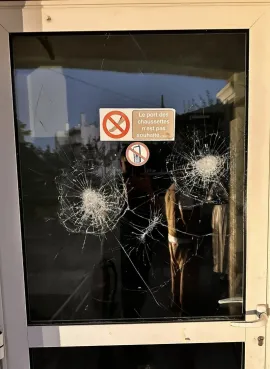
The broken glass crunched under Ahmed’s feet as he surveyed the damage at El Hidaya Mosque in Roussillon. It was supposed to be a peaceful Saturday morning, but masked vandals had other plans. By dawn, they had transformed his community’s sacred space into a crime scene – windows smashed, furniture overturned, and hate-filled leaflets plastered across walls where children once learned Arabic.
“This isn’t just about fixing windows,” Ahmed, a local community leader, might have said as he picked up scattered prayer books. “When they attack our mosque, they attack everything we’ve built here.”
The 5 a.m. assault in southeastern France represents far more than property damage. It’s the latest blow in an escalating campaign of intimidation that’s reshaping how French Muslims live, work, and worship.
The Ripple Effect: When Fear Enters the Kitchen
Just weeks earlier, another shocking scene unfolded at the Errahma Mosque in Villeurbanne. A burned Quran left at the entrance – a deliberate act of desecration that sent shockwaves through Muslim communities nationwide. These aren’t isolated incidents, they’re part of a pattern that’s quietly dismantling the infrastructure of Muslim life in France.
Consider Fatima, a mother of three who relies on her local mosque for more than just Friday prayers. Where does she turn now when she needs guidance about halal certification for her family’s groceries? The elderly imam who once advised her about which restaurants were truly halal-compliant now spends his time coordinating with police instead of serving his community.
“My children ask why we can’t go to mosque like we used to,” she might confide to friends. “How do I explain that some people hate us for our beliefs?”
Beyond Worship: The Hidden Casualties
The attacks are creating a domino effect that touches every corner of Muslim community life. Local halal restaurants report fewer customers as families avoid areas where tensions run high. The bustling weekend markets where vendors sold halal meat and specialty foods now feel subdued, their proprietors nervous about displaying Arabic signs too prominently.
Take Hassan’s family bakery, which has served the community for fifteen years. He used to rely on mosque announcements to advertise his traditional pastries during Ramadan. Now, with congregations smaller and gatherings canceled, his sales have plummeted. “It’s not just about money,” Hassan explains. “When the community is afraid, we all suffer.”
The Economics of Fear
The financial impact extends beyond individual businesses. Muslim families are changing their shopping patterns, driving further to find halal-certified products rather than supporting local vendors they no longer feel safe visiting. Religious tourism – Muslims visiting France for cultural and historical sites – has declined as news of the attacks spreads internationally.
Wedding halls that once hosted elaborate halal celebrations report cancellations. Islamic schools struggle with attendance as parents worry about their children’s safety. Even online halal food delivery services notice changes in ordering patterns, with customers increasingly requesting discrete packaging.
Community Under Siege
The psychological toll is perhaps the heaviest burden. Mosque committees now debate whether to install security cameras or hire guards – expenses that drain funds once used for community programs. Children’s Quran classes move to private homes. Women’s groups that once met openly to discuss everything from halal cooking to religious observance now gather in secret.
“We’re becoming invisible in our own neighborhoods,” observes Dr. Samira Benali, a sociologist studying French Muslim communities. “When you can’t practice your faith openly, when you’re afraid to speak Arabic in public, when your children are ashamed of their identity – that’s when a community truly suffers.”
Fighting Back with Food and Faith
Yet amid the darkness, sparks of resilience emerge. Some mosques have partnered with local halal restaurants to create “community kitchens” that serve both spiritual and nutritional needs. Interfaith groups organize “halal food festivals” to build bridges with non-Muslim neighbors. Social media networks help families locate safe spaces and trusted halal vendors.
Young French Muslims are using technology to fight back, creating apps that verify halal restaurants and crowdsourcing safety information about different neighborhoods. “They want to silence us,” says 22-year-old Layla, a computer science student developing a halal business directory. “But we’re finding new ways to stay connected.”
The Path Forward
As French authorities launch investigations into each attack, the Muslim community faces a choice: retreat further into isolation or find innovative ways to maintain their identity and practices. Early morning prayers continue, albeit behind reinforced doors. Halal businesses adapt, many moving online or into more diverse neighborhoods where acceptance runs deeper.
The broken windows at El Hidaya Mosque will be replaced, the hateful leaflets removed. But the real measure of victory won’t be found in repair bills or arrest reports. It will be in the day when French Muslim children can run to the mosque without fear, when halal vendors can proudly display their signs, and when the simple act of living according to one’s faith no longer requires courage.
Until then, every call to prayer becomes an act of defiance, every shared halal meal a declaration that this community – battered but unbroken – will endure.
Original Article:
Elqadim, K. (2025, July 2). Attackers target another mosque in France as anti-Muslim violence rises. Morocco World News. https://www.moroccoworldnews.com/2025/06/222062/attackers-target-another-mosque-in-france-as-anti-muslim-violence-rises/