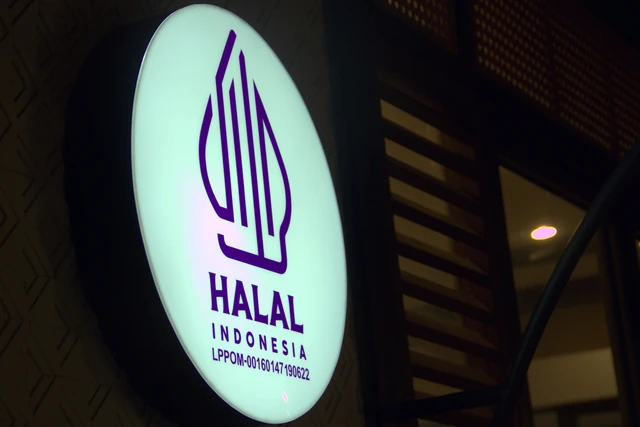
Indonesia’s Halal Certification Paradox: Why Awareness Remains Low Despite Muslim Majority
Source: Kumparan
JAKARTA – Indonesia presents a fascinating contradiction in the global halal landscape. As the nation housing the world’s largest Muslim population, one would expect widespread adoption and understanding of halal certification practices. However, the reality tells a different story—one where awareness of halal certification importance remains surprisingly limited among both business operators and consumers.
This phenomenon raises important questions about the disconnect between religious demographics and practical implementation of halal principles in commercial settings. The gap between Indonesia’s Islamic identity and its halal certification practices reveals deeper issues within the country’s approach to religious commerce and consumer protection.
The Staggering Numbers Behind the Gap
Recent data from the Halal Product Assurance Organizing Agency (BPJPH) reveals the true extent of Indonesia’s certification challenge. According to BPJPH Head Haikal Hassan, among the nation’s 66 million business operators, approximately 64 million currently operate without halal certification. This represents an overwhelming 97% of businesses lacking formal halal verification.
These figures become even more striking when considered against Indonesia’s demographic profile. In a country where Islamic principles should theoretically drive commercial practices, the near-universal absence of halal certification suggests fundamental systemic issues that extend beyond simple administrative oversight.
The Root Cause: Limited Halal Literacy
The kumparan Halal Forum 2025 brought attention to what many experts consider the primary driver of Indonesia’s certification gap: inadequate halal literacy. E.A Chuzaemi Abidin, Deputy for Development and Supervision at BPJPH, revealed that national halal literacy rates hover around just 40%.
“Halal literacy remains extremely limited in Indonesia in terms of socialization and education,” Chuzaemi explained during the forum. “We’re still at approximately 40% for halal literacy nationwide.”
This educational deficit creates a cascade of consequences throughout the halal ecosystem. When fundamental understanding of halal principles and their commercial applications is lacking, the entire certification framework becomes viewed as bureaucratic obligation rather than strategic business advantage.
The Perception Problem
The low literacy rates contribute significantly to how halal certification is perceived within Indonesia’s business community. Rather than recognizing certification as an opportunity to build consumer trust and access broader markets, many operators view it purely as administrative burden.
This perception barrier prevents businesses from recognizing the competitive advantages that halal certification can provide. Without understanding the potential benefits—including enhanced consumer confidence, expanded market access, and alignment with religious values—businesses naturally resist engaging with certification processes.
The challenge becomes self-perpetuating: limited understanding leads to poor perception, which results in low adoption rates, further reinforcing the view that certification is unnecessary or burdensome.
Consumer Behavior and Market Dynamics
The literacy challenge extends beyond business operators to encompass consumer behavior patterns. Sandra Hermanto, Head of the Center for Halal Product Assurance Study and Development at UIN Jakarta, identified concerning trends in Indonesian consumer awareness regarding halal products.
Despite their Muslim identity, many Indonesian consumers demonstrate limited attention to halal certification when making purchasing decisions. This behavior manifests across various consumption categories, from restaurant dining to product purchases, where certification status rarely influences consumer choice.
“Consumers have not prioritized halal certification,” Sandra observed. “When selecting products or dining at restaurants, they typically don’t verify whether the establishment holds halal certification, although some segments are beginning to develop this awareness.”
This consumer apathy creates a market environment where businesses face little demand-side pressure to pursue certification. Without consumer expectations driving certification requirements, businesses have minimal incentive to invest in the process.
The Educational Solution Framework
Addressing Indonesia’s halal certification awareness challenge requires comprehensive educational intervention across multiple levels. Sandra emphasized that educational institutions, particularly higher education establishments, must take leadership roles in building public consciousness about halal lifestyle importance.
Universities and colleges possess unique capabilities to influence societal attitudes through research initiatives, community engagement programs, and student education. These institutions can serve as catalysts for broader cultural transformation toward halal awareness.
“Educational institutions, especially universities, play crucial roles in building public awareness about halal lifestyle importance,” Sandra noted. “We need to educate our children, colleagues, and communities about caring for halal products.”
This educational approach must extend beyond formal academic settings to encompass community-based learning, professional development programs, and public awareness campaigns that reach diverse demographic segments across Indonesia’s vast archipelago.
Market-Driven Transformation Potential
The relationship between consumer awareness and business certification creates opportunities for market-driven solutions. As consumer consciousness increases, businesses naturally respond to market demands to maintain competitiveness and market share.
Sandra identified this dynamic as a potential catalyst for widespread certification adoption. When consumers begin prioritizing halal-certified products, businesses face market pressure to obtain certification or risk losing customers to certified competitors.
“When consumers develop awareness about choosing halal products, companies will need to pursue halal certification,” Sandra explained. “They’ll realize their products become unmarketable when consumers shift toward certified alternatives.”
This market-driven approach suggests that consumer education efforts could create self-reinforcing cycles where increased awareness drives business certification, which in turn reinforces consumer expectations for halal products throughout the marketplace.
Systemic Implications for Indonesia
The low halal certification awareness in Indonesia carries implications that extend far beyond individual business decisions or consumer choices. The phenomenon represents a systemic challenge that affects the country’s position in the rapidly growing global halal economy.
Indonesia’s massive Muslim population and strategic geographic location position it as a potential leader in halal industry development. However, the current awareness gap limits the nation’s ability to capitalize on growing global demand for halal products and services.
Furthermore, the certification gap creates quality assurance challenges that could impact consumer health and safety. Without proper halal certification systems, consumers lack reliable mechanisms for verifying product compliance with Islamic dietary laws and principles.
The Administrative Burden Misconception
One significant obstacle to certification adoption is the widespread perception that halal certification represents primarily administrative burden rather than business opportunity. This mindset stems from inadequate understanding of certification benefits and streamlined processes.
Changing this perception requires demonstrating tangible benefits of halal certification, including expanded market access, enhanced consumer trust, potential for premium pricing, and alignment with religious values. Educational efforts must emphasize these positive outcomes rather than focusing solely on compliance requirements.
Additionally, streamlining certification processes and reducing bureaucratic complexity can help shift perceptions from burden to opportunity. Government agencies and certification bodies must collaborate to create user-friendly systems that encourage participation rather than discourage engagement.
Building Collective Awareness
Addressing Indonesia’s halal certification awareness challenge requires coordinated efforts across multiple stakeholders. Government agencies, educational institutions, business associations, religious organizations, and community groups must collaborate to create comprehensive awareness-building initiatives.
These efforts should encompass multiple approaches, including formal education integration, public awareness campaigns, industry training programs, consumer education initiatives, and religious community engagement. Success depends on sustained commitment from all stakeholders and recognition that awareness building is a long-term process requiring patience and persistence.
The Path Forward
Indonesia’s halal certification awareness challenge, while significant, presents opportunities for transformative change. The country’s large Muslim population, growing economy, and strategic position in global halal markets create favorable conditions for rapid progress once awareness barriers are addressed.
Success requires acknowledging that halal certification represents more than administrative compliance—it embodies principles of quality assurance, consumer protection, religious observance, and economic development. By framing certification within these broader contexts, stakeholders can build momentum for widespread adoption.
The ultimate goal extends beyond simple certification numbers to encompass genuine integration of halal principles into Indonesian business culture and consumer behavior. This transformation would position Indonesia as a global leader in halal industry development while ensuring that the nation’s Muslim majority can confidently access products and services that align with their religious values.
Through sustained educational efforts, market-driven incentives, collaborative stakeholder engagement, and recognition of certification as business opportunity rather than administrative burden, Indonesia can bridge the gap between its demographic reality and halal certification implementation, creating a more conscious and confident halal marketplace for all participants.
Original article:
kumparan.com. (n.d.). Malaysia’s Abang J Aims to Enter Mindanao’s Growing Halal Food Market. Retrieved July 7, 2025, from https://m.kumparan.com/kumparanfood/mengapa-kesadaran-akan-sertifikasi-halal-di-indonesia-masih-rendah-25PdUQEpmg7