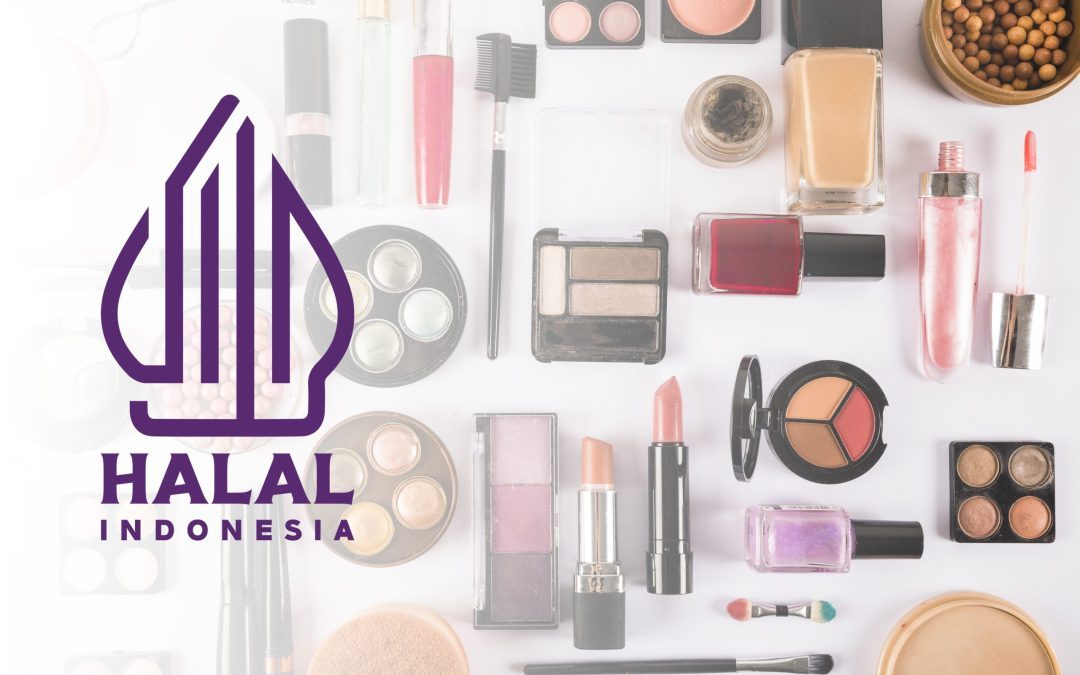
Halal Cosmetics Market Dynamics in Indonesia: Trends, Regulations, and Challenges
(Source: IHATEC)
Depok – Indonesia’s halal cosmetics market is entering a phase of significant growth, driven by increasing Muslim consumer awareness of product halal status and safety. Not only local products, but international brands are also entering the market with halal branding strategies. This phenomenon shows that halal cosmetics are no longer merely a religious requirement, but also serve as market differentiation tools and global positioning strategies.
Real examples include halal shampoo for hijab wearers now produced by many local brands, as well as imported products like Senka halal face wash from Japan entering the Indonesian market. This demonstrates that halal certification has become a key competitive factor for companies seeking to enter the domestic market.
Indonesia represents the world’s largest halal market with 87% of its population being Muslim. Fortune Business Insights (2024) estimates that the global halal cosmetics market value will reach USD 104.57 billion by 2032, with Southeast Asia as the primary driving force.
In Indonesia, consumer trends can be categorized as follows:
Skincare → The largest segment, especially facial brightening products, serums, and halal sunscreen.
Haircare → Halal shampoo specifically for hijab wearers dominates this category.
Decorative makeup → Halal lipstick and cushion products are popular among Gen Z consumers.
Personal care → Natural herbal-based halal soap and body lotion products.
These preferences show that halal is not merely a label, but is connected to other claims such as natural, organic, and cruelty-free, making consumers view halal as a guarantee of holistic quality covering religious, health, and environmental aspects.
However, with many brands using halal labels, “halal commodification” has occurred: halal is no longer a differentiator but has become a minimum standard. The main challenge is how brands can create added value beyond just the halal label, for example through product innovation, environmentally friendly packaging, and ethical narratives.
Halal Regulations in Indonesia: The Role of BPJPH
Indonesia has a strict halal regulatory system through BPJPH (Halal Product Assurance Organizing Agency). Halal certification is regulated under Law No. 33 of 2014 concerning Halal Product Assurance (JPH).
The halal certification process includes:
- Online Application → Business operators register through SIHALAL BPJPH system.
- Document Verification → Ingredients, formulas, and supply chains are reviewed.
- Audit by LPH (Halal Inspection Agency) → Production facility inspection is conducted.
- MUI Fatwa Session → Audit results are brought to MUI for halal status determination.
- Halal Certificate Issuance → Issued by BPJPH, valid for 4 years.
Implementation of these regulations makes Indonesia considered one of the countries with the most comprehensive halal system in the world. However, challenges arise because many illegal imported products enter without halal certificates, eroding consumer trust.
BPOM Approval Process for Cosmetics
Besides halal certification, cosmetics in Indonesia must obtain distribution permits from the Food and Drug Monitoring Agency (BPOM). This process is important because even if a product is already halal, safety and quality aspects must also be ensured.
The BPOM registration process includes:
- Online Registration in e-BPOM System – Companies must create accounts and register products online.
- Technical Document Upload – Including ingredient composition, formulas, product specifications, safety test results, and packaging labels.
- BPOM Evaluation – BPOM assesses product safety, quality, and claims aspects (such as halal claims, natural claims, or whitening claims).
- Sampling and Laboratory Testing (If Required) – Products may be tested to ensure compliance with submitted documents.
- Notification Number Issuance – If approved, BPOM issues a Notification Number (NA) that must be included on packaging.
This means that for cosmetics to be distributed in Indonesia, products must comply with two regulatory aspects:
- Halal (BPJPH + LPH + MUI) to ensure compliance with Islamic law.
- Legality (BPOM) to guarantee safety, quality, and consumer protection.
The combination of these two regulations strengthens consumer trust while filtering out illegal or counterfeit products that enter without official permits.
Case Study: Illegal Chinese Cosmetic Products
Despite Indonesia’s comprehensive regulations, there are still many parties distributing cosmetic products illegally. A South China Morning Post (2025) report found many Chinese cosmetic brands entering Indonesia without halal certification or BPOM permits. They focus more on quantity and low prices compared to regulatory compliance.
The implications of this problem include:
- Damaging consumer trust in halal products.
- Health risks due to bypassing BPOM testing.
- Creating unfair competition for compliant producers.
This condition shows that halal branding without official certification equals “halal washing,” which can erode the halal industry’s reputation.
Indonesia’s Opportunities in the Global Market
Indonesia has the potential to become a producer and export hub for halal cosmetics. Brands like Wardah, Make Over, and Emina have successfully penetrated global markets with strong halal narratives. Government support through Indonesia as the world’s halal center 2024-2030 further strengthens this positioning.
Strengthening strategies include:
- Export to Middle East & Europe with internationally recognized halal standards.
- Innovation in tropical natural ingredients (aloe vera, coconut, spices) as differentiation.
- R&D collaboration with universities for premium halal product development.
Global Cosmetics Market Opportunities in Indonesia
With more than 230 million Muslims, Indonesia has become a primary target for halal cosmetics exports from various countries such as Malaysia, South Korea, Japan, and the United Arab Emirates. These countries view Indonesia not only as a potential market, but also as a strategic gateway to Southeast Asian and Middle Eastern markets.
South Korean brands (K-Beauty) such as Innisfree, Etude House, and Laneige have begun adapting their products to Indonesian halal regulations, given the high interest of local consumers in Korean beauty products. Japanese productsare also responding to this trend, with brands like Senka and Shiseido developing special halal lines for the Muslim market. Meanwhile, Gulf countries are targeting Indonesia with natural and halal-based cosmetics, in line with the increasingly strong global halal lifestyle.
This potential is also strengthened by market projections: according to Fortune Business Insights (2024), the global halal cosmetics market value is estimated to reach USD 104.53 billion by 2030, with Indonesia predicted to be one of the largest absorbers.
Conversely, Indonesia has also become a highly attractive market for global cosmetics producers due to several factors:
- Large Young Muslim Population → Muslim millennials and Gen Z have high preferences for halal products, yet remain open to international brands. They desire a combination of global quality with halal assurance.
- International Brand Adaptation → Examples include Senka, Kao, and The Body Shop, which have begun launching halal products in Indonesia, affirming global awareness that halal certification is key to entering the domestic market.
- Collaboration with Local Industry → Foreign producers can collaborate with local contract manufacturers (maklon) to accelerate halal certification and facilitate distribution.
- Global Halal Beauty Trends → Southeast Asia is projected to become the center of halal cosmetics growth. Producers who comply with halal regulations earlier will have competitive advantages.
- Regional Market Expansion → Indonesia has the potential to become a distribution hub to ASEAN and Middle Eastern markets, as Indonesian halal certification is considered among the strictest and internationally recognized.
However, these opportunities must still be balanced with clear regulatory compliance strategies. The case of Chinese cosmetics products entering without halal certification or BPOM permits serves as an important lesson. Without official compliance, foreign products risk market rejection and losing the trust of Indonesian consumers who are increasingly critical of halal claims.
References
Fortune Business Insights. (2024). Halal Cosmetics Market Size, Share & Trends Analysis Report. Retrieved from https://www.fortunebusinessinsights.com/halal-cosmetics-market-106602
South China Morning Post. (2025). Are Chinese-made skincare brands downplaying their origins to appeal to Southeast Asians? Retrieved from https://www.scmp.com/week-asia/lifestyle-culture/article/3261396/are-chinese-made-skincare-brands-downplaying-their-origins-appeal-southeast-asians
Rahman, N., & Tieman, M. (2021). Cosmetics and personal care products: Halal perspectives. Journal of Islamic Marketing, 12(9), 1661–1678.
Prabowo, H., & Suhaeni, S. (2022). Halal certification and consumer trust in the Indonesian cosmetic industry. Indonesian Journal of Business and Entrepreneurship, 8(1), 45–56.
LPPOM MUI. (2023). Halal Cosmetics Trends in Indonesia and Their Challenges. Halal Journal, 6(2), 101–115.
BPJPH. (2022). Guidelines for Halal Certification of Cosmetic Products. Jakarta: Ministry of Religious Affairs RI.