How Social Media Drives Muslim Consumer Interest in Halal Cosmetic Purchases
JAKARTA – The motivation for Muslims to consume halal products represents a fundamental religious imperative that extends far beyond food and beverages to encompass all products and services, including cosmetics. The Quranic verse “And Allah makes lawful for them all good things and prohibits all evil things” (QS Al-A’raf:157) establishes the theological foundation for this comprehensive approach to halal consumption.
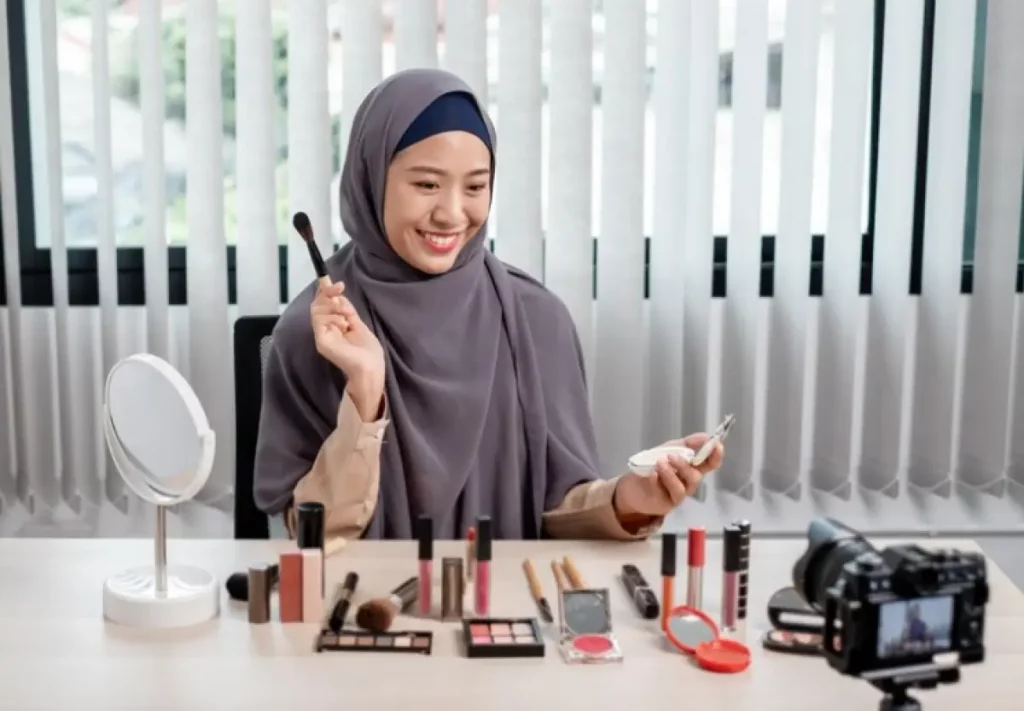
In today’s digital age, social media has emerged as a dominant force in society, effectively displacing traditional communication channels such as television and radio. Consumers increasingly turn to various social media platforms—Twitter, TikTok, Instagram, YouTube, and others—to obtain information, including details about halal cosmetic products.
Research Findings: Social Media’s Impact on Halal Cosmetic Purchasing
Recent research has demonstrated that social media platforms significantly stimulate interest in purchasing halal cosmetics among Muslim consumers. The growth of digital marketing has compelled companies to fundamentally transform their approach to customer engagement, with social media providing information that can substantially alter consumer behavior patterns.
This phenomenon has given rise to new marketing strategies characteristic of the digital era, commonly referred to as Social Media Influencer (SMI) marketing. The persuasive power of SMIs in affecting their audiences is undeniable, as supported by data from Think with Google indicating that 70% of teenagers feel closer connections to YouTube influencers than to traditional television celebrities.
The Role of Social Media Influencers in Product Decision-Making
Internet celebrities and influencers typically provide commentary, evaluations, and comprehensive reviews of specific products. These reviews become crucial considerations for consumers when making purchasing decisions. However, research reveals interesting nuances in how Muslim consumers in Indonesia respond to influencer marketing for halal cosmetics.
Credibility vs. Trust Dynamics
Surprisingly, influencer credibility does not significantly impact Muslim consumers’ purchasing intentions for halal cosmetics. Indonesian consumers of halal cosmetics tend to overlook influencer credibility, perceiving many influencers as lacking sufficient knowledge or appeal to meaningfully influence their purchasing decisions.
Conversely, trust emerges as a critical factor in consumer decision-making. Social media users demonstrate stronger support for trust-based relationships with influencers. Product reviews that build genuine trust among customers can serve as significant triggers for encouraging purchase intentions.
Behavioral Control as a Key Influence Factor
Another important element affecting social media users is behavioral control. Influencers who demonstrate good behavioral control can effectively influence halal cosmetic purchase intentions among their followers. This suggests that consumers value influencers who present themselves as reliable, consistent, and principled in their product recommendations.
The Surprising Role of Religious Motivation
One of the most remarkable findings from the research challenges conventional assumptions about religious motivation in halal product purchasing. Despite the fact that halal consumption represents a religious requirement, religion itself does not emerge as the primary driver in halal cosmetic purchasing decisions.
Practical Considerations Over Religious Obligations
This phenomenon mirrors consumer behavior in other sectors. For example, consumers often prioritize taste when deciding to purchase halal food products, even when religious considerations should theoretically take precedence. Similarly, many Muslim consumers choose Korean cosmetics without necessarily verifying their halal certification status, suggesting that other factors—such as perceived quality, brand reputation, or aesthetic appeal—can override religious considerations.
Digital Marketing Strategy Implications
The research findings have significant implications for companies developing digital marketing strategies targeting Muslim consumers:
Trust-Building Over Credibility-Building
Companies should focus on building genuine trust rather than simply showcasing influencer credentials or expertise. Authentic, honest reviews and transparent communication appear more effective than highlighting technical qualifications or industry recognition.
Behavioral Consistency in Influencer Selection
Brands should prioritize partnering with influencers who demonstrate consistent behavioral patterns and values alignment rather than focusing solely on follower counts or engagement rates.
Multi-Factor Appeal Strategy
Given that religious motivation alone does not drive purchasing decisions, companies should develop comprehensive marketing approaches that address multiple consumer motivations, including quality, aesthetics, functionality, and value proposition alongside halal certification.
The Evolution of Consumer Behavior in Digital Spaces
The research illuminates how digital platforms have fundamentally altered consumer decision-making processes. Traditional marketing assumptions—such as the idea that religious consumers primarily make faith-based purchasing decisions—require reassessment in light of social media’s influence.
Information Accessibility and Choice Complexity
Social media provides consumers with unprecedented access to product information, reviews, and alternatives. This abundance of information creates more complex decision-making processes where religious considerations compete with numerous other factors for consumer attention.
Community and Peer Influence
Social media platforms create virtual communities where peer opinions and experiences can significantly influence individual purchasing decisions. These community dynamics can sometimes override traditional religious guidance or personal religious convictions.
Implications for Halal Cosmetic Industry
The findings suggest several strategic directions for the halal cosmetic industry:
Integrated Marketing Approaches
Companies should develop integrated marketing strategies that acknowledge the multi-faceted nature of consumer motivation. While halal certification remains important, it should be presented alongside other compelling product attributes.
Authentic Influencer Partnerships
Brands should seek partnerships with influencers who demonstrate genuine engagement with halal principles rather than simply hiring popular personalities without relevant credibility or authentic commitment to halal values.
Trust-Based Communication Strategies
Marketing communications should prioritize building long-term trust relationships with consumers rather than focusing solely on immediate sales conversions.
Future Research Directions
This research opens several avenues for future investigation:
- Cross-Cultural Comparisons: How do these patterns vary across different Muslim-majority countries and communities?
- Generational Differences: Do younger and older Muslim consumers respond differently to social media influences on halal product purchasing?
- Platform-Specific Effects: Do different social media platforms (Instagram vs. TikTok vs. YouTube) have varying impacts on halal cosmetic purchase intentions?
Conclusion: Navigating Complex Consumer Motivations
The research reveals that Muslim consumer behavior regarding halal cosmetics is more complex than traditional religious-commercial frameworks might suggest. While social media effectively drives purchase intentions, the mechanisms through which this occurs—emphasizing trust over credibility and behavioral control over religious obligation—challenge conventional marketing wisdom.
For companies operating in the halal cosmetic space, success requires understanding and addressing this complexity through nuanced marketing strategies that acknowledge the multifaceted nature of contemporary Muslim consumer decision-making. The digital age has created new pathways for influence that transcend traditional religious and commercial boundaries, requiring adaptive approaches that speak to consumers’ diverse motivations and decision-making processes.
As the halal cosmetic industry continues to grow, companies that can effectively navigate these complex consumer dynamics while maintaining authentic commitment to halal principles will be best positioned for sustained success in an increasingly competitive and digitally-mediated marketplace.
Original Article:
Universitas Airlangga. (2025, September 21).Bagaimana Media Sosial dapat Memicu Niat Konsumen Muslim dalam Pembelian Kosmetik Halal? Retrieved from https://unair.ac.id/bagaimana-media-sosial-dapat-memicu-niat-konsumen-muslim-dalam-pembelian-kosmetik-halal/