Laboratory Testing Essential for Authentic Vegan Cosmetics Certification
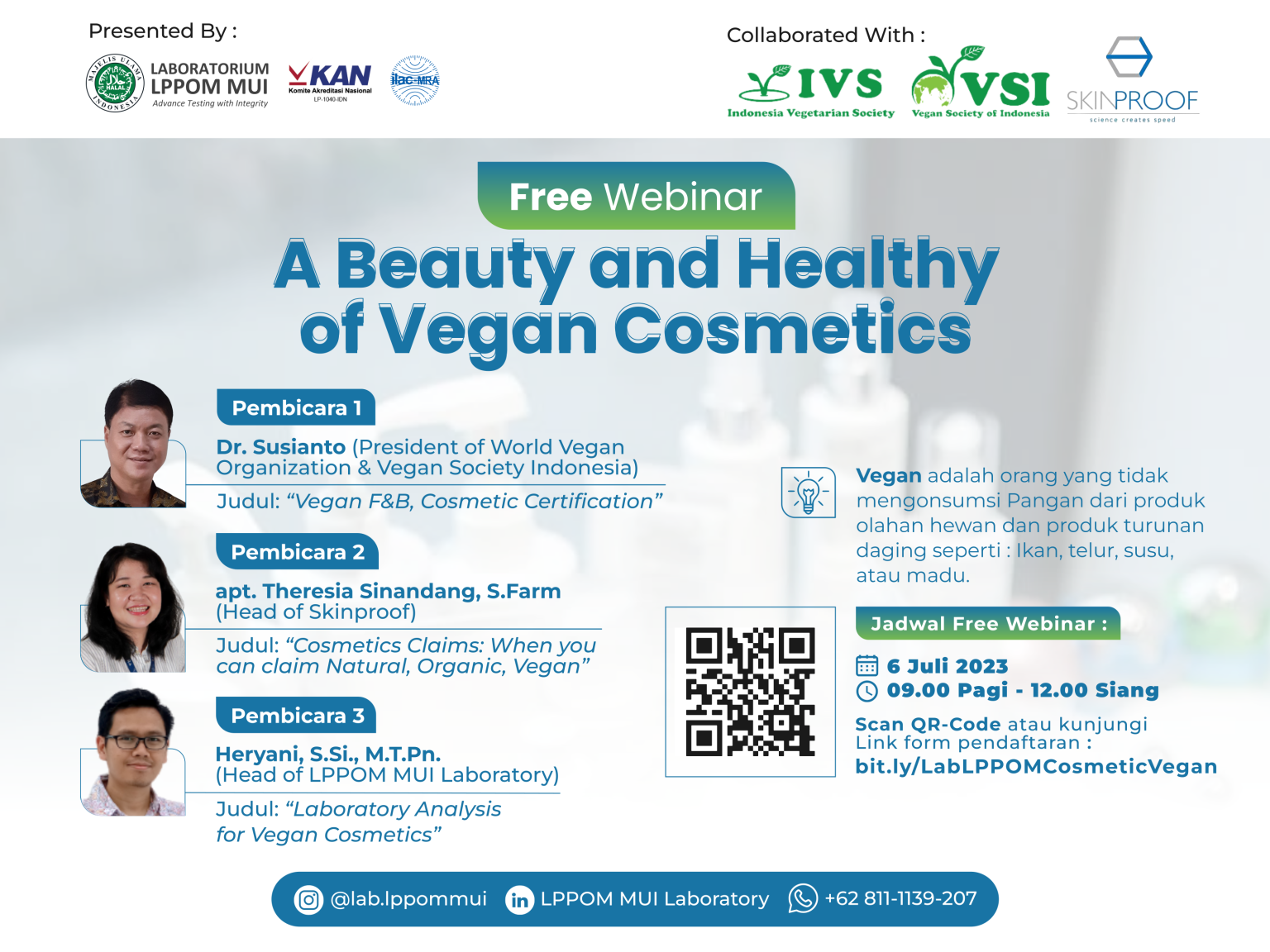
JAKARTA – The growing demand for vegan cosmetics has highlighted the critical need for rigorous laboratory testing to ensure product authenticity and prevent consumer deception. Industry experts emphasized this necessity during a recent webinar titled “A Beauty and Healthy of Vegan Cosmetics,” organized by LPPOM MUI in partnership with the World Vegan Organization, Vegan Society Indonesia, and Skinproof.
Laboratory Role in Preventing Vegan Product Fraud
Heryani, S.Si., M.TPn., Head of LPPOM MUI Laboratory, underscored laboratories’ fundamental importance in vegan certification processes. These facilities serve as guardians against fraudulent claims while adding significant commercial value to businesses seeking authentic vegan credentials.
The expansion of veganism beyond dietary choices into cosmetics and personal care products has created new challenges for verification and authentication. As consumers increasingly seek animal-free alternatives, the potential for misleading claims has grown correspondingly.
Market Growth and Regional Trends
Current market analysis reveals substantial growth in the vegan cosmetics sector. According to Mordor Intelligence data presented at the webinar, annual revenue growth for vegan cosmetics reaches approximately 6.5%, with European and North American markets leading adoption rates.
In Asia, India dominates the vegan cosmetics market, while Indonesia shows emerging potential with increasing consumer interest in plant-based beauty products. This regional growth pattern reflects broader shifts in consumer consciousness regarding animal welfare and environmental sustainability.
Common Misconceptions in Vegan Product Classification
Apt. Theresia Siandang, S. Farm, Head of Skinproof, addressed widespread confusion between vegan and natural cosmetics categories. Many consumers incorrectly assume that natural products automatically qualify as vegan, creating market confusion and potentially misleading purchasing decisions.
“While vegan products are inherently natural due to their plant-based origins, natural products are not necessarily vegan,” Siandang explained. She cited honey-containing cosmetics as a common example where products claim vegan status despite containing animal-derived ingredients.
This misclassification represents a fundamental misunderstanding of vegan principles, which explicitly exclude all animal-derived components, regardless of how they are obtained or processed.
Business Opportunities and Market Positioning
Dr. Susianto, President of the World Vegan Organization and Vegan Society Indonesia, characterized vegan products as representing extraordinary business opportunities. The rapid market expansion, described as rising “like a rocket,” encompasses cosmetics alongside food products, creating substantial commercial potential for certified vegan brands.
Proper vegan certification becomes crucial for effective marketing and consumer trust building in this competitive landscape. Authenticated vegan credentials can differentiate products in crowded markets while commanding premium pricing from conscious consumers.
Halal Considerations in Vegan Cosmetics
An important distinction emerged regarding the relationship between vegan and halal certifications. While vegan products exclude animal ingredients, this does not automatically guarantee halal compliance. Potential issues include the use of non-halal auxiliary materials, animal enzymes in processing, or alcohol-based solvents, emulsifiers, antiseptics, and preservatives.
These overlapping but distinct certification requirements create additional complexity for manufacturers seeking to serve both vegan and halal consumer segments. Comprehensive testing becomes essential to verify compliance with multiple certification standards.
Raw Material Identification and Contamination Prevention
The certification process begins with thorough raw material identification, as many cosmetic ingredients may contain hidden animal derivatives or face contamination risks during production. Laboratory analysis provides the only reliable method for detecting these potential issues before final product manufacturing.
This proactive approach prevents costly recalls and protects brand reputation while ensuring genuine compliance with vegan standards. The complexity of modern cosmetic formulations makes visual inspection or documentation review insufficient for complete verification.
Regulatory Framework and DNA Analysis Requirements
Indonesian regulations establish specific requirements for vegan product claims through BPOM RI Regulation Number 31 of 2018, Article 64, concerning Processed Food Labels. These rules mandate that any vegan logo or labeling must be supported by deoxyribonucleic acid (DNA) analysis to verify the absence of animal-derived components.
This regulatory framework provides legal backing for laboratory testing requirements while protecting consumers from false advertising. DNA analysis offers definitive proof of ingredient origins, eliminating ambiguity in vegan certification processes.
Laboratory Testing Benefits and Quality Assurance
Comprehensive laboratory testing serves multiple functions beyond regulatory compliance. These analyses prevent fraudulent claims about ingredient sources while providing valuable data for marketing and consumer communication. Testing results offer concrete evidence of product authenticity that can be used in promotional materials and certification documentation.
Furthermore, laboratory data enables ongoing quality control monitoring, ensuring consistent vegan compliance throughout production runs. This systematic approach builds consumer confidence while protecting manufacturers from potential legal challenges related to false advertising claims.
Industry Implications and Future Development
The emphasis on laboratory verification reflects the vegan cosmetics industry’s maturation from a niche market to a mainstream commercial sector. As growth continues and regulatory oversight increases, standardized testing protocols will likely become industry requirements rather than optional quality measures.
Companies entering the vegan cosmetics market must prepare for comprehensive testing requirements while budgeting for ongoing verification costs. However, the investment in proper certification can yield significant returns through premium pricing, market differentiation, and consumer loyalty in this rapidly expanding sector.
The integration of laboratory testing into vegan certification processes represents a critical evolution in product authentication, ensuring that the growing consumer demand for ethical cosmetics is met with genuine, verified products rather than misleading marketing claims.
Original Article:
LPPOM MUI. (2025, September 23). LPPOM MUI Laboratory Supports Halal Vegan Certification. Retrieved from https://halalmui.org/en/lppom-mui-laboratory-supports-vegan-certification/