Saudi Arabia’s New Generation of Architects Prioritizes Cultural Identity Amid Rapid Development
JAKARTA – As Saudi Arabia undergoes unprecedented urban transformation, a new wave of young architects is taking a thoughtful approach to development, focusing on cultural authenticity, community needs, and environmental context rather than simply chasing headline-grabbing mega-projects.
Design Takes Center Stage
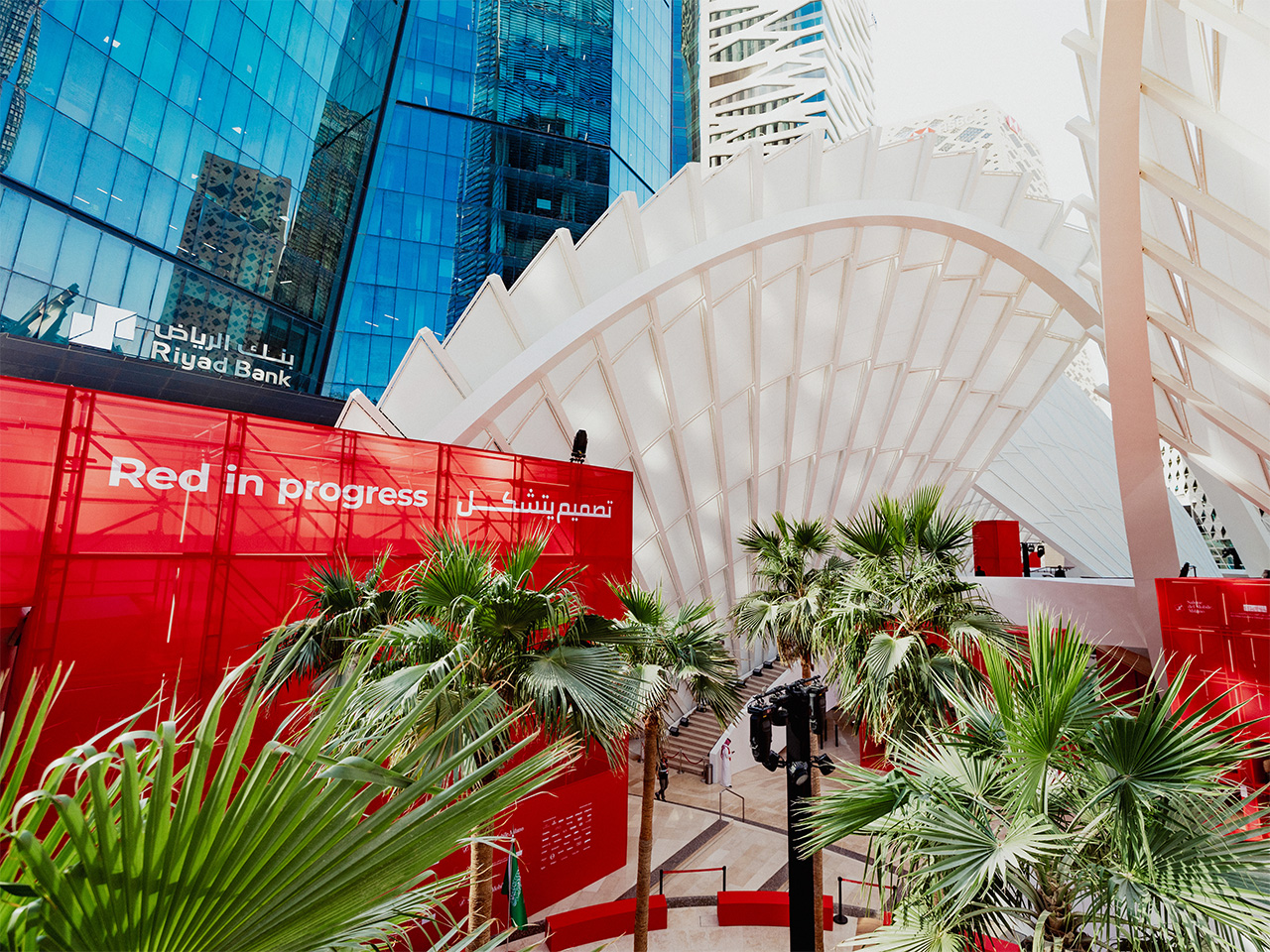
The kingdom’s commitment to design was highlighted by Salone del Mobile’s recent debut in Riyadh, held at the King Abdullah Financial District (KAFD). The three-day “Red in progress” event, featuring 38 Italian design brands, served as a preview for a full-scale edition planned for November 2026. Beyond business discussions, the event provided insight into the evolving perspectives of Saudi Arabia’s design community.
This growing emphasis on architecture reflects the country’s broader cultural shift, supported by the Design & Architecture Commission, established in 2020 under the Ministry of Culture, which itself was created just two years prior.
Returning Talent with Fresh Perspectives
Many young Saudi architects who studied and worked abroad in cities like London, New York, and Bristol are now returning home, bringing international experience while seeking deeper connections to their homeland.
Landscape designer Lulu Almana spent six years with Arup in London before relocating back to Saudi Arabia. Working on Saudi projects from abroad made her realize the importance of being physically present. She felt compelled to play a more direct role in shaping the country’s evolving urban spaces.
Almana co-curated “Maghras: A Farm For Experimentation” for Saudi Arabia’s debut at the Milan Triennale, a project based in Al Ahsa—the world’s oldest and largest oasis. The initiative combines workshops, research, and discussions to examine the changing landscape through a community-centered lens.
Currently running her own practice, Almana is developing Rufaida Park in Dammam, scheduled to open in mid-January. The project addresses the needs of older residents with features including indigenous trees, medicinal plants, outdoor fitness equipment, and social gathering spaces for tea.
Documenting Saudi Architectural Heritage
Abdulrahman Gazzaz, who co-founded Jeddah’s Bricklab with his brother Turki, is working to expand the visual language of Saudi architecture beyond commonly used motifs. His research involves documenting everyday architectural elements found throughout Saudi cities.
After noticing that educational institutions primarily feature architectural literature from Europe but rarely from Saudi Arabia, Gazzaz authored “Saudi Modern: Jeddah in Transition 1938-1964” to create a comprehensive record of the kingdom’s architectural evolution.
Bricklab has concentrated much of its work on adaptive reuse projects, including Attaché, a transformed former stable in Riyadh’s Diplomatic Quarter. The firm also undertakes new construction projects, such as recent work for the Ministry of Culture in the capital’s Jax district.
Balancing Speed with Authenticity
The rapid pace of development presents unique challenges for architects contemplating questions of identity and cultural continuity. Abdullah Alazzaz, creative director at Azaz Architects—originally founded by his sister Shahad in 2017—acknowledges the complexity of determining which historical references to draw upon when seeking authentic design inspiration.
Having studied civil engineering in New York and worked in London’s financial sector before returning home, Alazzaz appreciates the opportunity to contribute to projects ranging from residential developments to large-scale initiatives, viewing it as a chance to shape the country’s future.
Expanding Opportunities for Women
The architectural profession in Saudi Arabia is experiencing significant demographic shifts. As more educational programs for women launch across the kingdom, a new generation of female architects is emerging with strong interest in shaping the built environment.
Noura Ghabara, assistant professor of architecture at King Abdulaziz University in Jeddah, emphasizes the market’s substantial need for female architects. She notes that women bring different perspectives that complement rather than compete with male colleagues, enriching the overall design discourse.
Ghabara, who led a masterclass on reimagining the built environment’s future, stresses that education forms the foundation for Saudi Arabia’s architectural evolution. She acknowledges that finding definitive answers to questions of identity and development will require time, but establishing strong educational foundations now will benefit future generations.
Looking Forward
As Saudi Arabia pursues its Vision 2030 objectives—including attracting 150 million annual tourists—the country’s emerging architectural voices are ensuring that rapid growth doesn’t come at the expense of cultural authenticity, community well-being, and environmental sustainability. Their work represents a measured counterpoint to the mega-projects dominating international headlines, focusing instead on creating spaces where people actually want to live.
Original Article:
Monocle. (2025, December 19). Beyond the Giga projects, a new generation of Saudi Arabian architects is getting introspective. Retrieved from https://monocle.com/design/architecture/saudi-arabia-development/