Yemen Crisis Deepens as Saudi Arabia Confronts Southern Separatists Over Territory Seizure
JAKARTA – Riyadh has issued a stern warning to Yemen’s Southern Transitional Council, demanding the immediate withdrawal of separatist forces from two strategic eastern provinces seized earlier this month, in a development that threatens to fracture the already fragile coalition fighting Houthi rebels.
Saudi Kingdom Condemns Military Action
The Saudi Foreign Ministry released a statement Thursday characterizing the STC’s military campaigns as an unwarranted aggression following the group’s December takeover of Hadramout and al-Mahra—both oil-wealthy regions critical to regional stability.
Saudi officials emphasized the need for unity among Yemeni groups, urging all parties to show restraint and refrain from actions that could undermine peace and trigger unwanted repercussions.
According to Riyadh, diplomatic initiatives are currently in progress to facilitate the STC’s military withdrawal to their former positions and transfer control of military installations to the National Shield Forces. The kingdom expressed optimism that separatist forces would retreat promptly and systematically.
Separatist Expansion Threatens Stability
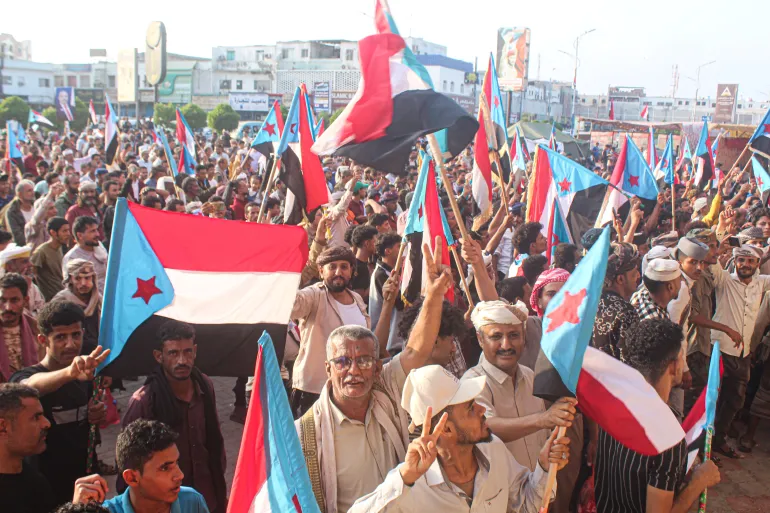
The UAE-supported STC rapidly advanced into both provinces in early December, capturing crucial petroleum infrastructure, government facilities, and border control points with little opposition. The group additionally seized Aden’s presidential compound, which serves as the temporary headquarters for Yemen’s internationally recognized administration.
Since 2015, both Saudi Arabia and the UAE have supported Yemen’s government against Iranian-backed Houthi forces. Despite a joint Saudi-Emirati diplomatic mission to Aden on December 12, negotiations have yet to yield meaningful progress.
Strategic Concerns for Gulf Nations
Hadramout shares a 684-kilometer border with Saudi Arabia, making the province strategically vital for Saudi national interests. Similarly, Oman regards al-Mahra—located on its border—as crucial to its security concerns.
Both territories contain significant trade corridors and energy assets that the STC views as fundamental to establishing an autonomous southern nation.
Historical Context and Future Ambitions
Established in 2017, the STC aims to restore South Yemen’s independence—a nation that existed from 1967 until reunification in 1990. Despite STC leader Aidarous al-Zubaidi’s position on Yemen’s Presidential Leadership Council, he has increasingly operated autonomously from the government.
Rather than retreating, the STC has extended operations into Abyan province and announced ambitions to capture Sanaa from Houthi control. Al-Zubaidi recently declared that the southern region faces a pivotal moment demanding efforts to construct “the institutions of the future South Arabian state.”
Warning from Analysts
Experts caution that this escalation could destroy Yemen’s delicate ceasefire agreement and inadvertently strengthen the Houthis, who have maintained control over northern Yemen and the capital since 2014.
Original Article:
Aljazeera. (2025, December 26). Saudi Arabia demands Yemeni separatists leave seized governorates. Retrieved from https://www.aljazeera.com/news/2025/12/25/saudi-arabia-demands-yemeni-separatists-leave-seized-governorates