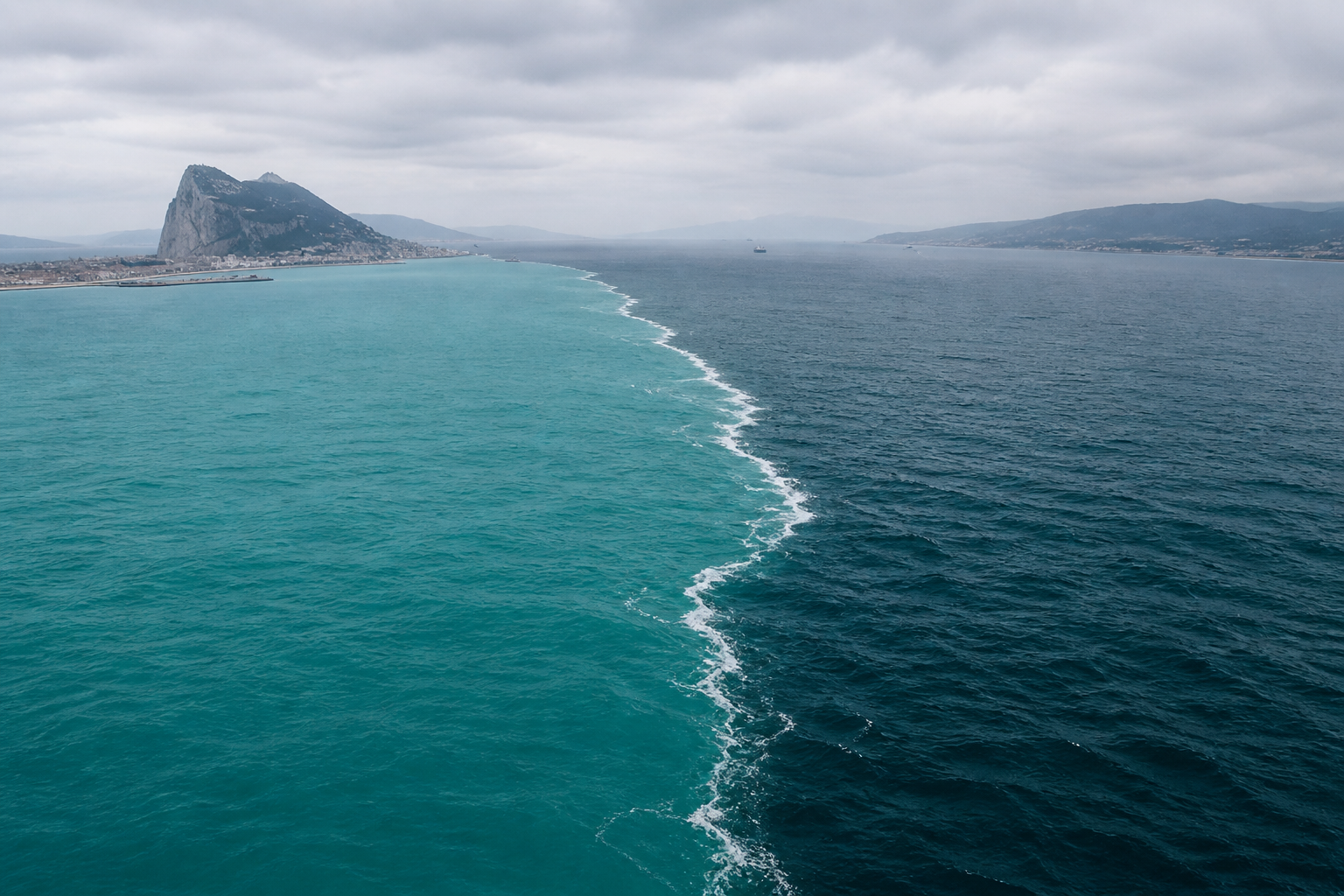
The Meeting of Seawater and Freshwater: A Harmony Between Science and the Qur’an
The Meeting of Seawater and Freshwater: A Harmony Between Science and the Qur’an
Introduction
Water is a very important element for life on Earth. Without water, living things cannot survive. Besides being a source of life, water also contains many interesting natural phenomena, one of which is the meeting of seawater and freshwater that do not immediately mix.
In general, simple logic suggests that two liquids will mix when they meet. However, in reality, there is a unique phenomenon where seawater and freshwater still have a boundary even though they are in the same area. This can be found in river mouths or straits where two different bodies of water meet.
Interestingly, this phenomenon is not only explained by modern science but is also mentioned in the Qur’an as a sign of Allah’s greatness. This shows a connection between science and religion in understanding the universe.
The Phenomenon According to Science
In science, the reason seawater and freshwater do not immediately mix is explained by several physical and chemical factors. One main factor is the difference in salinity (salt content). Seawater has a high salt content, while freshwater has very little or none.
There is also a difference in density. Seawater, which contains more salt, is denser than freshwater. As a result, denser water tends to stay below, while lighter water stays above, so they do not mix quickly.
Other factors include temperature, ocean currents, and surface tension. Temperature differences affect water density, while currents control the movement of water masses. Surface tension also helps maintain the boundary between the two.
In oceanography, this phenomenon is known as a halocline, which is a boundary layer between two water masses with different salinity. This layer slows down the mixing process.
The Phenomenon According to the Qur’an
The Qur’an describes this phenomenon in several verses, including:
مَرَجَ الْبَحْرَيْنِ يَلْتَقِيٰنِۙ ١٩
بَيْنَهُمَا بَرْزَخٌ لَّا يَبْغِيٰنِۚ ٢٠
He merges the two bodies of (fresh and salt) water, yet between them is a barrier they never cross. (QS. Ar-Rahman: 19–20)وَهُوَ الَّذِيْ مَرَجَ الْبَحْرَيْنِ هٰذَا عَذْبٌ فُرَاتٌ وَّهٰذَا مِلْحٌ اُجَاجٌۚ وَجَعَلَ بَيْنَهُمَا بَرْزَخًا وَّحِجْرًا مَّحْجُوْرًا ٥٣
And He is the One Who merges the two bodies of water: one fresh and palatable and the other salty and bitter, placing between them a barrier they cannot cross. (QS. Al-Furqan: 53)
Scholars have explained these verses in different ways. Some say that Allah created a divine barrier (barzakh) that prevents the waters from mixing. Others explain that the natural differences in properties such as taste, content, and physical characteristics are the reason why they do not mix easily.
Thus, the Qur’an not only describes this phenomenon but also shows that nature follows laws set by Allah.
Explanation and Examples
A real example of this phenomenon can be found in the Strait of Gibraltar, where the Atlantic Ocean meets the Mediterranean Sea. These two bodies of water have different characteristics in salinity, temperature, and density.
Water from the Mediterranean Sea has higher salt content, making it denser and causing it to move below. Meanwhile, water from the Atlantic Ocean is lighter and stays above. This difference prevents them from mixing quickly, and sometimes the boundary can even be seen through differences in water color.
Although they meet, mixing still happens slowly through diffusion. This shows that the boundary is not a physical wall, but a result of complex physical and chemical differences.
This phenomenon proves that natural laws work in an orderly and systematic way, and it also shows harmony between scientific explanations and what is mentioned in the Qur’an.
Conclusion
The meeting of seawater and freshwater without immediate mixing is a natural phenomenon explained by both science and the Qur’an. Scientifically, it happens because of differences in salinity, density, temperature, currents, and surface tension, which create a natural boundary between the two.
Meanwhile, the Qur’an describes a “barzakh” as a barrier between the two waters. Scholars interpret this as either a divine rule or as the result of natural differences in water characteristics.
In conclusion, this phenomenon shows that science and religion are not in conflict, but instead complement each other in explaining the order and beauty of the natural world.
Source
Al Khair, A. D., Azizah, F. D., & Salsabila, N. (2024). Fenomena dua air laut dan tawar yang bertemu tapi tidak bersatu. Journal Islamic Education. https://maryamsejahtera.com/index.php/Education/article/view/1063
Syafina, K., Putri, R. A., Adibatuzzakiyah, G. W., Saleha, N., & Lestari, D. (2023). Fenomena air laut dan air tawar berdasarkan surah Ar-Rahman ayat 19-20 dan Al-Fur’qan ayat 53. Jurnal Religion: Jurnal Agama, Sosial, dan Budaya. https://maryamsejahtera.com/index.php/Religion/article/view/96
Aulia, N. R., & Hidayah, S. A. N. (2024). Pembuktian ayat-ayat Al-Qur’an tentang perbedaan warna air laut dalam perspektif fisika. Religion: Jurnal Agama, Sosial, dan Budaya. https://maryamsejahtera.com/index.php/Religion/article/view/1034