The Relevance of Gas Use in Halal Slaughter: Maintaining Sharia Integrity Amid Poultry Industry Modernization
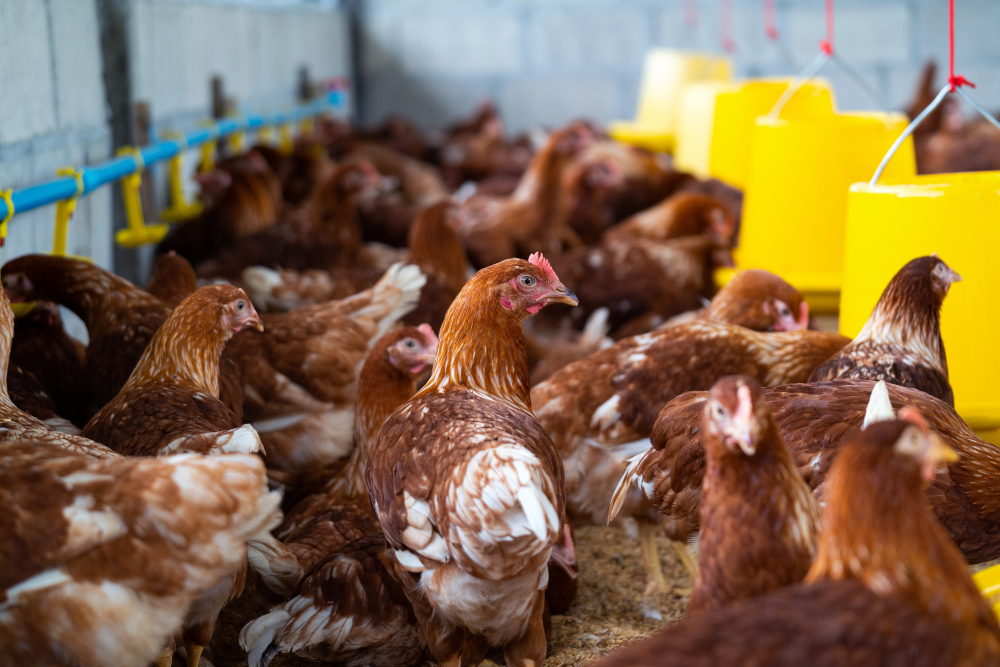
Carbon dioxide (CO₂), nitrogen (N₂), and argon are among the gases utilized in modern poultry processing systems prior to slaughter. Through Controlled Atmosphere Stunning (CAS) technology, gas exposure can be deployed to induce unconsciousness (stunning) or, under specific operational parameters, cause death (gas killing) before the slaughter process takes place. This technology is increasingly being adopted within the poultry industry due to its ability to enhance production efficiency, minimize the direct handling of livestock, and support the implementation of animal welfare principles.
As this technology advances, the focus of the halal industry has shifted beyond the act of slaughter itself to the stages immediately preceding it. The relevance of gas usage relative to halal standards has emerged as a critical issue, particularly when gas exposure risks becoming the primary cause of animal death prior to slaughter. Within this context, the core question is not merely whether the technology is modern or efficient, but whether its application consistently adheres to the foundational tenets of halal slaughter.
Why Do Industries Utilize Gas-Based Methods?
The growing global demand for poultry meat drives slaughterhouses to adopt highly automated, efficient, and consistent technologies. Among these developments is Controlled Atmosphere Stunning (CAS), a system that employs gas mixtures to render poultry unconscious before they are slaughtered.
Compared to traditional electrical stunning methods, CAS allows poultry to remain inside their transport crates during the process. This significantly reduces direct handling and shackling, both of which are widely recognized as primary causes of stress and physical injury to poultry prior to slaughter. Furthermore, this system is deemed highly suitable for large-scale processing facilities as it delivers a more uniform and efficient workflow.
However, the application of gas does not always yield identical outcomes. In practice, gas can be calibrated solely to induce a loss of consciousness (gas stunning) or, conversely, to cause death before the knife is applied (gas killing). This distinction forms the baseline for evaluation within the halal compliance system.
The Halal Perspective: Relevance is Dictated by the Cause of Death
Under Islamic law (Sharia), one of the fundamental prerequisites for halal slaughter is that the animal must be alive at the exact moment of slaughter, and its death must result directly from a Sharia-compliant slaughtering process.
Consequently, the focus of a halal assessment does not rest on the type of technology deployed, but on whether that technology induces death prior to slaughter. If gas exposure merely renders the animal unconscious, and the animal still exhibits definitive signs of life at the time of slaughter, several halal certification bodies accept the method under strict conditions. Conversely, if death occurs as a direct result of gas exposure prior to slaughter, the method fails to meet the core tenets of halal slaughter, as the cause of death is decoupled from the actual slaughtering process.
Prior research confirms that stunning technologies can align with halal principles provided they fulfill several mandatory criteria: the process must be reversible, it must not cause death or permanent injury, the animal must remain alive at the point of slaughter, and robust verification mechanisms must be in place to ensure compliance. This research also underscores that verification becomes increasingly critical as automation within the processing industry escalates.
Thus, the relevance of gas usage to halal standards is not determined by the presence of the gas itself, but by the system’s capacity to guarantee that the gas does not become the underlying cause of death before the slaughter occurs.
Global Perspectives: How Different Nations Approach Gas in Halal Slaughter
As modern slaughter technologies evolve, different countries have adopted varied regulatory frameworks to govern the use of gas prior to slaughter. These variations are generally shaped by localized regulatory priorities, ranging from the optimization of animal welfare to the fulfillment of Sharia requirements within halal assurance systems.
In the United Kingdom, the use of gas-based systems is detailed extensively through guidelines issued by the Department for Environment, Food & Rural Affairs (DEFRA). These regulations specify gas concentrations, exposure durations, and mandatory monitoring procedures. Within conventional gas killing systems, poultry must be certified dead before being discharged from the gas chamber and entering subsequent processing stages. This approach is engineered to ensure a consistent termination process while minimizing animal suffering in accordance with animal welfare principles.
In contrast to the UK, Malaysia regulates the use of stunning strictly within its national halal certification framework, managed by JAKIM. According to MS 1500:2019 and the Malaysian Halal Certification Procedure Manual, stunning methods are permissible provided they are reversible, cause neither death nor permanent injury to the animal, and that the slaughterer verifies the animal is alive immediately prior to slaughter. Consequently, the technology is not rejected outright; rather, its application is strictly bounded to remain within foundational halal parameters. This approach has reinforced Malaysia’s position as a benchmark jurisdiction in the development of global halal standards.
Meanwhile, Indonesia applies a comparable framework through the Halal Product Assurance Organizing Body (BPJPH) in conjunction with the Indonesian Ulema Council (MUI) as the fatwa-issuing authority. Indonesian halal standards accommodate the use of stunning on the condition that it does not induce death prior to slaughter and fully satisfies Sharia mandates. This stance demonstrates Indonesia’s efforts to balance industrial technological progress with the protection of product halal integrity. Furthermore, Indonesia and Malaysia have established a Mutual Recognition of Halal Certificates agreement as part of a broader strategy to strengthen cross-border halal trade and drive the harmonization of halal standards internationally.
These comparisons demonstrate that gas-based technology cannot be evaluated solely through a technical lens. Its relevance to halal standards depends fundamentally on how the technology is regulated, monitored, and verified to ensure Sharia compliance. In other words, the primary challenge is not the existence of the technology itself, but ensuring that every innovation actively preserves the integrity of the halal slaughter process.
The Path Forward
The evolution of technology indicates that the challenges facing the halal industry no longer center on the binary acceptance or rejection of a method, but rather on how consistently that technology can be applied and verified.
Previous studies note that stunning failures can still occur due to inadequate equipment maintenance, improper procedural execution, and poor animal restraint practices. Such conditions frequently necessitate re-stunning, which increases animal pain and distress while casting doubt on the compliance of the slaughter process. Furthermore, researchers emphasize the need for continued study regarding the precise identification of animal death status, improved restraint methods, and the refinement of stunning technologies to better align animal welfare parameters with halal mandates.
Consequently, strengthening governance frameworks is an essential step forward. The industry must ensure that equipment calibration and maintenance occur at scheduled intervals, operators receive formal training and certification, operational parameters are scientifically validated, and auditing mechanisms are consistently applied to verify that every animal is alive prior to slaughter. Parallel to this, closer collaboration among regulators, scientists, and halal certification bodies is required to develop harmonized technical guidelines, allowing innovations to be adopted without compromising the integrity of halal standards.
Ultimately, the relevance of gas use to halal standards is dictated not by the sophistication of the technology, but by the industry’s ability to keep that technology within Sharia-defined boundaries. In an era of automation, halal consumer trust will increasingly rely on process transparency, rigorous oversight, and verification systems capable of proving that every stage of production consistently fulfills halal principles.
– Written by Naflah –
References
DEFRA. (2022). White meat slaughterhouses: Unloading, handling and holding, restraining, stunning, killing. Gov.uk. https://www.gov.uk/guidance/white-meat-slaughterhouses-unloading-handling-and-holding-restraining-stunning-killing
DEFRA. (2023). Halal and kosher slaughter. Gov.uk. https://www.gov.uk/guidance/halal-and-kosher-slaughter
Fuseini, A., Knowles, T. G., Hadley, P. J., & Wotton, S. B. (2023). An update on halal slaughter: Current methods and ongoing research on halal meat production techniques and their implications for animal welfare. Animal Welfare, 31(2), 269–276. https://doi.org/10.7120/09627286.31.2.010
Halal Focus. (2024). Gas killing and its halal relevance in poultry processing. Halalfocus.com. https://halalfocus.com/gas-killing-and-its-halal-relevance-in-poultry-processing/
Rahman, S. A., Razak, N. I. A., & Nusran, M. (2023). Halal standards and their contributions to the growth of halal economy in Malaysia and Indonesia. International Journal of Halal System and Sustainability, 3(2), 54–68. https://doi.org/10.33096/injhss.v3i2.278
Sazili, A. Q., Kumar, P., & Hayat, M. N. (2023). Stunning compliance in halal slaughter: A review of current scientific knowledge. Animals, 13(19), Article 3061. https://doi.org/10.3390/ani13193061