Is Fish Always Halal? Unpacking the Exceptions in Islamic Law
(Jakarta, 01/10/2026)
Introduction: Examining the Basis of Fish’s Halal Status in Islam
Muslims carry out many obligations as an expression of gratitude to Allah SWT and obedience to His commands on earth. Among these obligations, safeguarding the halal status of what they eat and drink is one of the most fundamental, since the permissibility of what is consumed directly affects the validity of one’s worship. If a Muslim consumes something haram, their worship is rendered invalid. For this reason, Allah SWT provides clear guidance on what is halal and haram through the Qur’an, and the Prophet Muhammad ﷺ further clarified these rulings through his own teachings and hadith.
One subject covered in considerable detail is the ruling on the halal status of animals. In principle, animals fall into two categories: halal and non-halal. Yet even an animal classified as halal cannot simply be eaten at will. It must be a living animal, slaughtered while reciting “Bismillah” (invoking the name of Allah, which marks the act as a deliberate, sanctified taking of life rather than an ordinary killing), and the slaughter must follow the conditions set out by Islamic law.
However, certain animals are granted an exemption from this rule, and fish is one of them. Fish, along with all creatures that live in the sea, are categorized as halal to consume without exception. This ruling applies specifically to creatures that live entirely in the sea, and does not extend to animals that live in both water and on land (amphibians). Allah SWT affirms the halal status of fish and other sea creatures in the following verse:
اُحِلَّ لَكُمْ صَيْدُ الْبَحْرِ وَطَعَامُهٗ مَتَاعًا لَّكُمْ وَلِلسَّيَّارَةِ
“Lawful to you is game from the sea and its food as provision for you and the travelers.” (Al-Ma’idah 5:96)
This ruling applies not only to fish caught alive, but also to fish that have already died before being caught. The Prophet Muhammad ﷺ further explained this in a hadith narrated by Ibn Majah and Ahmad:
أُحِلَّتْ لَنَا مَيْتَتَانِ وَدَمَانِ، فَأَمَّا الْمَيْتَتَانِ فَالْحُوتُ وَالْجَرَادُ، وَأَمَّا الدَّمَانِ فَالْكَبِدُ وَالطِّحَالُ
“Two types of carrion and two types of blood have been made lawful for us. The two types of carrion are fish and locusts, while the two types of blood are liver and spleen.” (HR Ibn Majah no. 3314, sahih)
Based on this evidence, fish holds a halal status markedly different from that of land animals. This makes fish a safe and convenient food choice for Muslims, as it requires none of the specific slaughtering conditions applied to animals on land.
But Does That Certainty Ever Break Down?
Although fish holds a clear and firmly established halal status in Islam, that certainty is not absolute. Certain conditions can alter a fish’s halal status, and advances in science and technology, including in the fisheries industry, have given rise to situations that test this certainty.
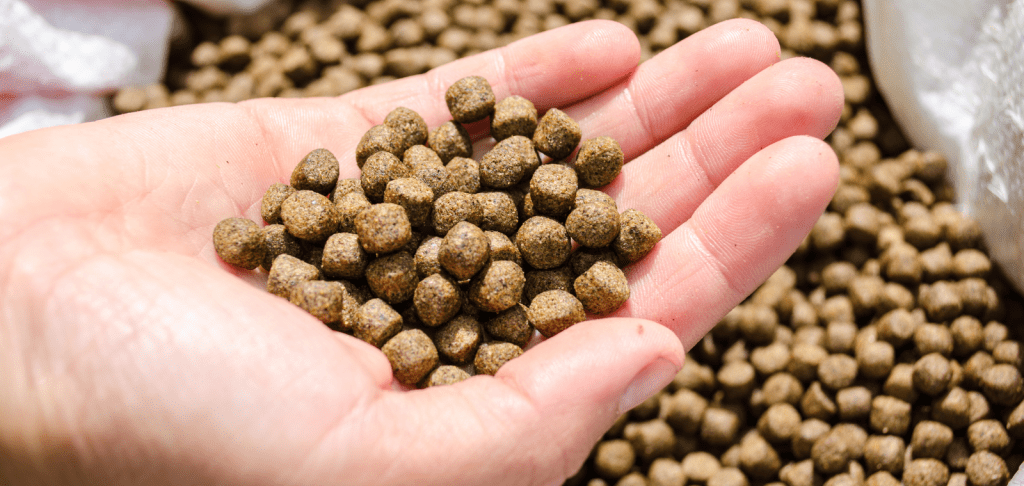
Today, the world faces a pressing concern: waste management. Large volumes of waste remain poorly regulated, ultimately polluting the environment. In response, many industry players have pursued initiatives to address the problem. In the fisheries sector, one such innovation is fish feed made from livestock manure. Beyond its environmental appeal, this feed is also attractive for cutting costs, since manure-based feed is both easy to obtain and inexpensive to produce. Yet despite these advantages, questions remain over its safety and halal status. Manure can carry pathogens that enter the fish’s body once consumed, with consequences for the fish’s health. More significantly, some of the manure used in feed production comes from pigs. Since pork is one of the substances explicitly prohibited in Islam, its presence inevitably affects the halal quality of any fish that consumes it.
A similar concern arises with catfish (lele). Catfish is a freshwater species widely consumed by the public, known for its remarkable resilience and ability to survive in difficult conditions. It can feed on almost anything, including najis substances (impure matter that Islamic law requires Muslims to avoid, such as waste and anything linked to pork). Animal manure, animal carcasses, pork remnants, and other substances prohibited under Islamic law. This naturally raises concern among Muslims over the halal status of catfish.
The Ruling: When Fish Becomes “Jalalah”
Fish that consume this kind of feed are classified as jalalah fish, and many scholars have issued fatwas addressing their halal status. One such ruling is MUI (Indonesian Ulema Council) Fatwa No. 52 of 2012, which categorizes fish fed in this way as jalalah fish, with two classifications carrying two different rulings:
- If the fish is given haram feed in a small amount that causes no noticeable change in smell, taste, or color, the fish remains halal to eat.
- If the fish is given haram feed in large quantities to the point that its flesh smells foul or becomes contaminated with najis, the fish’s status shifts to makruh (discouraged, but not sinful to consume), or even haram, depending on what substances remain in the fish’s body.
Scholars differ on the permissibility of consuming jalalah fish once it has been contaminated to a makruh degree. Some permit it under a makruh tanzih ruling (disliked, but not sinful) while recommending it be avoided as a precaution; others take a stricter position.
Getting to Know Istibra’: The Path Back to Halal
Istibra’ is a quarantine process lasting several days, carried out to cleanse fish of any haram elements they have absorbed. The length of this quarantine varies, typically 3 to 7 days depending on the fish’s condition, though it may extend to 10-14 days if the fish was previously kept in a heavily contaminated environment or routinely fed large quantities of najis feed. The process serves three main purposes: clearing najis elements from the fish’s entire digestive system, eliminating organoleptic effects (changes in taste, smell, and color) caused by contamination, and detoxifying the fish’s body of harmful substances.
Broadly, istibra’ consists of four steps:
- The fish is transferred to clean, sterile water.
- Once in clean water, the fish is no longer given any najis or harmful feed.
- Its feed is replaced with healthy, halal feed.
- Its waste is cleaned out regularly, to prevent the fish from consuming its own feces.
Once a fish has completed this process in full, it is declared halal for consumption. Istibra’ offers Muslims a practical and reassuring pathway to keep enjoying fish as a halal food source, even when a fish’s status has been compromised by questionable feed, rather than having to give it up altogether.
Writer: Alhayya Maritza & Naflah Azizah Wibowo
Reference:
Maflahah, I., Omar, E. N., Asfan, D. F., & Firmansyah, R. A. (2026). Strengthening halal integrity in the fish supply chain: Early detection approach at the fisherman and collector level. Journal of Islamic Marketing, 1-23.
Hidayah, K. T., Azkaratri, H. D., Paradhipta, D. H. V., Astuti, A., Agus, A., Anam, M. S. U., … & Pastawan, V. (2026). Integrating Poultry and Aquaculture Systems: Fermentation of Poultry Manure as Ingredient of an Unconventional Feed for Catfish. Waste and Biomass Valorization, 1-14.
Liu, K., Zhang, K., Li, P., Wei, X., Tang, N., & Huang, X. (2026). Impact of moisture regulation methods on the fish manure composting process and gas emissions. Environmental Technology & Innovation, 104748.
Tengku Zainal Abidin, T. N. H., Ahmad, H., & Mohd-Hairul, A. R. (2017). Konsep halal dan al-Istibra’Pangasius Sutchii menurut perspektif Islam dan sains akuakultur. Journal of Contempory Islamic Studies, 3(1), 85-98.
MUI Digital. (2025). Makan Ikan Lele Pemakan Kotoran Manusia atau Hewan, Apa Hukumnya? Retrieved October 1, 2026, from https://mui.or.id/baca/berita/makan-ikan-lele-pemakan-kotoran-manusia-atau-hewan-apa-hukumnya
Tabloid Sinartani.com. (2016). Awas Pakan Ikan, Bisa Membuat Tidak Halal? Retrieved October 1, 2026, from https://tabloidsinartani.com/detail//indeks/ternak/4332-awas-pakan-ikan-bisa-membuat-tidak-halal
Dinas Pertanian, Ketahanan Pangan Dan Perikanan Kabupaten Buleleng. (2018). Kotoran Ternak Bisa Jadi Pakan Alternatif untuk Ikan. Retrieved October 1, 2026, from https://distankan.bulelengkab.go.id/informasi/detail/artikel/kotoran-ternak-bisa-jadi-pakan-alternatif-untuk-ikan-92