Flora & Noor: Pioneering Halal Skincare Revolution at America’s Beauty Retailers
Addressing a massive market gap
Muslims constitute 24% of the global population, wielding spending power estimated in trillions, yet finding halal-certified skincare products at local stores proves nearly impossible—you’d sooner locate Waldo.
Flora & Noor founder Jordan Karim embarks on a mission to transform that reality.
The Chicago-based entrepreneur emphasizes that an entire community faces exclusion from skincare options. After nearly a decade working as a research chemist plus pharmaceutical consultant for skincare giants like Johnson & Johnson alongside Allergan, Karim realized Muslims cannot use the majority, if any, of shelf skincare products in good conscience since they lack halal certification.
Karim notes that Muslims use these products anyway—either from ignorance about prohibitions, which she learned is quite common, or from settling when they shouldn’t have to.
From kitchen experiments to bestselling products
Despite enjoying her work, Karim wrestled with growing guilt over time. As she matured plus strengthened in faith, she increasingly questioned whether continuing that career path aligned with her values.
In 2020, Karim took a leap of faith, launching Flora & Noor to make halal skincare more accessible throughout the United States.
The term ‘halal’ means lawful or permissible in Arabic. In consumer goods contexts, it refers to products formulated, processed, manufactured, stored in accordance with Islamic law (shariah).
Karim concocted the brand’s debut product—Oatmeal plus Shea Body Butter—in her own kitchen. Today, it ranks as their Amazon bestseller.
The colloidal oatmeal-infused moisturizer was initially developed to address her son’s eczema. Karim, a mother of two preschoolers, couldn’t find suitable products—they were either natural but ineffective or worked but contained ingredients unsuitable for children.
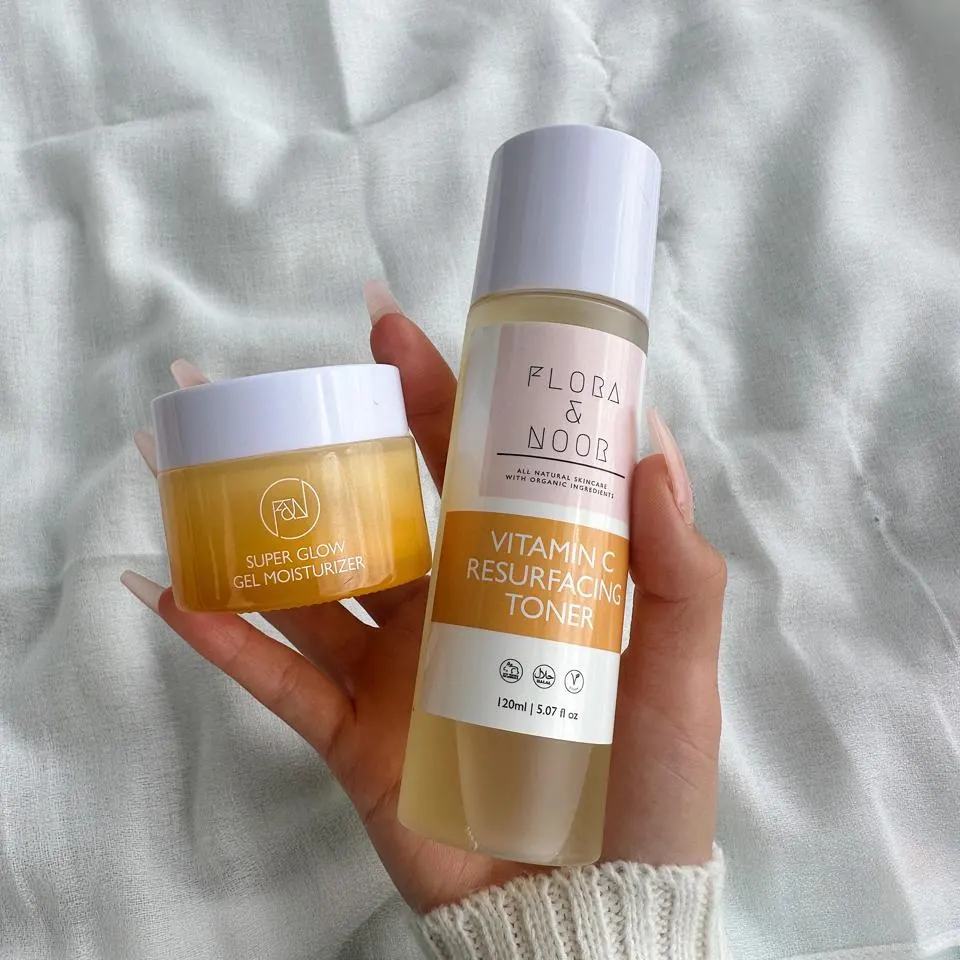
She realized she could apply her chemistry expertise in her own kitchen, creating something for him herself. What started as a humble kitchen operation has scaled to a full-fledged halal skincare line encompassing cleansers, toners, masks, moisturizers, serums, other essentials inspired by African plus Middle Eastern ingredients alongside traditions.
Each product forms part of skincare regimen kits tailored to specific skin goals. Consumers can subscribe for monthly kit deliveries. The approach spares consumers from becoming chemists in their own bathrooms—that’s Karim’s job. Beyond Amazon, the brand is available at Thirteen Lune.
Historic retail breakthrough achieved
Flora & Noor also launched online at Ulta Beauty earlier this year—making it the first halal-certified brand carried by the beauty retailer.
Karim recalls literally seeing Ulta stores on her high school commute, making the partnership a full-circle moment as she grew up near Ulta Beauty headquarters in Chicago.
The BIPOC brand secured the position after winning a live-crowdfunded pitch competition organized by Rare Beauty Brands in partnership with Black Girl Ventures plus Ulta Beauty.
The company is also a recipient of Glossier’s 2023 Grant Program for Black-owned Beauty Businesses, an initiative addressing inequity alongside fundraising barriers for Black entrepreneurs.
The bootstrapped business has sustained itself through grants, as Karim refrained from taking interest-based loans, which are considered haram (unlawful) in Islam.
The brand currently seeks to raise $1.1 million in venture capital funding to support further expansion.
The global halal cosmetics market was valued at $37.62 billion in 2022, projected to reach $92.55 billion by 2030.
Navigating representation challenges
Karim identifies her biggest challenge as explaining their category to consumers, retailers, investors, everyone else because it virtually doesn’t exist. The company essentially fills a white space.
Additionally, being a Black Muslim woman-led company, they face three times more underrepresentation. Success requires jumping over far more hurdles than others might encounter.
Karim shares that numerous conversations involved people who had already formed opinions about their work, then later, once dialogue occurred, they were pleasantly surprised. They would respond with newfound understanding, expressing desire to support the mission.
Understanding halal certification requirements
Karim explains that when people hear ‘halal,’ they think of food plus animals, but the certification encompasses much more.
To achieve halal certification, skincare products must exclude alcohol, haram (forbidden) animal products or by-products such as porcine-derived collagen plus stearic acid, blood, human-sourced ingredients like stem cells, any substances harmful to human health including lead, parabens, phthalates. Sourcing methods prove equally important. Ingredients must be ethically sourced plus traceable, Karim notes.
Halal-certified companies must also uphold the highest hygiene standards, keeping premises plus machinery clean, avoiding cross-contamination with anything haram or najis (unclean) during production. Companies must also obtain pre-authorization for any significant production process changes. Strict enforcement of these quality control measures means literally anyone can benefit from halal beauty products, not just Muslims.
Karim emphasizes that just like you don’t have to be Korean to enjoy K-beauty benefits, you don’t have to be Muslim to experience halal beauty. Anyone can benefit.
She uses a reference that makes explanation easy—when entering grocery stores, seeing regular hot dogs alongside Kosher hot dogs, whether Jewish or not, people subconsciously believe the Kosher option is better, having undergone more stringent manufacturing processes. The same applies to halal products—consumers know they’re safe plus transparent. When using non-halal certified products, the responsibility rests with consumers to verify halal compliance.
Distinguishing halal from vegan beauty
Some Muslims, Karim notes, opt for vegan skincare plus makeup products as substitutes for halal beauty, which remains largely inaccessible, especially outside Europe plus the Middle East. While both halal beauty plus vegan beauty prioritize cruelty-free formulations, they aren’t identical.
Karim explains that halal doesn’t mean vegan plus vice versa. The biggest difference involves halal-certified skincare excluding alcohol or other non-halal additives which can appear in vegan products like ethyl alcohol.
Similarly, halal-certified products can contain permissible, ethically sourced animal-based ingredients like honey or beeswax, making them unsuitable for vegans.
Flora & Noor, however, is both vegan plus Leaping Bunny-certified, in addition to being halal-certified, the beauty entrepreneur notes. For Karim, such standards make research, product development, manufacturing processes three times as challenging. She laughs, acknowledging that supply chain management is probably the most difficult part of her job.
The company has switched labs before plus changed suppliers because they must be very stringent regarding all these requirements.
Additionally, because halal certification isn’t prominent in the U.S., many manufacturers lack awareness about what it is or how to abide by it. Significant education plus training becomes necessary—not just for their team, but for contractors’ teams, suppliers’, manufacturers’ teams as well.
Karim shares that it’s also more expensive as they must ensure ingredients are not only high-performance but also halal, ethically sourced, plant-based. For example, one active ingredient they use is botanical hyaluronic acid (cassia senna) indigenous to Sudan.
The process proves quite difficult plus time-consuming, comes with higher supply chain costs, but it’s worth it, Karim adds.
Educating consumers about effective ingredients
Besides halal regulations, the other tricky task for the Flora & Noor founder involves educating consumers about differences between marketing buzzwords plus genuinely effective skincare, helping them distinguish fact from fiction.
Karim says navigating explanations about what’s trendy versus scientific can be difficult. For example, collagen-infused skincare—collagen actually doesn’t absorb well topically, making it just a marketing gimmick. Collagen molecules are too large to penetrate the epidermis (the skin’s outermost layer). While it hydrates skin, no epidemiological studies with large sample sizes prove applying topical collagen promotes collagen synthesis.
Instead of topical collagen, Flora & Noor uses ingredients that actually increase collagen production, for example, gotu kola, which is a hundred times more effective, Karim explains.
Vision for comprehensive inclusivity
Karim envisions a future where halal beauty is readily available at every drugstore, whether shopping in the U.S., Egypt, or Indonesia. She points out that when people think inclusivity, they think complexions plus shade ranges, but there’s so much more—it should also reflect different cultures, age groups, skin concerns.
Karim observes many retailers display beautiful Muslim women in hijab on their windows, who cannot actually use any products inside. Nobody actually formulates for Muslim consumers or considers them when making products.
The halal beauty founder says changes need to occur on both ends. Brands need to be serious about their manufacturing plus production practices if they want to be deemed inclusive by using Muslim faces plus religion.
Additionally, Muslims as a community need to make their voices louder about what they will plus won’t accept regarding these matters.
Karim also notes she’d like to see halal beauty become more inclusive from within. Currently, in the majority of countries that have halal skincare plus cosmetics, products aren’t reflective of overall populations. They aren’t most effective for richer skin tones plus more melanated skin concerns.
Future expansion plans
Flora & Noor is set to roll out two new body care products in 2024, formulated to target skin conditions like eczema, psoriasis, keratosis pilaris. Other new releases in the pipeline include cleansers plus oils inspired by Somali ingredients alongside traditions.
Original Article:
Forbes. (2025, October 12). Meet Flora & Noor, The First Halal Skincare Brand at Ulta. Retrieved from https://www.forbes.com/sites/nomanazish/2023/10/08/meet-flora–noor-the-first-halal-skincare-brand-at-ulta/