Understanding Thailand’s Halal Certification System and Framework
JAKARTA (2026/10/07)
Thailand is one of the most serious players in the global halal market, and that makes it a remarkable story: Islam is not the religion of the majority there. So how did a Buddhist-majority country position itself as a contender for Southeast Asia’s halal hub?
The groundwork goes back to 2001-2002, when Thailand began promoting its local food industry worldwide through a gastronomy program called Kitchen of the World. The initiative was designed to boost food exports and the growth of Thai restaurants abroad, and Muslim-majority countries were one of its key target markets. To serve them, Thailand has consistently ensured that the products and restaurants it exports comply with the halal regulations of each destination country.
In 2014-2015, the country went a step further and began integrating its gastronomy strategy into halal tourism, an approach it pursued aggressively. Since 2024, Thailand has also built gastrodiplomacy relationships with fellow ASEAN member states. Little wonder, then, that the Land of the White Elephant is viewed as a strong candidate for Southeast Asia’s halal hub, and that it attracts world-class entrepreneurs seeking partnerships.
A market this promising needs a well-organized system to support the entire halal industry framework. Thailand has therefore established dedicated bodies and regulations to govern halal matters. These rules apply to every business stakeholder, local and foreign alike, and its halal standard deserves close attention from anyone planning to do business there.
This article walks through the three main steps that businesses must complete to market their products in Thailand. First, though, let’s meet the institution at the center of it all.
Introduction: Understanding CICOT and Thailand’s Halal Regulations
Like other countries in Southeast Asia with significant Muslim populations, Thailand has an institution dedicated to Islamic affairs: the Central Islamic Council of Thailand (CICOT). It was established to assist the Thai government in managing Islamic affairs and promoting the welfare of Thailand’s Muslim community. CICOT became a formal government institution in 1997 and is led by a chairman known as the Sheikhul Islam, who is selected through consultation among Islamic religious leaders across the country.
One of CICOT’s principal duties is to oversee Thailand’s halal mechanism. It is responsible for drafting regulations, auditing and processing the entire production chain, granting permits, and issuing the official halal logo for every product circulating in the Thai halal market. In carrying out this mission, CICOT is supported by various government bodies, including the Halal Standard Institute of Thailand (HSIT), 36 provincial Islamic committees, and several Thai ministry departments.
To classify halal products, CICOT relies on a standard issued under Thailand’s Ministry of Agriculture and Cooperatives: TAS 8400-2025. TAS stands for Thai Agricultural Standard, and this one is the national standard for halal food. In short, it is the rulebook containing the information and requirements for halal products in Thailand.
TAS 8400-2025 has three core components:
- Definitions: the meaning of halal and haram (najis), based on the views of the four schools of Islamic jurisprudence.
- Scope: the categories of halal and non-halal products, as agreed upon by Thailand’s council of Islamic scholars.
- Requirements: the halal compliance conditions for products entering the Thai market.
The standard is short, yet comprehensive. It is mandatory guidance for all halal business operators in Thailand, domestic and international. With CICOT and TAS 8400-2025 as the foundation of halal compliance in Thailand, what should a business prepare before entering the market?
Step 1: Align Your Product with the TAS 8400-2025 Standard
The first and most vital step is making sure your product conforms to Thailand’s halal regulations. Like other countries, Thailand has its own halal standardization, and it is set out in TAS 8400-2025, which is the result of deliberation among Islamic scholars’ councils from various provinces. By following it, a product is automatically aligned with the halal standard across all of Thailand.
Importantly, the requirements cover not only food ingredients but the entire production process, all the way to distribution in the Thai market. The second chapter of the standard states that halal requirements must cover the following scope:
- Raw materials for food (animal-based, plant-based, beverages)
- Slaughtering process and procedure
- Slaughterhouses
- Food and service products
- Food processing
- Machinery and equipment
- Food storage, display, service, and transportation
- Hygiene, sanitation, and safety
- Identification and traceability
- Packaging and labeling
Step 2: Secure CICOT Halal Recognition
Once a product meets the standard in TAS 8400-2025, it is registered to obtain halal recognition from CICOT. This recognition allows the product to circulate legally in the Thai market.
There are two routes. In the first, the business registers its product directly with CICOT. In the second, the product is registered through a halal certification body from its country of origin that is already recognized by CICOT. Of the two, the second is generally the most practical and efficient.
Business stakeholders must complete seven stages to obtain CICOT halal recognition:
- Application and registration: Submit an application through the CICOT portal with the required documents: raw material details, lab test results, staff and halal auditor training records, and the country-of-origin halal certificate.
- Document review: CICOT checks the completeness of the submission and may request additional documents.
- Halal system training: Businesses must complete the halal system training organized by CICOT.
- On-site audit: Once documents and training are complete, auditors inspect the production facility, equipment, and distribution process, and collect raw material samples.
- Laboratory testing: The samples collected during the audit are tested in a laboratory.
- Approval and recognition: Products that pass testing proceed to final evaluation, after which CICOT issues halal recognition and the halal logo.
- Ongoing monitoring: Recognized products undergo regular assessments to maintain halal integrity.
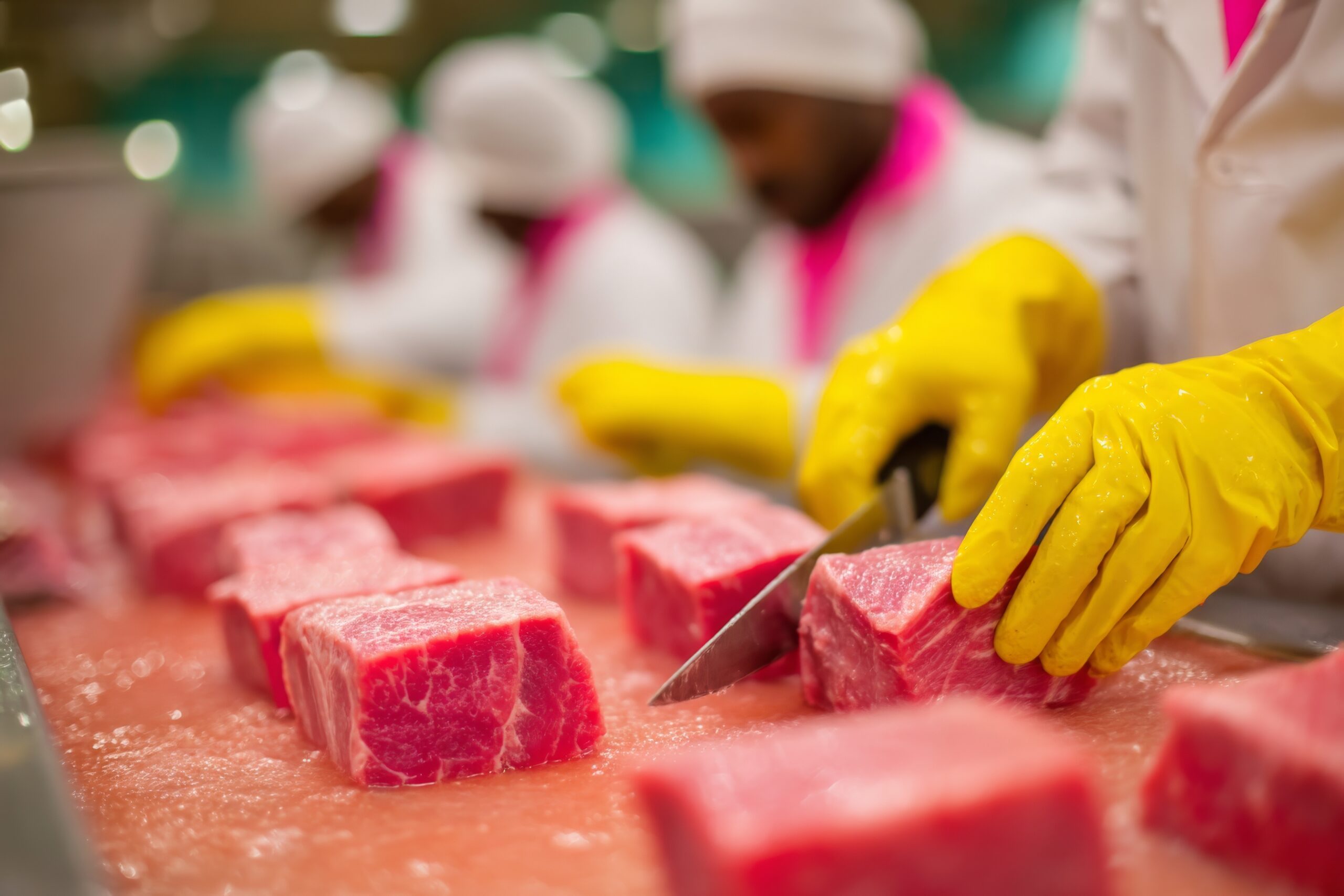
If a product already holds a certificate from a foreign halal body recognized by CICOT, the process becomes easier. In most cases, CICOT only asks for the foreign certificate as a legal document. However, this does not apply to every commodity. Products such as meat, processed meat, and slaughtering operations often require special permits for the evaluation process and undergo more intensive on-site assessments.
Step 3: Halal Recognition Issuance and Validity
Once CICOT grants official recognition, companies and business stakeholders can distribute and market their products in Thailand’s halal market. The recognition also serves as proof of validity and credibility for any business operating in the country, giving consumers, distributors, and partners confidence in the product.
But this is not the end of the process. CICOT halal recognition has an expiry date. Dates vary between stakeholders, but for foreign halal bodies and companies the expiry commonly falls on July 17, 2028. Businesses are therefore advised to note when their recognition expires and to apply for renewal before the deadline.
Four sources can help you monitor and manage the renewal of CICOT recognition:
- TAS 8400-2025: the basic guideline for halal product standardization.
- CICOT Terms and Conditions of Recognition: information on recognition status, the product scope covered, and requirements.
- CICOT Foreign Halal CB Directory: the status of recognized halal bodies, including registered bodies and their expiry dates.
- CICOT Regulations: guidance on how recognition certificates may be used.
Closing: Beyond the Rules, What Really Matters
Behind all these rules and procedures, one lesson stands out: recognition is only the starting point. What ultimately matters is whether the certification system, the interpretation of product scope, the audit evidence, and the control of certificates remain aligned with Thailand’s current requirements.
For halal certification bodies: The key issue is not merely being recognized. Their certification system, interpretation of scope, audit evidence, and certificate control must stay consistent with Thailand’s prevailing requirements.
For industry players: It is equally important to understand how a recognized foreign certification interacts with product scope, production activities, and market access.
Thailand’s halal ecosystem rewards businesses that treat compliance as an ongoing discipline, not a one-time milestone. Those who do will find a market that is open, structured, and full of opportunity.
Written by: Alhayya Maritza & Naflah Azizah Wibowo
References
Murdhania, D. (2022). Analisis implementasi gastrodiplomasi Thailand dalam mempererat hubungan dengan negara muslim dunia menggunakan halal food. Journal Of Halal Industry Studies, 1(2), 91-100.
Nurdiana, N., Siradjuddin, S., & Muin, R. (2025). The Halal Industry in Southeast Asia: A Comparison of the Development of Indonesia and Thailand. Formosa Journal of Multidisciplinary Research, 4(6), 2619-2626.
Halal Standard Insitute of Thailand. (n.d). Thailand Halal Certification Process Guide. Retrieved October 6, 2026, from https://www.scribd.com/document/681666040/Halal-Product-Standards-Products
Halal Standard Insitute of Thailand. (n.d). Halal Standard Institute of Thailand Recognition Details. Retrieved October 6, 2026, from https://halalcenter.global/dk/recgonition_details/51
Thailand Ministry of Agriculture and Cooperatives. (2025). Thai Agricultural Standard (TAS 8400-2025). Retrieved October 6, 2026, from https://www.halal.or.th/storages/documents/manage/250_222.pdf
Kiricioglu, Emre. (2026). Thailand Halal Regulatory System. LinkedIn. https://lnkd.in/p/gW8equmk