Ensuring Welfare and Halal Compliance: The Science Behind Modern Stunning Techniques
(JAKARTA 28/09/2026)
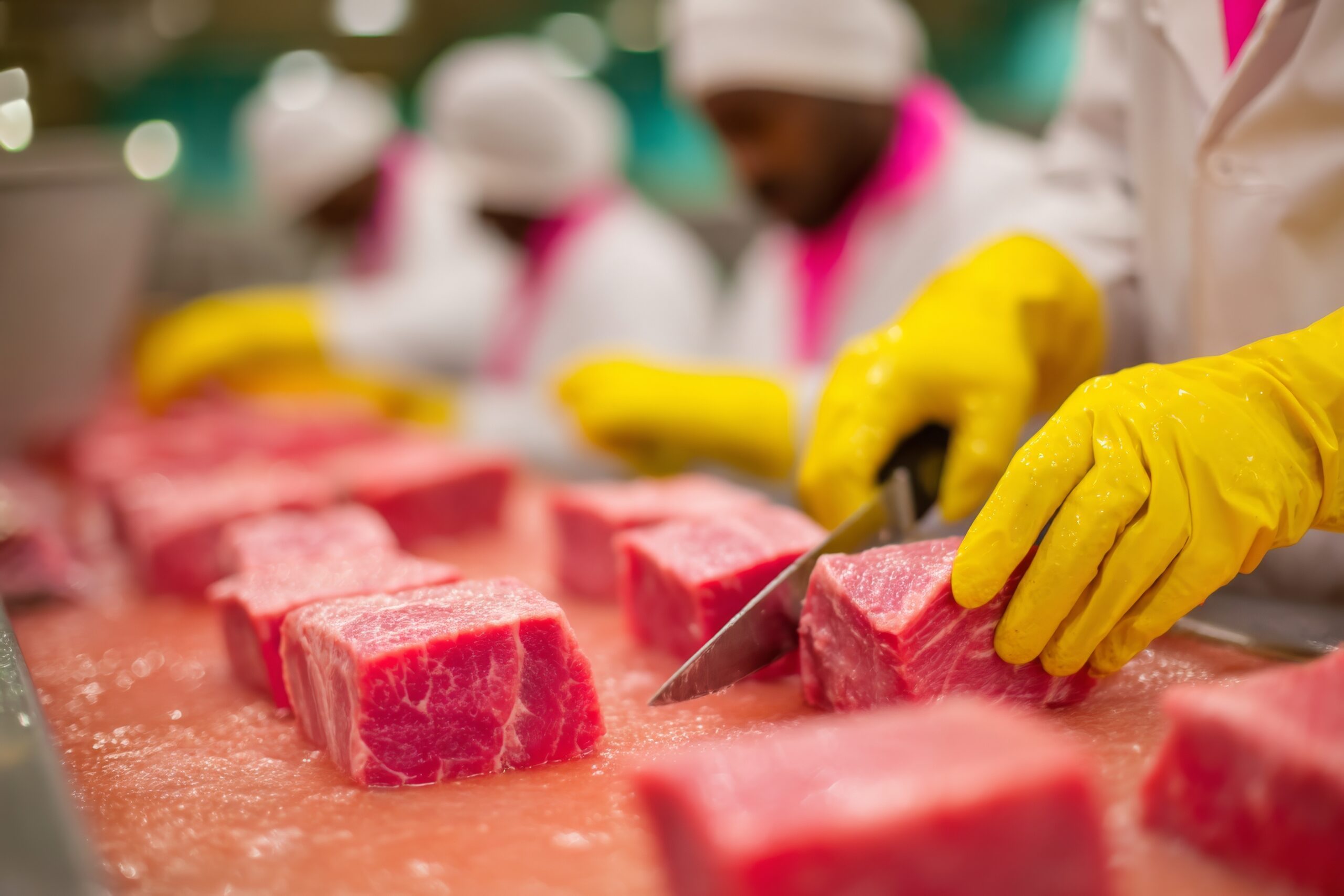
Muslims and the Growing Demand for Halal Meat
The world’s Muslim population is growing steadily. According to World Population Review, it reached approximately 2 billion in 2026 and is projected to rise to between 2.2 and 2.6 billion by 2030. This growth is matched by rising demand across the halal industry, particularly for food, one of humanity’s basic necessities. Meat is among the most in-demand food commodities. Fortune Business Insights valued the global halal meat market at USD 1.09 trillion in 2025 and projects it will grow from USD 1.13 trillion in 2026 to USD 1.51 trillion by 2034, a compound annual growth rate (CAGR) of 3.72%. Asia Pacific led the market in 2025 with a 40% revenue share.
The Dilemma Behind Halal Meat Production
Meeting this demand is not straightforward. A common perception holds that religious slaughter conflicts with animal welfare law. Some experts argue that slaughtering animals by traditional or religious methods can cause serious risks and adverse responses in the animal, including:
- Severing of blood vessels
- Brain death
- Damage to the skull and brain tissue membranes
- Blood spillage, as animals move and resist during slaughter
To address these concerns, the industry developed stunning. This process renders the animal unconscious before slaughter, sparing it pain and stress. Several countries, particularly those with Muslim minorities, now require all slaughterhouses to use stunning. France issued Decree No. 2011-2006 in 2011, Denmark has mandated stunning since 2014, and the United Kingdom enforces The Welfare of Animals at the Time of Killing (WATOK) Regulations 2015, with Scotland and Wales applying similar rules.
Stunning vs. Halal Slaughter
Although stunning offers a solution to the welfare concerns around traditional slaughter, its permissibility remains debated among Muslim scholars. The main objection is that stunning causes a total loss of consciousness, which some scholars see as conflicting with the Qur’anic requirement that the animal be properly slaughtered:
اِلَّا مَا ذَكَّيۡتُمۡ
“(Animal must not be eaten) unless you slaughter it.” (Qur’an, Surah Al-Ma’idah [5]: 3)
A second objection is that stunning has no precedent in the teachings of the Prophet Muhammad ﷺ. He never instructed, practiced, or encouraged it, and neither the Qur’an nor the Hadith mentions it directly.
How Scholars Address This Modern Issue
Islamic law is flexible and evolves alongside the times. The teachings and practices of the Prophet ﷺ do not always map directly onto the conditions Muslims face today, and rulings may adapt as the modern era develops. This adaptation is not done casually. It requires a rigorous, careful process.
After the Qur’an and the Hadith, two further sources guide Muslims: ijma’ and qiyas. Ijma’ is the consensus of scholars on a matter that has been disputed in the community. Qiyas is a new ruling established by analogy with a similar precedent. Both come into play when the Qur’an and Hadith do not directly resolve an issue, as with stunning.
Given the large demand for halal meat and the animal welfare regulations that constrain it, some scholars have approved stunning under specific conditions and methods. The fact that the Prophet ﷺ never practiced stunning does not mean it is entirely prohibited. Rather, the tension between halal slaughter law and animal welfare calls for a middle path that serves the wellbeing of the Muslim community. This is consistent with the words of Allah ﷻ, who intends ease for believers:
يُرِيْدُ اللّٰهُ بِكُمُ الْيُسْرَ وَلَا يُرِيْدُ بِكُمُ الْعُسْرَ
“Allah intends for you ease and does not intend for your hardship.” (Quran, Surah Albaqarah [2]: 185)
Diathermic Syncope (DTS): A Promising Method for Halal Slaughter
Advances in science and technology have driven researchers to innovate across the food and livestock industries, and stunning is no exception. One breakthrough attracting considerable attention in halal slaughter is Diathermic Syncope, known as DTS. Developed over roughly 20 years in Australia, DTS uses electromagnetic waves to render animals unconscious. It selectively raises the temperature of the brain to produce rapid, reversible stunning in livestock.
Many modern stunning methods already exist, but most were designed primarily for efficiency and mass production, often at the expense of animal welfare. Mechanical stunning traumatizes the animal and damages its skull and brain. Head-to-back electrical stunning applies a voltage strong enough to kill the animal. Head-only electrical stunning produces only a short period of unconsciousness and can cause considerable blood splatter.
DTS was developed to complement these existing methods. It aims to stun animals without causing pain or permanent physical damage, in line with animal welfare law, while preserving the requirements of slaughter under Islamic law.
How DTS Works
To understand DTS, it helps to know its four main components:
- Generator cabinet: the main source of electromagnetic energy.
- Waveguide: the channel that carries energy from the generator to the applicator.
- Applicator: the device placed on the animal’s head.
- Faraday cage: the enclosure in which the animal is placed, containing the radiation.
Each stunning cycle passes through six stages:
Step 1: Set-up. The operator selects the power and energy settings on the control panel.
Step 2: Generation. The generator cabinet produces electromagnetic energy.
Step 3: Delivery. The waveguide carries the energy to the applicator on the animal’s head, while the Faraday cage keeps the radiation contained.
Step 4: Unconsciousness. The animal loses consciousness within four seconds of the energy being applied. Delivery continues for 8 to 12 seconds, which ensures a prolonged period of unconsciousness and reduces convulsions.
Step 5: Halal slaughter. While the animal is unconscious, the halal neck cut is performed, within 45 seconds of the start of energy application.
Step 6: Recording. The system logs the energy delivered and reflected and stores the data for audit purposes.
Why DTS Answers the Halal Slaughter Challenge
DTS was designed to bridge two demands that are often seen as opposed: animal welfare and the requirements of halal slaughter. It addresses both.
For animal welfare, DTS achieves a 98.5% first-stun success rate, meaning almost every animal is rendered unconscious on the first attempt. It also has a built-in safety net at around 95 kJ. By that point the animal is already drowsy, so energy delivery can safely continue. The process causes minimal distress, and the only discomfort the animal experiences is the minor one of being restrained.
For halal slaughter law, DTS is reversible. If the animal is not slaughtered, consciousness returns within two to four minutes, which shows the stun does not kill it. Because the method involves no impact or blow to the head, it also avoids the risk of the animal dying before slaughter, which would render the meat impermissible in Islam.
Where Faith, Science, and Compassion Meet
The journey does not end here. DTS was designed by humans and will need continued refinement. As food and livestock science advance, the method can be developed further. For now, it is regarded as the stunning method most compatible with the requirements of halal slaughter, and a number of scholars have already permitted its use. It offers a way forward in the modern debate over stunning that still concerns Muslims today.
Ultimately, DTS was built for a single purpose: a stunning system that is faithful to Sharia law and compassionate toward animal welfare.
Writer : Alhayya Maritza & Naflah Azizah Wibowo
Reference:
Saputri, S. D. A., Ardi, H., Khadijah, K., & Sari, W. (2025). The Ijtihad Method: Ijma and Qiyas as Sources of Islamic Law from the Perspective of Usul Fiqh. TOFEDU: The Future of Education Journal, 4(9), 5475-5480.
Sazili AQ, Kumar P, Hayat MN. Stunning Compliance in Halal Slaughter: A Review of Current Scientific Knowledge. Animals. 2023; 13(19): 3061.
ABNA 24. (2026). France Politicized Halal; Poland Turned It into an Economic Opportunity. Retrieved September 23, 2026, from https://en.abna24.com/news/1859590/France-Politicized-Halal-Poland-Turned-It-into-an-Economic-Opportunity
Diathermic Syncope. (n.d). The DTS System. Retrieved September 28, 2026, from https://www.diathermicsyncope.com.au/
Fortune Business Insight. (2026). Halal Meat Market Size, Share, and Industry Analysis, By Type, By Packaging, By Distribution Channel, and Regional Forecast, 2026-2034. Retrieved September 28, 2026, from https://www.fortunebusinessinsights.com/halal-meat-market-110267
World Population Review. (2026). Muslim Population by Country. Retrieved September 28, 2026, from https://worldpopulationreview.com/country-rankings/muslim-population-by-country