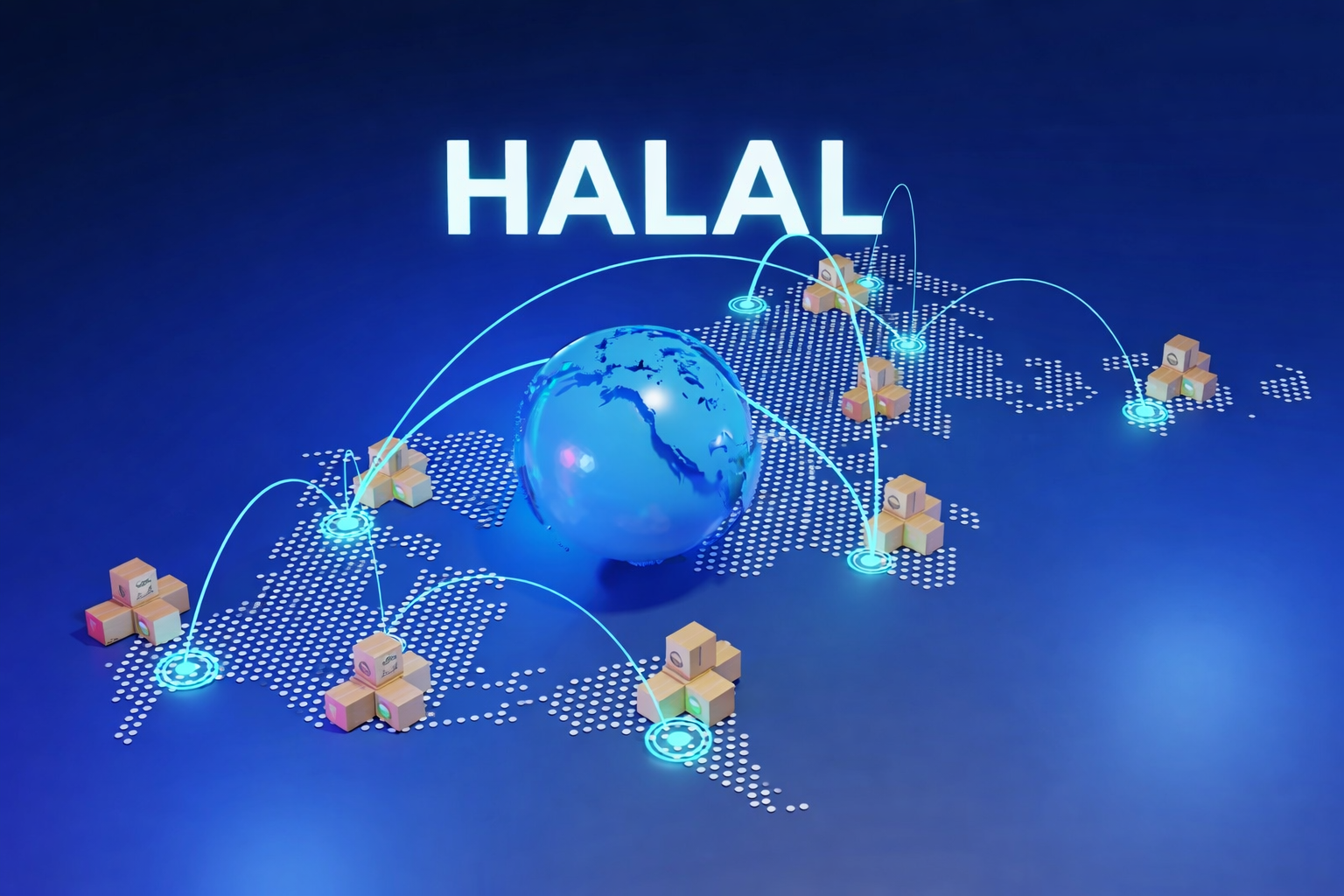
Connecting Food Security with Religious Requirements: Making Halal Food Available for All

(Photo by: childrenscolorado.org)
The UN’s Food and Agriculture Organization reports that approximately 733 million people worldwide faced hunger in 2023, representing roughly one in eleven people globally and one in five across Africa. Food insecurity affects those who lack consistent access to sufficient, safe, and nutritious food necessary for proper growth, development, and maintaining an active, healthy lifestyle.
Food Insecurity Beyond Developing Nations
Contrary to common assumptions, food insecurity isn’t limited to developing countries. In the United States, the problem affects substantial numbers of households. The USDA’s 2023 report revealed that 13.5% of American households (approximately 47.4 million people, including 14 million children) experienced food insecurity. Children face particular vulnerability, with 17.9% of households with minors experiencing food insecurity. The situation appears to be worsening year over year.
The Muslim Community’s Unique Challenges
The situation becomes more complex for Muslim households, where religious dietary requirements add another layer of difficulty. USDA data indicates that 10% of Muslims reported inadequate food access, comparable to rates among Black and Hispanic Americans. For the 1.34% of the US population that is Muslim (making Islam the third-largest religion in the country), dietary restrictions aren’t merely preferences—they’re religious obligations.
Understanding Halal’s Significance
Halal, meaning “permissible” in Arabic, encompasses more than dietary guidelines. It includes ethical animal treatment, specific ingredient requirements, and strict cleanliness standards throughout the entire food production process. Research by the Institute for Social Policy and Understanding found that 83% of American Muslims prefer or require halal diets.
For Muslim families facing food insecurity, the lack of halal options creates an impossible dilemma: violate religious beliefs or remain hungry. This is particularly challenging for children in school settings where halal options are scarce. The resulting malnutrition can lead to lasting consequences including poor academic performance, health problems, and social isolation.
IFANCA’s Role and Mission
The Islamic Food and Nutrition Council of America (IFANCA), established in 1982, has spent over four decades working to improve halal food access. The organization focuses on providing consumers with guidance to identify halal-certified products that meet both religious requirements and nutritional needs.
IFANCA’s team of industry experts and Islamic jurisprudence scholars has developed widely-accepted standards for halal certification. The organization operates globally, working with clients across more than 70 countries in food, pharmaceutical, and cosmetic industries.
Beyond certification, IFANCA supports educational initiatives, including programs at Texas A&M University focusing on ethnic and faith-based food systems, and environmental stewardship projects at Zaytuna College. The organization has also partnered with institutions like Chicago Public Schools, the Alliance to End Hunger, and food banks in Pennsylvania and Delaware to distribute halal-certified products.
Illinois Leads the Way
On March 28, 2025, Illinois became the first US state to mandate halal and kosher meal options in public schools, hospitals, and state-run facilities through the “Faith by Plate Act.” This legislation recognizes that access to culturally and religiously appropriate meals is an equity issue, not a luxury.
Given Illinois’ high per capita Muslim population, the legislation addresses long-standing concerns from observant families about how the absence of halal meals in public institutions exacerbates hunger and health disparities. IFANCA played a crucial role in developing this legislation, contributing four decades of expertise to ensure the technical feasibility of halal compliance at institutional scale.
A Model for Broader Implementation
Illinois’ approach provides a blueprint for other states and organizations addressing food insecurity among Muslim populations. The legislation demonstrates that large institutions can successfully integrate faith-based dietary requirements into their operations while maintaining efficiency and cost-effectiveness.
This model shows how halal certification can serve as a comprehensive framework for addressing hunger while respecting cultural identity and ethical principles. The approach could be replicated in various settings, from urban centers to refugee camps, wherever people need both sustenance and cultural dignity.
Moving Toward Inclusive Food Security
As global hunger intensifies, inclusive policies become increasingly critical. Food insecurity among children leads to both immediate problems (undernutrition, social exclusion, psychological distress) and long-term consequences (poor academic performance, reduced life expectancy, socioeconomic marginalization).
When Muslim children cannot access halal meals, they face the untenable choice between religious observance and basic nutrition—a situation that violates both their rights and wellbeing. The Faith by Plate Act demonstrates how public institutions can bridge cultural gaps while addressing essential needs.
Conclusion
The movement toward inclusive food security represents more than simply feeding people—it’s about honoring their values, maintaining their dignity, and ensuring no one must choose between hunger and faith. As governments, nonprofits, and communities work together to expand halal-friendly infrastructure, it becomes clear that equitable food systems benefit everyone, regardless of whether one views halal as a religious necessity, moral choice, or simply a higher standard of care.
The Illinois example, supported by IFANCA’s expertise, illustrates that when faith and practicality unite, food insecurity can become a solvable problem rather than an insurmountable challenge.
Original Article:
Salaam Gateway. (2025, July 9). Bridging nutrition and faith: Ensuring halal food access, one plate at a time. https://salaamgateway.com/story/bridging-nutrition-and-faith-ensuring-halal-food-access-one-plate-at-a-time