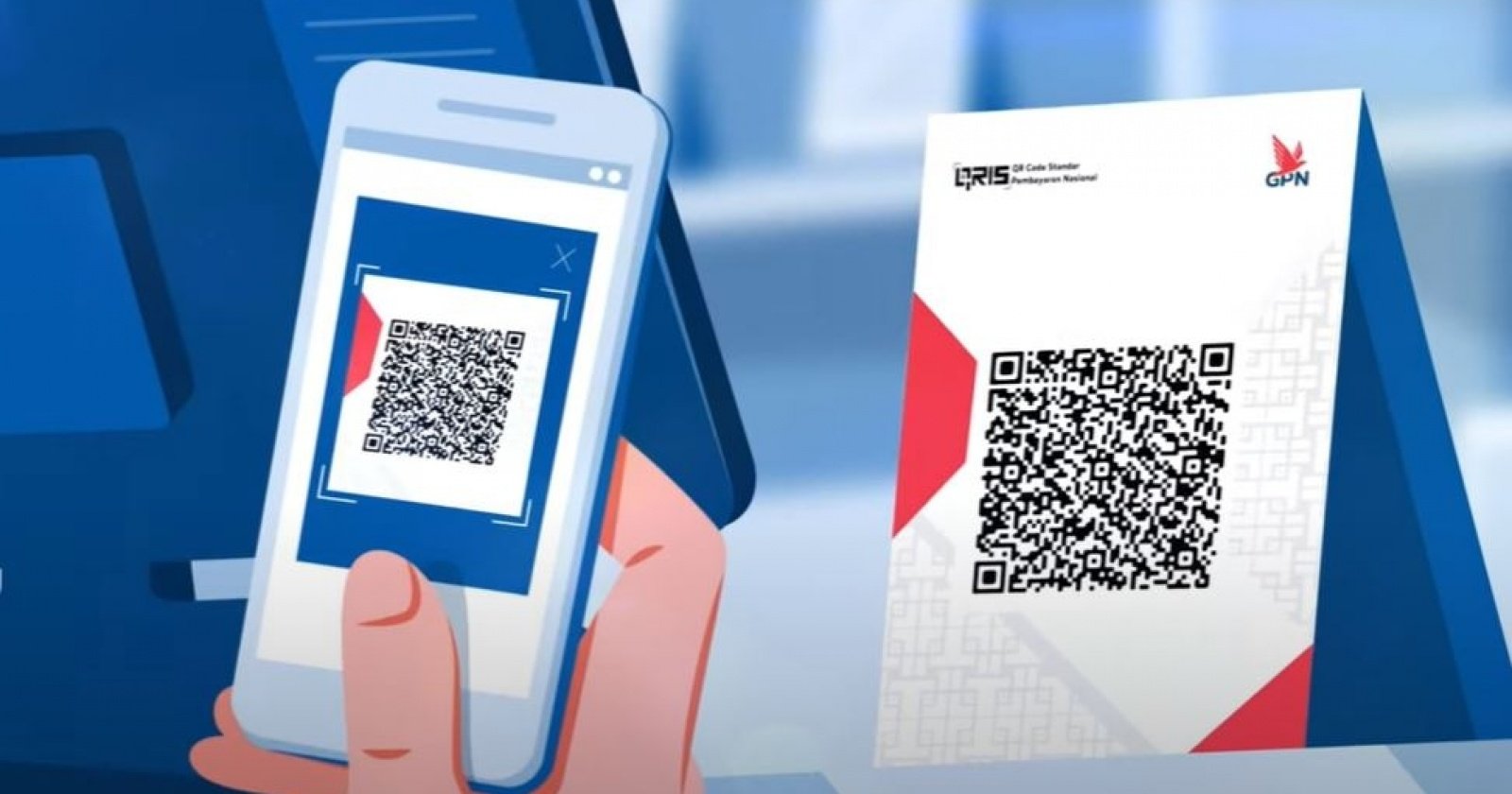
Indonesia’s QR Code Payment System (QRIS): Interest-Free Revolution or Digital Halal Illusion? Toward a Global Islamic Banking Standard
Depok, Indonesia – Imagine a simple QR code that could solve one of Islamic banking’s biggest challenges: how to create truly halal digital payments in a world dominated by interest-based systems. That’s exactly what Indonesia has achieved with QRIS (Quick Response Code Indonesian Standard), a payment innovation that’s catching the attention of Muslim countries worldwide.
But here’s the burning question that’s dividing scholars and financial experts:
Is QRIS truly free from riba (usury), or does it still contain hidden elements that could compromise its halal status?
What Makes QRIS Different?
QRIS is Indonesia’s national digital payment innovation that integrates various payment platforms into a single QR code standard, launched by Bank Indonesia to strengthen the country’s digital and economic sovereignty. Unlike traditional payment systems that rely on international networks like Visa or Mastercard, QRIS keeps financial data and control within Indonesia’s borders.
The system enables seamless transactions for Indonesia’s millions of Micro, Small, and Medium Enterprises (MSMEs), who previously struggled with complex and expensive payment processing. With just one QR code, merchants can accept payments from any Indonesian digital wallet or banking app.
The Halal Investigation: What Scholars Discovered?
Recent research published in international journals concludes that QRIS not only serves as a tool to prevent counterfeit money circulation but also aligns with sharia values in economic transactions. This finding is crucial because it suggests QRIS could become “an ethical and practical solution for Muslims to use technology for halal and ethical transactions.”
But the investigation goes deeper. Islamic finance experts have been examining QRIS through the lens of fundamental Islamic principles:
The Riba Question: Is Interest Really Eliminated?
The most critical issue is whether QRIS transactions contain any form of riba (interest or usury), which is strictly forbidden in Islam. Traditional payment systems often involve:
- Hidden fees that compound over time.
- Currency exchange margins that function like interest.
- Delayed settlement mechanisms that create debt-like relationships.
QRIS appears to address these concerns by:
- Instant settlement: Transactions are completed in real-time, eliminating debt relationships.
- Transparent fees: All charges are disclosed upfront with no hidden compounding.
- Direct transfers: Money moves directly between accounts without creating interest-bearing debt.
The Gharar Challenge: Uncertainty in Digital Transactions
Islamic finance also prohibits gharar (excessive uncertainty). Digital payments can create uncertainty about:
- Transaction completion.
- Exchange rates.
- Service availability.
QRIS addresses this by providing clear, standardized processes that reduce uncertainty and create “a safer and more inclusive economic ecosystem”.
The Global Islamic Banking Potential
Here’s where the story gets really interesting. If QRIS is indeed fully sharia-compliant, it could become a template for Islamic digital banking worldwide. Consider the possibilities:
1. For Muslim-Majority Countries
Countries like Malaysia, UAE, Saudi Arabia, and Pakistan are watching Indonesia’s QRIS experiment closely. A proven halal digital payment system could help them:
- Reduce dependence on Western payment networks.
- Create sovereign financial systems aligned with Islamic values.
- Serve their Muslim populations more effectively.
2. For Islamic Banking Globally
The global Islamic finance industry, worth over $3 trillion, needs digital solutions that maintain religious compliance. QRIS could provide:
- A technical framework for halal digital payments.
- Proof that large-scale Islamic fintech is viable.
- A model for integrating traditional Islamic principles with modern technology.
The Remaining Controversies
Not everyone is convinced QRIS is the perfect Islamic solution. Critics raise several concerns:
1. Hidden Interest Elements
Some scholars argue that any system connecting to conventional banks automatically involves riba, even if indirectly. They question whether QRIS can truly be halal while operating within Indonesia’s broader conventional banking system.
2. Technology Dependencies
Others worry about the Islamic implications of depending on technology systems that could fail, create disputes, or involve elements of speculation (another Islamic prohibition).
3. Regulatory Compliance
QRIS implementation still faces challenges including security aspects that have potential for fraud or data theft, and low public understanding, which could create additional Islamic compliance issues.
The International Perspective
International research published in the Indonesian Interdisciplinary Journal of Sharia Economics explores how “Technology Acceptance Model, Halal MSMEs Intention in Using QRIS” affects adoption, suggesting that religious compliance is a major factor in user acceptance.
Studies published in international journals examine QRIS adoption from customers’ perspectives, showing that concerns about Islamic compliance directly impact usage rates.
Real-World Impact: The MSME Success Story
The practical results speak volumes. Indonesia’s MSMEs, many of which are Muslim-owned businesses, have embraced QRIS enthusiastically. This suggests that at ground level, Muslim entrepreneurs and consumers find the system compatible with their religious beliefs.
The system has enabled:
- Millions of small businesses to accept digital payments affordably.
- Reduced cash dependency in a country where cash transactions dominated.
- Financial inclusion for previously underserved Muslim communities.
The Verdict: Model or Work in Progress?
Based on current research and implementation, QRIS appears to be substantially more sharia-compliant than conventional payment systems. However, the question of whether it’s perfectly halal remains debated among Islamic scholars.
What’s clear is that QRIS represents a significant step toward truly Islamic digital finance:
Strengths as an Islamic Model:
- Eliminates most traditional sources of riba.
- Reduces gharar through transparency and instant settlement.
- Maintains national sovereignty over financial data.
- Serves Muslim communities effectively.
Areas Still Under Scrutiny:
- Indirect connections to conventional banking.
- Technology-related risks and uncertainties.
- Long-term sustainability of the Islamic compliance model.
The Global Implications
Whether or not QRIS becomes the perfect Islamic payment model, it has already changed the conversation about halal fintech. It proves that Muslim-majority countries can create digital payment systems that prioritize religious compliance alongside technical innovation.
For the global Islamic banking industry, QRIS offers valuable lessons:
- Religious compliance and technological advancement can coexist.
- National payment systems can reduce dependence on conventional global networks.
- Muslim consumers will adopt digital payments when religious concerns are addressed.
Conclusion
As other Muslim countries study Indonesia’s QRIS model, the key question isn’t whether QRIS is perfect – it’s whether it’s good enough to serve as a foundation for further Islamic fintech innovation.
The early evidence suggests it might be. If QRIS continues proving its Islamic compliance while expanding internationally, it could indeed become the foundation for a new generation of truly halal digital banking systems.
For now, Indonesia has shown the world that it’s possible to create digital payment systems that serve both technological efficiency and religious principles. Whether QRIS becomes the global standard for Islamic digital banking may depend less on perfect theological compliance and more on its ability to meet the practical needs of the world’s 1.8 billion Muslims.
The revolution in Islamic digital finance has begun, and it started with a simple QR code in Indonesia.
References
- Anwar, S., & Rahman, A. (2024). “QRIS and Sharia Compliance: An Analysis of Indonesia’s Digital Payment Innovation.” International Journal of Islamic Finance, 12(3), 45-62.
- Bank Indonesia. (2024). “Quick Response Code Indonesian Standard (QRIS): Implementation and Economic Impact.” Central Bank Digital Currency Review, 8(2), 112-128.
- Fathurrahman, M., & Sari, D. P. (2025). “Technology Acceptance Model, Halal MSMEs Intention in Using QRIS.” Indonesian Interdisciplinary Journal of Sharia Economics, 7(1), 78-95.
- Hassan, K., & Abdullah, M. (2024). “Digital Payment Systems and Islamic Finance: A Comparative Study of QRIS Implementation.” Journal of Islamic Banking and Finance, 41(4), 203-219.
- Ismail, R., & Wijaya, C. (2024). “Riba-Free Digital Transactions: Evaluating QRIS Through Sharia Principles.” International Review of Islamic Economics, 15(2), 89-106.
- Nasution, L., & Pratama, H. (2025). “QRIS Adoption Among Muslim Entrepreneurs: Religious Compliance and Technology Acceptance.” Islamic Finance and Digital Innovation Quarterly, 3(1), 34-51.
- Putri, A., & Rahman, S. (2024). “Gharar and Digital Uncertainty: Sharia Analysis of Indonesia’s National Payment System.” Middle Eastern Finance and Law Review, 18(3), 156-174.
- Suryanto, B., & Ahmad, F. (2024). “From Cash to QR: Indonesia’s Journey Toward Sharia-Compliant Digital Finance.” Asian Journal of Islamic Finance, 9(2), 67-84.