Indonesia’s Path to Development Through Halal Industry Leadership
Source: Halal Times
JAKARTA – Indonesia’s leadership has identified a promising pathway toward achieving developed nation status through the strategic development of its halal industry. Vice President Gibran Rakabuming Raka has articulated a vision that centers on building self-reliance across key halal sectors, positioning the nation to capitalize on its unique demographic advantages and cultural alignment with Islamic principles.
The country’s approach focuses on four critical areas: Islamic finance, halal food and beverages, Muslim fashion, and Islamic media content. This comprehensive strategy aims to transform Indonesia from a consumer market into a global production hub for halal goods and services.
Leveraging Demographic Advantages
Indonesia’s position as the world’s largest Muslim-majority nation provides an exceptional foundation for halal industry development. With approximately 230 million Muslim citizens, the country possesses both a substantial domestic consumer base and natural expertise in halal requirements and preferences.
According to Prof. Dr. Imron Mawardi from Universitas Airlangga’s Faculty of Economics and Business, this demographic strength extends beyond national borders. The global Muslim population of nearly two billion represents an enormous market opportunity, creating potential for both domestic consumption and international export growth.
Overcoming Structural Obstacles
Despite these advantages, Indonesia faces several challenges that must be addressed to achieve its halal industry ambitions. The nation’s economic structure currently presents cost disadvantages compared to regional competitors, particularly Thailand and Vietnam. High interest rates and financing margins create barriers to business expansion and international competitiveness.
The halal industry’s composition presents additional challenges. The sector is dominated by micro, small, and medium-sized enterprises (MSMEs) that often struggle with resource constraints. These businesses face difficulties including:
- Limited human resource productivity
- Inadequate distribution networks
- Logistical inefficiencies
- High production costs relative to output
These structural issues require targeted interventions to unlock the industry’s full potential and enable sustainable growth.
Current Economic Impact
The halal ecosystem already plays a significant role in Indonesia’s economy, though it is not yet formally recognized as a unified sector. Industries within the halal framework—including food production, fashion, pharmaceuticals, tourism, and Islamic finance—contribute substantially to the nation’s economic output.
Research indicates that over 60 percent of Indonesia’s Gross Domestic Product stems from industries operating within the halal ecosystem. This substantial contribution underscores the sector’s existing importance and its potential for further development.
Strategic Development Recommendations
To enhance Indonesia’s position in the Global Islamic Economy Index, experts recommend focusing on six priority sectors:
- Islamic Finance: Developing Sharia-compliant financial products and services
- Halal Food Industry: Expanding production capacity and quality standards
- Muslim Fashion: Building design and manufacturing capabilities
- Pharmaceuticals and Cosmetics: Ensuring halal compliance in health and beauty products
- Islamic Media and Entertainment: Creating content that aligns with Islamic values
- Halal Tourism: Developing tourism infrastructure and services for Muslim travelers
Innovation and System Integration
Success in the halal industry requires innovation that extends beyond individual products to encompass entire systems. Every aspect of the value chain—from financing mechanisms to distribution networks—must adhere to halal and thayyib (pure and wholesome) principles.
This holistic approach ensures that the industry maintains ethical standards while delivering high-quality products and services. Such comprehensive compliance enhances credibility among consumers and establishes Indonesia as a trusted source for halal goods globally.
International Cooperation and Certification
A critical element of Indonesia’s halal industry strategy involves international cooperation, particularly in mutual halal certification recognition. This approach serves as a strategic non-tariff measure that can enhance the competitiveness of Indonesian products while protecting domestic markets.
Harmonizing certification standards with other Muslim-majority countries would facilitate smoother international trade and expand market access. Such cooperation positions halal certification as both a quality assurance mechanism and a competitive advantage in global markets.
Infrastructure Development Through Industrial Hubs
The establishment of dedicated halal industrial hubs represents a key strategy for supporting MSME development. These specialized zones would provide:
- Modern infrastructure tailored to halal production requirements
- Streamlined logistics and distribution networks
- Training programs to enhance workforce productivity
- Access to financing and technical support
Such hubs would enable small businesses to achieve consistent quality standards and scale their operations effectively, positioning them for success in both domestic and international markets.
Market Opportunities and Global Potential
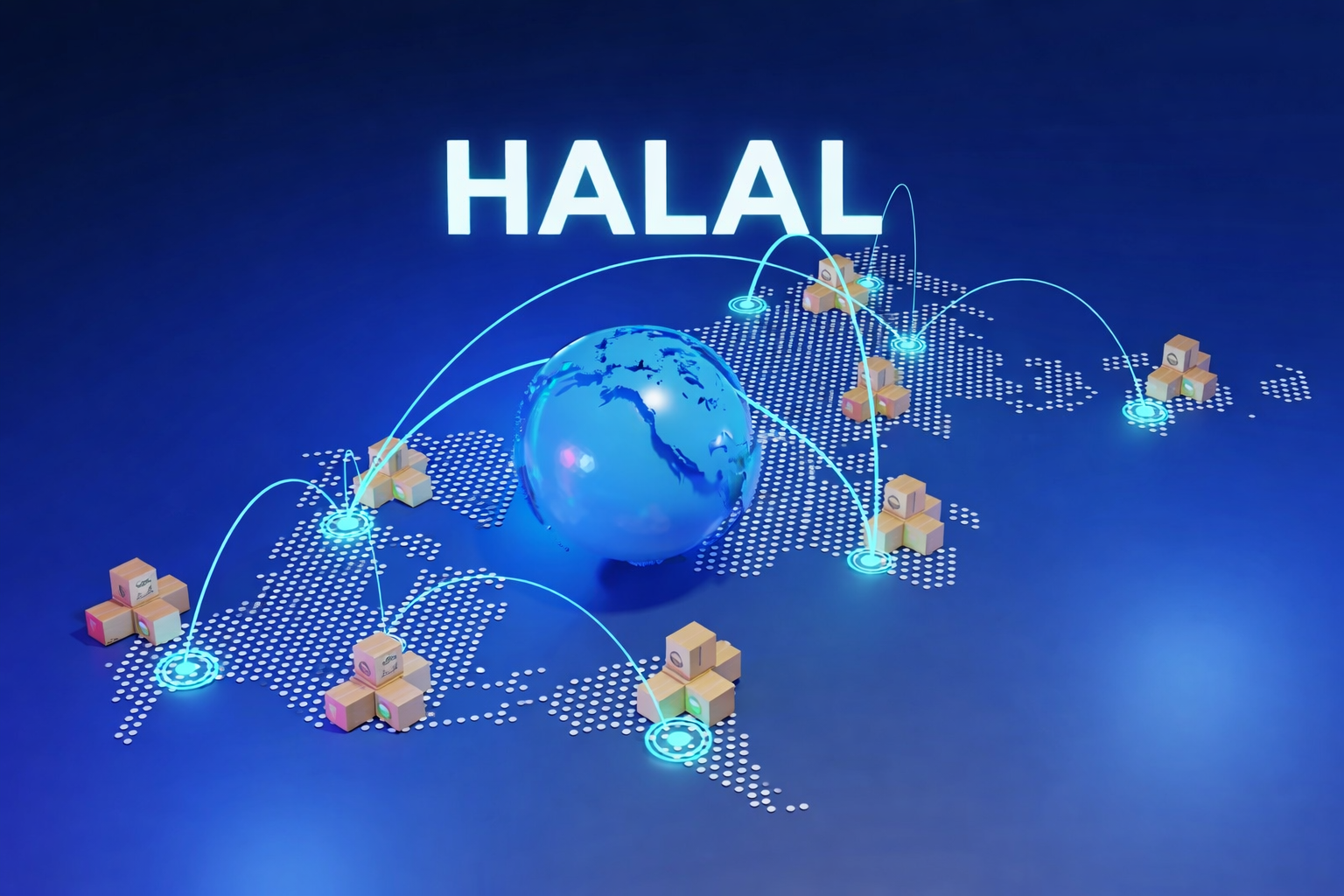
The global halal market presents substantial growth opportunities, with projections indicating continued expansion into the trillions of dollars in coming years. Indonesia’s cultural alignment with halal principles, combined with its demographic advantages, positions the country to capture a significant share of this growing market.
The domestic market provides a strong foundation for initial growth and product development, while international expansion offers opportunities for increased export revenues and economic diversification.
The Path Forward
Indonesia’s halal industry development represents more than an economic opportunity—it constitutes a strategic pathway to elevate the nation’s global standing. Success requires coordinated efforts across multiple fronts:
- Addressing structural cost disadvantages through policy reforms
- Investing in infrastructure and industrial hub development
- Supporting MSME capacity building and productivity enhancement
- Fostering international partnerships and certification harmonization
- Promoting innovation across all aspects of the halal value chain
By leveraging its demographic advantages and committing to systematic development, Indonesia has the potential to emerge as a global leader in the halal market. This transformation would not only drive economic growth but also establish the country as a developed nation through strategic utilization of its unique cultural and demographic assets.
The window of opportunity for Indonesia to establish halal industry leadership is significant, but it requires decisive action and coordinated implementation across all relevant sectors and stakeholders.
Original article:
halaltimes.com. (n.d.). Halal Industry Can Drive Indonesia to Developed Nation Status. Retrieved July 3, 2025, from https://www.halaltimes.com/halal-industry-can-drive-indonesia-to-developed-nation-status/