Egypt’s Finance Minister Calls for Enhanced BRICS Support for Emerging Economies
Source: Akhbar El Youm
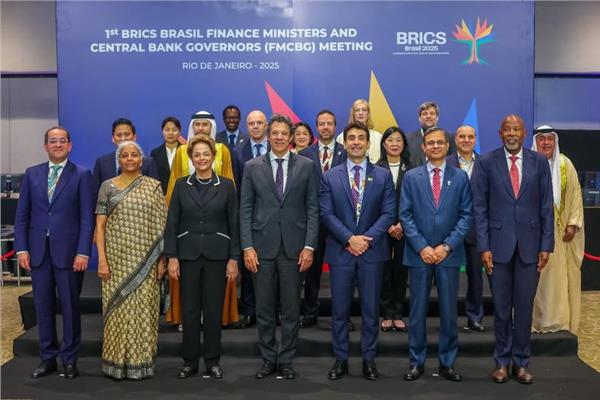
JAKARTA – Egypt’s Finance Minister Ahmed Kojok emphasized the critical need for BRICS nations to strengthen their collective support for emerging economies during the recent BRICS Finance Ministers and Central Bank Governors meeting held in Brazil. His remarks highlighted the urgent challenges facing developing nations and the potential for BRICS to play a transformative role in addressing global economic imbalances.
Debt Sustainability as a Priority
Speaking at the financial policy session, Minister Kojok stressed that BRICS member countries must collaborate with all stakeholders to ensure debt sustainability for emerging economies. He emphasized the importance of advancing diverse financing instruments, particularly debt swap initiatives that could provide crucial relief to developing nations struggling with external debt burdens.
“We look forward to a clear footprint from BRICS in supporting emerging economies as they confront global challenges,” Kojok stated, underlining the bloc’s potential to serve as a counterweight to existing international financial mechanisms.
Concerns Over Unilateral Economic Measures
The Egyptian Finance Minister warned that unilateral economic actions undermine confidence in the global economic system and hinder developmental financing. This critique appears directed at economic sanctions and trade restrictions that often disproportionately affect developing nations and limit their access to international markets and financing.
Kojok’s comments reflect growing sentiment among Global South nations that current international economic governance structures favor developed economies at the expense of emerging markets.
Climate Finance Accessibility
A significant portion of Minister Kojok’s address focused on climate financing challenges. He argued that facilitating developing nations’ access to appropriate and equitable climate financing has become an urgent necessity, particularly as these countries face disproportionate impacts from climate change despite contributing less to global emissions.
This emphasis on climate finance reflects Egypt’s ongoing priorities, especially following its hosting of COP27 and its continued advocacy for climate justice and adequate funding for adaptation and mitigation efforts in the Global South.
International Tax System Reform
The Finance Minister reaffirmed Egypt’s commitment to supporting the development of a more equitable international tax system through the United Nations Tax Convention. This initiative represents part of broader efforts to reform global tax governance and ensure that developing nations receive fair shares of international tax revenues.
The UN Tax Convention aims to create more inclusive and equitable international tax rules, moving beyond frameworks primarily designed by and for developed economies.
Egypt’s Economic Reform Success Story
Minister Kojok presented Egypt’s economic reforms as a model for enhancing resilience and achieving inclusive, sustainable growth. He highlighted several key achievements of the Egyptian economy:
Strong Growth Performance: Egypt has successfully achieved high growth rates driven by robust private sector expansion and renewed private investment flows.
Fiscal Discipline: The government has advanced fiscal consolidation efforts through tax incentives, resulting in approximately 35% growth in tax revenues without imposing new burdens on taxpayers.
Private Sector Revival: The return of strong private investment flows has become a key driver of economic growth, demonstrating the success of structural reforms.
Sectoral Cooperation Opportunities
The Finance Minister identified significant opportunities for cooperation among BRICS nations in agriculture, manufacturing, and healthcare sectors, particularly to enhance food and health security for the Global South. These sectors represent areas where BRICS countries possess complementary strengths and could develop integrated value chains.
Infrastructure Financing Innovation
Kojok emphasized the importance of developing innovative financing mechanisms through the new BRICS investment platform to accelerate infrastructure projects. This focus on infrastructure reflects the critical infrastructure gaps in many developing nations and the potential for BRICS to provide alternative financing sources.
The proposed investment platform could offer developing nations access to funding outside traditional Western-dominated financial institutions, potentially with more favorable terms and conditions.
Strategic Vision for BRICS Financial Cooperation
Minister Kojok’s remarks reflect Egypt’s strategic vision for BRICS as more than an economic bloc, but as a platform for reshaping global financial governance. His emphasis on debt sustainability, climate finance, and tax reform indicates Egypt’s desire to use BRICS membership to advance broader Global South interests.
The Egyptian approach suggests viewing BRICS as a vehicle for:
- Challenging existing international financial hierarchies
- Promoting more equitable global economic governance
- Developing alternative financing mechanisms for developing nations
- Advancing climate justice and sustainable development goals
Regional and Global Implications
Egypt’s active participation in BRICS financial discussions signals the country’s commitment to multilateral economic cooperation beyond traditional Western-led institutions. As a bridge between Africa, the Middle East, and the Mediterranean, Egypt’s engagement with BRICS could influence broader regional integration efforts.
The Finance Minister’s emphasis on supporting emerging economies through BRICS mechanisms reflects growing South-South cooperation trends and the desire among developing nations to create alternative economic arrangements that better serve their interests.
Looking Forward: Implementation Challenges
While Minister Kojok’s vision for enhanced BRICS support for emerging economies is ambitious, implementation will require:
- Concrete mechanisms for debt sustainability support
- Establishment of effective climate financing channels
- Development of the proposed investment platform
- Coordination among BRICS members with varying economic priorities
The success of these initiatives will depend on BRICS nations’ ability to move beyond declarations to establish functional institutions and financing mechanisms that can effectively support emerging economies.
Egypt’s Position in Global Economic Governance
Through its BRICS engagement, Egypt positions itself as a leader in advocating for reformed global economic governance that better serves developing nations. The country’s emphasis on debt sustainability, climate finance, and equitable taxation reflects broader aspirations among Global South nations for more inclusive international economic institutions.
Minister Kojok’s remarks at the Brazil meeting demonstrate Egypt’s commitment to using its BRICS membership to advance not only national interests but also broader objectives of economic justice and sustainable development for emerging economies worldwide.
Original article:
akhbarelyom.com. (n.d.). كجوك: نتطلع إلى بصمة واضحة لـ«البريكس» في مساندة الاقتصادات الناشئة. Retrieved July 7, 2025, from https://m.akhbarelyom.com/news/NewDetails/