Defining Prosperity: The Wealthiest Muslim Nations in 2025
Source: Halal Times
JAKARTA – The concept of national wealth extends far beyond simple economic indicators, encompassing multiple dimensions that reveal different aspects of prosperity. When examining the wealthiest Muslim countries in 2025, a nuanced approach considering various metrics provides a more complete understanding of economic success and citizen well-being across the Islamic world.
Three Dimensions of National Wealth
Understanding which Muslim nation claims the title of “wealthiest” requires examining prosperity through three distinct lenses: total economic output, individual purchasing power, and quality of life balanced with work demands. Each perspective reveals different leaders and provides unique insights into economic achievement across Muslim-majority countries.
Economic Powerhouses: Total GDP Leaders
Turkey: The Manufacturing Giant
Turkey emerges as the dominant economic force among Muslim nations, with projected GDP reaching $1.44 trillion in 2025. Despite growth moderating to approximately 3.1% from previous higher rates, Turkey’s economic strength stems from its diversified industrial foundation spanning automotive production, textile manufacturing, and electronics sectors that drive significant export revenues.
The country’s strategic position bridging Europe and Asia creates extensive trade networks, while its substantial domestic market fuels consumption and investment. Turkey’s tourism industry continues attracting millions of visitors annually, contributing substantially to economic output. Although facing inflation challenges projected to remain elevated through 2025, Turkey’s structural economic advantages maintain its position as the region’s largest economy.
Indonesia: The Demographic Dividend
Indonesia closely follows with anticipated GDP of $1.43 trillion, supported by robust projected growth rates of 5.1-5.2% in 2025. As the world’s most populous Muslim nation, Indonesia leverages its massive domestic market as a fundamental economic pillar, demonstrating remarkable resilience against global economic headwinds.
The Indonesian economy benefits from diversified sectors including manufacturing, agriculture, and expanding services industries. Ongoing structural reforms aim to attract foreign investment and enhance productivity, signaling commitment to sustained large-scale economic expansion, though commodity price fluctuations present ongoing challenges.
Saudi Arabia: The Transformation Story
Saudi Arabia secures its position as a major economic force with projected GDP of $1.08 trillion in 2025. While historically dependent on petroleum revenues contributing over 70% of government income, the Kingdom actively pursues Vision 2030’s ambitious diversification agenda.
This comprehensive reform program has already reduced oil’s GDP contribution from 85-90% to under 55%. Massive infrastructure investments, including the $500 billion NEOM project and $63.2 billion Diriyah development, target tourism, technology, and non-oil industries. These strategic initiatives aim to transform the petro-economy into a sustainable, innovation-driven global hub through regulatory reforms and investment incentives.
Individual Prosperity: Per Capita Wealth Champions
Qatar: The Per Capita Leader
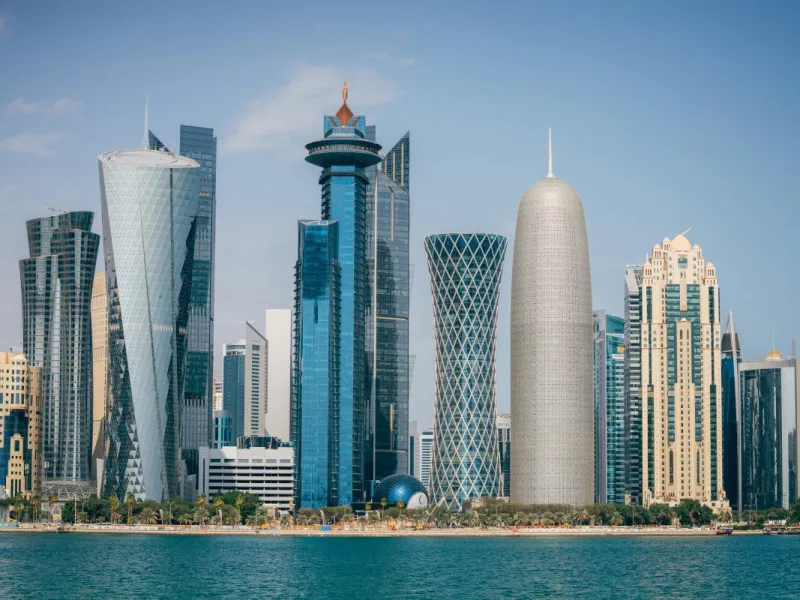
Qatar demonstrates exceptional individual wealth with projected GDP per capita (PPP) potentially reaching $118,760 in 2025, ranking among global leaders. This extraordinary figure results from immense natural gas reserves—the world’s third largest with 24.7 trillion cubic meters of proven reserves—combined with a relatively small citizen population.
This unique demographic-resource ratio enables massive wealth concentration per individual, supporting high wages, generous social benefits, and affordable goods relative to income levels. The $28.7 billion North Field East expansion project, designed to increase LNG output by 40% by 2026, ensures continued prosperity streams.
United Arab Emirates: The Diversification Success
The UAE achieves remarkably high GDP per capita (PPP) through successful economic diversification strategies. While oil wealth provides foundation, the UAE has transformed into a dynamic global financial, trade, and tourism center. Non-oil trade exceeded AED 2.8 trillion in 2024, representing 139% of GDP, with projected 4.5% growth in non-hydrocarbon GDP for 2025.
Dubai and Abu Dhabi serve as magnets for international business and skilled professionals. Economic acceleration driven by strong trade relationships, thriving real estate markets (sales up 12.6% year-on-year in Q1 2025), and attracting 7.15 million visitors in Q1 2025 alone ensures high incomes and manageable living costs.
Brunei: The Resource Advantage
Brunei leverages significant hydrocarbon reserves relative to its modest population, enabling very high living standards for citizens. This demographic-resource balance creates strong purchasing power for consumer goods and services without the extreme costs associated with other high-income nations.
Holistic Wealth: Prosperity with Balance
Qatar: Maximum Efficiency
Qatar presents the most compelling case for comprehensive wealth when considering work-life balance alongside economic prosperity. The nation’s per-capita wealth from gas industry productivity allows citizens to enjoy remarkable quality of life through economic structures enabling robust social welfare systems.
For Qatar’s national workforce, high living standards are achievable without disproportionate labor demands, maximizing returns on productive time and enabling quality of life extending beyond mere income to embrace leisure and personal development.
UAE: High-Value Productivity
The UAE’s focus on high-productivity, high-value sectors including finance, technology, and specialized services enables significant wealth generation through efficiency. While maintaining bustling commercial activity, the nation’s high-income environment coupled with excellent infrastructure allows residents, particularly skilled professionals, to achieve high living standards without exceptionally long working hours compared to other global economic centers.
Broader Economic Landscape
Malaysia: Diversified Resilience
Malaysia maintains a highly diversified economy with strong manufacturing sectors, particularly Electrical & Electronics components vital to global supply chains, and robust services industries. The economy demonstrates resilient growth driven by domestic demand and investment despite external uncertainties.
Bangladesh: Export-Led Growth
Bangladesh’s economy centers on its powerhouse Ready-Made Garment industry, valued at $19.04 billion in 2025 with projected CAGR of 5.81% through 2033. The large workforce, rising domestic consumption, and government support for value-added products position Bangladesh strongly in global textile markets.
Egypt: Strategic Recovery
Egypt experiences economic resurgence with IMF projections of 4.1% GDP growth in 2025. Key drivers include vital Suez Canal revenues targeting $9 billion in FY24-25, revitalized tourism attracting 7.069 million visitors in H1 2024, and significant FDI inflows into new economic zones including the $35 billion UAE-backed Ras El Hikma development.
Kazakhstan: Resource-Dependent Growth
Central Asia’s largest economy, Kazakhstan, projects solid 4.5-5.0% growth in 2025, largely from increased oil production and fiscal stimulus. However, the nation faces ongoing challenges diversifying beyond hydrocarbons to ensure long-term stability and address low productivity and declining non-energy investment.
Iran: Sanctions Impact
Despite considerable nominal GDP, Iran’s economy faces structural challenges from international sanctions crippling foreign trade (non-oil exports down 14.4% in Spring 2025), energy crises causing blackouts, and policy volatility. Continued oil revenue dependence with significant military allocation highlights complex development hurdles.
Multiple Definitions of Wealth
The question of the “richest Muslim country” in 2025 yields different answers depending on chosen metrics. Turkey and Indonesia emerge as economic giants by total output, representing industrial might and vast markets. Meanwhile, Qatar and the UAE offer unparalleled individual prosperity and quality of life when considering purchasing power and work-life balance.
This multi-faceted wealth analysis reveals the dynamic and diverse economic landscape across Muslim nations—a constantly evolving spectrum forging distinct paths on the global stage. Understanding these various dimensions of prosperity provides deeper appreciation for the complexity and potential within the Islamic world’s economic development.
Original article:
halaltimes.com. (n.d.). What is the Richest Muslim Country in the World in 2025. Travelers. Retrieved August 5, 2025, from https://www.halaltimes.com/what-is-the-richest-muslim-country-in-the-world-in-2025/