From Niche to Mainstream: The Rise of Halal Tourism in the Global Travel Industry
The landscape of tourism is undergoing a significant transformation, with the Muslim-friendly travel sector poised for remarkable growth. Experts predict that this market will expand to an astounding $410.9 billion by 2032, a substantial increase from $256.5 billion in 2023. This surge is driven by a rising demand for travel options that cater specifically to the needs of Muslim travelers, prompting popular destinations to implement various initiatives to tap into this lucrative market.
According to Crescent Rating, international arrivals of Muslim tourists reached 80 million in the first half of 2024, with projections suggesting that this figure could soar to 230 million by 2028. The broader Islamic Halal economy, which encompasses tourism and investments, is expected to reach a staggering $7.7 trillion this year—more than double the $3.2 trillion recorded in 2015 and significantly higher than the $5.7 trillion valuation in 2021.
Defining Halal Tourism
The term “Halal,” which means “permitted” in Arabic, extends far beyond dietary laws. Halal tourism encompasses a variety of considerations, including access to halal food, prayer facilities, hygiene amenities, gender-segregated options, and environments free from activities deemed “forbidden,” such as alcohol and gambling.
The Need for Halal Tourism
Fazal Bahardeen, CEO of Crescent Rating, highlights that Muslim leisure travelers share similar motivations with other tourists—they seek to immerse themselves in the culture of their chosen destinations. However, the key difference lies in their desire to enjoy these experiences without compromising their faith-based principles. This form of travel transcends mere religious tourism; it represents a holistic approach to experiencing the world.
A report from Crescent Rating forecasts that the Muslim travel market will reach $300 billion by 2026, presenting a strategic opportunity for destinations and operators to engage with this expanding demographic.
The Expanding Landscape of Muslim-Friendly Tourism
AbdulMaalik Tailor, CEO and founder of Halal Tourism Britain, views Halal tourism as an untapped market brimming with potential. Historically, Muslim travelers primarily engaged in religious pilgrimages or visits to their home countries. However, as the community has evolved—particularly among younger generations with increased disposable income—the demand for tailored travel experiences has become evident.
Bahardeen notes that many popular tourist destinations are now recognizing this potential and enhancing their offerings to be more inclusive. While Malaysia and Thailand remain frontrunners in Halal tourism, other countries like Singapore, the United Kingdom, Taiwan, and Hong Kong are also making strides.
For instance, Thailand introduced a Halal industry action plan last year to promote local products and elevate industry standards, aiming to revitalize its tourism-dependent economy post-COVID-19. The country has already seen a 4 million increase in Muslim tourists over the past decade and has opened its first Halal hotel.
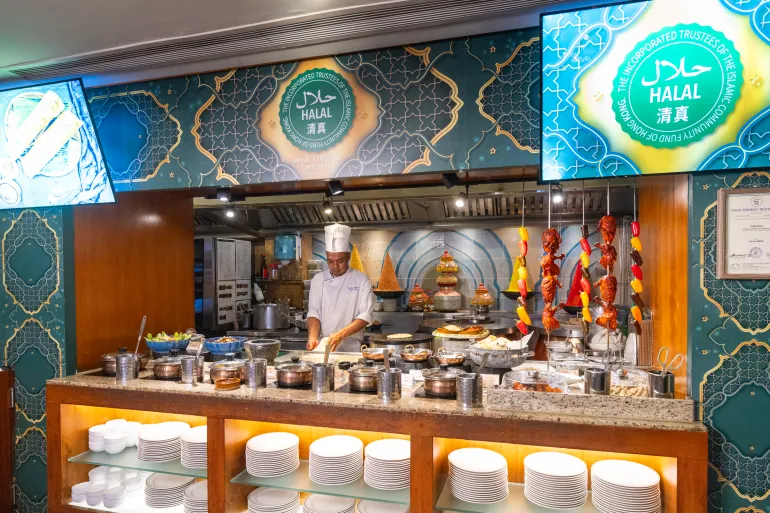
In November, the Hong Kong Tourism Board launched an initiative to enhance Muslim-friendly tourism facilities, encouraging local establishments to assess their Halal compliance and promote the importance of Halal certification.
Taiwan has consistently ranked high in Crescent Rating’s assessments, while the Philippines has emerged as a promising Muslim-friendly destination. Christina Frasco, the Philippines’ Tourism Secretary, highlighted the significance of Halal tourism in diversifying the country’s tourism offerings and enhancing its competitiveness in the global market.
Zanzibar also hosted a Halal Tourism Exhibition last year, aiming to attract investment and interest in the sector, with local officials expressing optimism about boosting businesses already catering to Muslim travelers.
Tailor points out that the increasing engagement of non-Muslim countries in Halal tourism reflects a positive trend in the market’s growth.
Factors Fueling the Growth of Halal Tourism
The rising demand for Halal tourism can be attributed to several factors. While the growth of the Muslim population plays a significant role, Tailor notes that the expanding middle class with disposable income is a major driver of travel aspirations.
Destinations—both Muslim and non-Muslim—are becoming increasingly aware of the potential of Halal tourism and are actively marketing themselves to create diverse experiences. The narrative surrounding Halal travel is also evolving, with Muslim influencers and brands taking the lead, while non-Muslims interested in Halal experiences are increasingly seeking shared adventures.
With approximately 70% of the global Muslim population under the age of 40, Crescent Rating predicts substantial growth in the middle-aged demographic by 2034, which is crucial for travel due to their economic activity and propensity to travel.
Bahardeen reflects on the profound changes in Halal tourism over the past 16 years. What began as a niche concept with limited awareness has now transformed into a widely recognized segment of the travel industry, with dedicated efforts to accommodate Muslim travelers.
As the Halal tourism market continues to evolve, it is clear that the future holds exciting possibilities for both travelers and destinations alike, paving the way for a more inclusive and diverse global travel experience.
Original Article:
Ghani, F. (2025, February 1). Niche to mainstream: Evolution of halal tourism in global travel industry. Al Jazeera. https://www.aljazeera.com/news/2025/2/1/niche-to-mainstream-evolution-of-halal-tourism-in-global-travel-industry


