Indonesia’s Rising Potential in Asian Medical Tourism
JAKARTA – The Indonesian Ministry of Tourism has officially launched the Indonesian Health Tourism program, marking a significant strategic move to strengthen the country’s appeal in the healthcare tourism sector. According to Market Research Future, medical tourism is emerging as one of the world’s fastest-growing tourism segments, presenting substantial economic opportunities.
The Economic Multiplier Effect
Medical tourists contribute significantly more to local economies than conventional tourists, spending two to three times more on average. Beyond medical procedures, their expenditures encompass additional tourism destinations, accommodations, and support services such as interpreters and companions during their treatment stay.
This multiplier effect creates opportunities across multiple sectors including healthcare facilities, hospitality, transportation, creative industries, and various service sectors, making medical tourism a strategically valuable industry with far-reaching economic impact.
Competing in the Asian Market
While countries like Thailand, India, Malaysia, and South Korea currently dominate Asia’s medical tourism landscape, Indonesia is carving out its own niche, particularly in eye care services.
“Popular treatments in Asia now extend beyond cardiac surgery and cosmetics to include vision care such as LASIK. Indonesia has tremendous potential to become a significant player in this segment,” said Dr. Sophia Pujiastuti, founder of SILC Lasik Center.
Malaysia’s success demonstrates that healthcare facilities such as hospitals and clinics are the primary factors in medical tourism decisions, followed by the quality of human resources and technical care standards.
Key Success Factors
Research from the Medical Tourism Association reveals important insights into patient decision-making. While quality and trust dominate patient choices, 28.8% of respondents indicated that cost influences their selection. Additionally, 34.6% of patients expressed concerns about hidden costs, and 26.9% feared potential fraud in international payment systems.
These findings underscore the critical importance of transparency and pricing clarity in attracting international medical tourists. Transparent, comprehensive, and competitive pricing serves as the key to converting interest into actual medical travel decisions.
Strategic Infrastructure Development
Indonesia recognizes that infrastructure development is crucial to supporting thematic tourism services, particularly in health and wellness. Minister of Tourism Widiyanti Putri Wardhana emphasized that infrastructure development opens new frontiers for tourism, including the rapidly growing health and wellness segment.
To capitalize on this opportunity, the Indonesian government has established two major Special Economic Zones focused on health tourism:
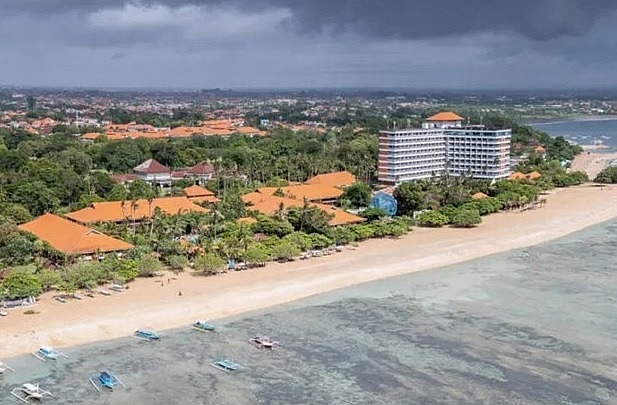
Sanur Special Economic Zone (Bali) has secured investments totaling Rp4.25 trillion to date, with projections to contribute over Rp20 trillion to state revenue by 2045.
Officially inaugurated by President Prabowo Subianto on June 25, 2025, KEK Sanur represents Indonesia’s first integrated health and tourism zone. Spanning 41.26 hectares, this strategic national project combines international-standard medical facilities, hotel and MICE accommodations, and health research centers. The zone’s total projected investment reaches Rp10.2 trillion and is expected to absorb 18,375 direct workers and 25,272 indirect workers when fully operational. By the first quarter of 2025, the zone had already realized cumulative investments of Rp4.42 trillion and created 3,822 jobs.
A concrete example of KEK Sanur’s development is the upcoming fertility service center, established through collaboration between PT Hotel Indonesia Natour (HIN) as the zone’s developer and operator, and Alpha IVF, a Malaysian fertility clinic network. Built on 6,343 square meters of land, this international-standard facility will provide comprehensive fertility services including IVF programs, obstetrics, gynecology, and integrated women’s and children’s healthcare.
“This marks an important milestone for Indonesia’s health tourism transformation,” said Christine Hutabarat, CEO of PT Hotel Indonesia Natour. Dato’ Dr. Colin Lee, representing Alpha IVF, noted Indonesia’s growing need for fertility services: “With the presence of this service center in Bali, we want to bring international standards closer to Indonesian society.”
Batam International Health and Tourism Special Economic Zone (Riau Islands) is expected to contribute 1.03% or approximately Rp18.8 trillion to Batam’s Gross Regional Domestic Product (GRDP) and provide livelihoods for more than 105,000 workers.
“These special economic zones are designed to provide healthcare services integrated with tourism settings. If developed properly, they can help increase domestic spending,” Widiyanti stated at the International Conference of Infrastructure (ICI) 2025 in Jakarta.
Massive Economic Potential
The economic potential is substantial. Minister of Health Budi Gunadi Sadikin highlighted that Indonesia’s health tourism sector could generate $84 billion (approximately Rp1,362 trillion) in GDP. Currently, Indonesians spend around $10 billion annually on healthcare services abroad in countries like Malaysia, Singapore, and the United States—a market that domestic health tourism could capture.
With Indonesia’s average life expectancy at 70 years and health spending of approximately $140 per person annually, the total expenditure reaches $40 billion, expected to increase annually as the population ages.
Innovative Development Strategy
Beyond special economic zones, Indonesia is taking a unique approach to developing its medical tourism infrastructure. The Minister of Transmigration, M. Iftitah Sulaiman Suryanagara, has invited Japanese investors to establish international-standard, premium healthcare facilities in transmigration areas, inspired by the successful Mayo Clinic model in the United States.
“We’re learning from a small city in Minnesota, United States, which has a specialized cancer hospital that attracts patients from around the world. Due to its highly specific expertise, Mayo Clinic’s presence has drawn more than 120,000 professional workers to the hospital, while the city’s total population is only 150,000 people,” Iftitah explained at the “From Mobility to Prosperity” business forum at the Indonesia Pavilion during Osaka Expo 2025, Japan.
The concept involves developing specialized healthcare facilities on Indonesia’s exotic islands, combining natural beauty with world-class medical services for conditions such as cancer, cardiac care, or long-term recovery.
“Imagine a beautiful, peaceful, natural island becoming a destination where patients from various countries come for treatment while also resting. This will create a world-class healthcare ecosystem,” he said.
Several transmigration areas including Lombok, Nihi Sumba, and the Anambas Islands have been identified as having significant potential as world-class tourism destinations. These locations could support luxury tourism developments such as resorts, exclusive villas, and culture-based ecotourism alongside premium healthcare facilities.
The government has established close collaboration with the Ministry of Health to ensure basic healthcare services are available throughout transmigration areas, while inviting global investors to create premium-level facilities capable of accommodating expatriates and health tourists.
Holistic Health and Wellness Integration
Indonesia recognizes that modern international tourists prioritize health aspects and prefer holistic health experiences, especially when they involve the culture, traditions, and nature of the country they visit. The Ministry of Tourism and Ministry of Health have collaborated to develop tourism guidelines specifically for health tourism.
“Indonesia has everything needed to compete in the health tourism industry,” Widiyanti emphasized.
Several projects involving international business partners, particularly from Japan, are already underway to attract investors who can help develop this emerging market. These projects include Indonesian spa facilities and elderly care residences, which have generated significant interest from various investors, including medical companies.
The Path Forward
“This signals that healthcare services in Indonesia must continue improving accessibility, convenience, and international standards. We believe Indonesia has enormous potential to become a premier destination in this region,” Dr. Sophia emphasized.
With an integrated approach and continued enhancement of national medical service quality, Indonesia has significant potential to claim a more prominent role in Asia’s healthcare tourism map. The government is not only opening investment opportunities but also ensuring local communities become part of the economic growth itself, with training programs designed to meet Japanese and global tourism industry standards.
By combining competitive pricing, transparent costs, high-quality care, and strategic development of specialized healthcare facilities in exotic locations, Indonesia aims to establish itself as a leading medical tourism destination in Asia and beyond.
References
Adel, A. M., Dai, X., Yan, C., & Roshdy, R. S. (2022). Fear of COVID-19 and the future of medical tourism in the post-pandemic era: Implications for Saudi Arabia. Journal of King Saud University – Science, 34(3), 101900. https://doi.org/10.1016/j.jksus.2022.101900
Bindu, T., Kurakar, P. K., & Thomas, S. (2023). Medical tourism in Asia: A comprehensive review of trends, challenges, and opportunities. International Journal of Healthcare Management, 16(2), 145-162. https://doi.org/10.1080/20479700.2023.2186543
Cheng, T. M., & Chang, H. Y. (2024). Digital transformation and medical tourism: The role of telemedicine and AI in Southeast Asia. Tourism Management Perspectives, 49, 101186. https://doi.org/10.1016/j.tmp.2023.101186
Han, H., & Hyun, S. S. (2023). Medical tourism destination competitiveness: A comparative analysis of Asian countries. Journal of Travel Research, 62(4), 891-910. https://doi.org/10.1177/00472875221098765
Lam, C. C., & du Cros, H. (2022). Resilience in medical tourism: Learning from the COVID-19 pandemic. Current Issues in Tourism, 25(18), 2985-3001. https://doi.org/10.1080/13683500.2022.2052010
Market Research Future. (2024). Medical tourism market research report: Global forecast to 2030. Market Research Future.
Medical Tourism Association. (2024). Medical tourism industry report 2024: Post-pandemic recovery and future trends. Medical Tourism Association.
Moghavvemi, S., Parveen Taj, M. S. B. S., & Nguyen, B. (2023). Determinants of medical tourism adoption: An integrative approach. Tourism Management, 95, 104685. https://doi.org/10.1016/j.tourman.2022.104685
Nagaj, R., & Žuromskaitė, B. (2024). Medical tourism development in post-pandemic Asia: Infrastructure, policy, and sustainability perspectives. Sustainability, 16(3), 1247. https://doi.org/10.3390/su16031247
Rahman, M. K., Gazi, M. A. I., Bhuiyan, M. A., & Rahaman, M. A. (2023). An integrated model for examining tourists’ intention toward medical tourism: Empirical evidence from Bangladesh. Heliyon, 9(8), e18439. https://doi.org/10.1016/j.heliyon.2023.e18439
Suess, C., Baloglu, S., & Busser, J. A. (2022). Medical tourism destination image formation: A conceptual framework. International Journal of Contemporary Hospitality Management, 34(6), 2229-2252. https://doi.org/10.1108/IJCHM-06-2021-0762
Yusoff, N. A. M., Hamid, S. R., & Ahmad, M. F. (2024). The role of special economic zones in advancing medical tourism: Evidence from ASEAN countries. Journal of Asian Business and Economic Studies, 31(1), 45-63. https://doi.org/10.1108/JABES-08-2023-0289