Malaysia Leads Initiative to Establish World Halal Development Council
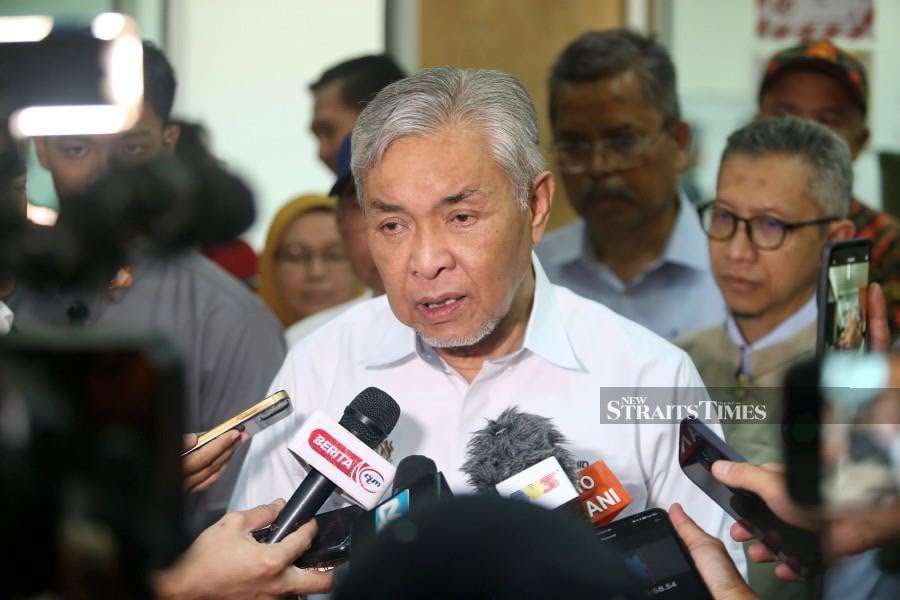
JAKARTA – Malaysia has announced its leadership in establishing the World Halal Development Council (WHDC), a new international platform designed to coordinate trade, investment, and innovation across the global halal economy. Deputy Prime Minister Datuk Seri Dr. Ahmad Zahid Hamidi revealed this initiative during the Global Halal Summit 2025 in Kuala Lumpur on September 17, 2025.
Strategic Vision and Membership
Focused Initial Approach
Zahid, who also serves as chairman of the Malaysian Halal Industry Development Council, explained that the WHDC would commence operations with a compact but strategically selected membership. This deliberate approach aims to accelerate capacity development, enhance research and development efforts, and generate measurable economic impact.
“The council will build a coalition that is dynamic and market-oriented,” Zahid stated in his address, which was delivered on his behalf by Minister in the Prime Minister’s Department (Religious Affairs) Datuk Mohd Na’im Mokhtar at the Grand Dinner accompanying the summit.
The Halal+ 2030 Initiative
Comprehensive Global Movement
Alongside the WHDC announcement, Malaysia proposed Halal+ 2030, an ambitious global movement with multiple strategic objectives:
ESG Integration: Aligning halal standards with environmental, social, and governance principles alongside ethical consumer trends.
Digital Transformation: Accelerating digital halal infrastructure through artificial intelligence, blockchain technology, and Internet of Things applications to enable complete traceability throughout supply chains.
Sector Bundling: Creating integrated halal offerings across multiple sectors including food, pharmaceuticals, cosmetics, travel, and fashion.
Leadership Development: Cultivating future industry leaders through technical and vocational education and training programs alongside international training initiatives.
Open Invitation for Collaboration
“Halal+ 2030 is an invitation to bring your expertise, your investment, and your ideas, so that halal is not only certified but dignified; not only recognised but respected,” stated the Rural and Regional Development Minister in his address.
Priority Areas for Collaboration
SME Certification Pathways
Malaysia identifies several critical areas where international cooperation is urgently needed. A primary focus involves creating streamlined certification pathways for small and medium enterprises (SMEs), which currently face significant obstacles.
“Today, duplication and delays hold us back. We must expand recognised certification bodies and more importantly, move towards official mutual recognition across countries, so that halal becomes seamless for exporters and consumers alike,” Zahid emphasized.
Mutual Recognition Framework
The initiative seeks to eliminate redundant certification processes and reduce delays through expanded recognition of certification bodies. Crucially, it aims to establish formal mutual recognition agreements among participating nations, simplifying processes for both exporters and consumers across borders.
Strategic Significance
Beyond Commerce
Both the WHDC and Halal+ 2030 initiatives reflect a broader vision extending beyond purely commercial considerations. Zahid articulated that the halal economy encompasses dimensions of diplomacy, influence, and international leadership.
“It is Malaysia’s way of showing the world that a Muslim nation can uphold the principles of syariah while embracing the realities of a modern, global economy,” he explained.
Soft Power Development
The Deputy Prime Minister noted that halal has evolved into one of Malaysia’s most powerful soft power instruments. Through its certification systems, Islamic finance sector, halal education programs, and halal tourism offerings, Malaysia has established significant international credibility and trust.
“And trust, once earned, becomes influence,” Zahid observed, underscoring the strategic value of Malaysia’s halal industry leadership.
Economic Impact and Projections
Global Market Growth
The global halal economy currently exceeds USD 3 trillion in value, with projections indicating growth to USD 5 trillion by 2030. This expansive market encompasses diverse sectors including food, pharmaceuticals, cosmetics, tourism, logistics, finance, and the digital economy.
Malaysia’s Halal Economy Contribution
For Malaysia specifically, the halal sector represents a substantial economic pillar with significant growth trajectory:
Current Impact: The halal industry contributes 7.5% of Malaysia’s gross domestic product as of 2025.
Projected Growth: This contribution is expected to rise to 11% of GDP by 2030, representing a domestic value of USD 113 billion.
Export Performance: Malaysia’s halal exports reached USD 13.1 billion in 2024, marking a 15% increase from the previous year and accounting for more than 5% of national exports.
Future Targets: Under the 13th Malaysia Plan, the Madani government aims to increase halal exports to USD 17 billion, positioning halal not merely as an industry sector but as a cornerstone of GDP growth.
Implementation Timeline
The initiatives announced at the Global Halal Summit 2025 represent the beginning of a structured approach to establishing international coordination mechanisms for the halal economy. While specific implementation timelines were not detailed in the announcement, the proposals signal Malaysia’s commitment to translating these concepts into operational frameworks.
International Implications
Standardization Benefits
The establishment of the WHDC and implementation of Halal+ 2030 could significantly benefit the global halal industry by:
- Reducing certification complexity and costs for businesses operating across multiple markets
- Creating unified standards that facilitate international trade
- Accelerating innovation through coordinated research and development efforts
- Enhancing consumer confidence through improved traceability and transparency
Diplomatic Dimensions
These initiatives also carry important diplomatic implications, positioning Malaysia as a convening power within the Muslim world and broader international community. By championing coordination rather than competition among halal-certifying nations, Malaysia seeks to build collaborative frameworks that benefit all participating economies.
Challenges and Opportunities
Harmonization Complexities
Establishing mutual recognition frameworks and unified standards across diverse national regulatory systems presents significant challenges. Different countries maintain varying interpretations of halal requirements, and reconciling these differences while respecting national sovereignty will require diplomatic skill and technical expertise.
Digital Infrastructure Requirements
The digital transformation elements of Halal+ 2030, while offering tremendous potential for supply chain transparency and efficiency, will require substantial investment in technological infrastructure and capacity building, particularly for developing economies.
Market Expansion Potential
Successfully implementing these initiatives could unlock significant market expansion opportunities by reducing barriers to entry for halal-certified products in international markets. This could particularly benefit SMEs that currently struggle with the complexity and cost of multiple certification requirements.
Conclusion
Malaysia’s leadership in proposing both the World Halal Development Council and the Halal+ 2030 movement represents an ambitious vision for coordinating and accelerating growth in the global halal economy. By emphasizing collaboration over competition, digital transformation, and ethical integration, these initiatives seek to position the halal sector as a model for sustainable, values-based economic development.
The success of these proposals will depend on securing buy-in from key halal-producing and consuming nations, establishing effective governance structures, and demonstrating tangible benefits for participating countries and businesses. However, given Malaysia’s established credibility in halal certification and Islamic finance, along with its track record of soft power diplomacy, the country is well-positioned to lead this coordinating effort.
As the global halal market continues its trajectory toward USD 5 trillion by 2030, effective coordination mechanisms will become increasingly important. Malaysia’s initiatives aim to ensure that this growth occurs in a structured, equitable manner that benefits producers, consumers, and economies across the Muslim world and beyond.
Original Article:
Straits Times. (2025, October 20). Malaysia to lead creation of World Halal Development Council. Retrieved from https://www.nst.com.my/news/nation/2025/09/1276685/malaysia-lead-creation-world-halal-development-council


