Laos’ Transformation into a New Haven for Muslim Travelers
 (Photo: Outlook Travel Magazine)
In the last six years, Laos has undergone a significant transformation, particularly in its approach to accommodating Muslim visitors. Recent visits have shown considerable improvement in various aspects that benefit the Muslim community.
In a conversation with Bodral Jammal in the capital, Vientiane, he expressed his reasons for visiting Laos at this more mature stage of life:
“It is now easier to travel across the country, with better transportation options and a more visible Muslim community, as told by friends who recently visited. Moreover, there are more halal food options available.”
This observation is indeed accurate. Compared to several years ago, there is now a clear increase in inclusivity, marked by more halal food choices, improved infrastructure, and a growing recognition of religious diversity.
This change was immediately noticeable upon arrival in Laos. The introduction of the Laos-China Railway has revolutionized domestic travel, enhancing logistics for businesses and facilitating the movement of goods, ultimately positively impacting the availability of halal products. This development has been immensely beneficial for both Muslim tourists and local residents.
A New Era for Muslims in Laos
Laos has a long history influenced by Buddhist traditions and stunning natural beauty. Previously, it was challenging to find halal food, prayer spaces, and connections within the Muslim community. However, this situation has now changed.
Economic growth, supported by assistance from the Chinese government, improved transportation connectivity, and a more open approach to the outside world have made the country much more accessible and welcoming to Muslim visitors. Even Vang Vieng, known as a backpacker destination, has become more family-oriented. This change is evident in the increasing number of family-friendly resorts and activities, contrasting with the previously hostel-focused environment. For example, San San Resort now attracts many families, indicating a clear shift in tourism patterns in the area.
Although the Muslim minority in Laos is relatively small, they are well-integrated into the country’s cultural structure. The majority of Muslims in Laos are Sunni, with two mosques located in Vientiane serving as centers for worship and social activities. Beyond the capital, Muslim communities can also be found in Savannakhet and Oudomxay, where a mosque was established in 2016. The presence of Muslims is also more noticeable in Vang Vieng and Luang Prabang.
The Muslim community in Laos comprises various ethnic backgrounds, including Lao, Chin Haw, Cham, Tamil, and Pashtun, with inter-ethnic marriages becoming increasingly common. Additionally, there has been an influx of Muslim migrants managing Indian restaurants, reflecting a typical journey of first-generation immigrants from Asia.
Vientiane: A Growing Hub for Muslim Travelers
Koyes Islam, a Bangladeshi resident, moved to Vientiane four months ago in search of new opportunities. He shared his observations:
“I have spoken with several people who say that the Muslim community here is growing. We have mosques, and halal food is available at local markets. I can only see this growth continuing.”
A local informed me that suppliers in Laos export meat to predominantly Muslim countries like Malaysia and Indonesia. As a result, many restaurants are likely to offer halal food, albeit without official certification. This situation is similar to what I am aware of in the UK. Although Laos does not yet have a widely recognized or strictly regulated halal certification system, many businesses employ local third-party companies, meaning that the community often has to rely on direct inquiries and trust to ensure the halal status of their food.
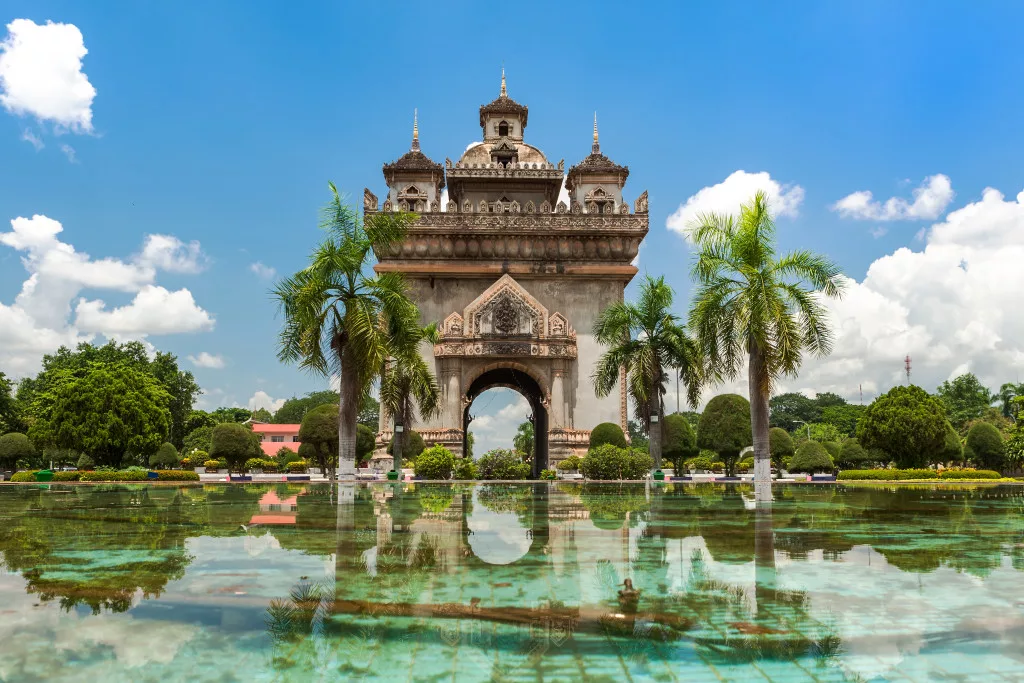
While the majestic golden temples like Wat Sisaket and Pha That Luang dominate the Vientiane skyline, their intricate carvings and tranquil courtyards provide moments of reflection akin to the atmosphere inside a mosque during the call to prayer. The Mekong River, a lifeline of the region, offers a serene perspective of the capital—gliding along its waters at dusk creates an almost meditative experience.
Although designated prayer spaces outside mosques are still limited, some restaurants and hotels allow guests to use quiet areas for worship. Additionally, Laos’s atmosphere of respect and tolerance generally facilitates the search for a quiet corner to pray, even if it is not a designated space.
Vang Vieng & Luang Prabang – A Surprising Shift in Attitudes
 (Photo: VietAsiatravel)
Outside the capital, the visible changes continue. Vang Vieng, once known primarily for adventure tourism and backpackers, has adapted to become more inclusive. In addition to the increasing number of family holidaymakers, particularly from China, the stunning Karst Mountains and the Nam Song River still attract visitors, but there is now a growing awareness of diverse traveler needs.
“Vang Vieng has been a pleasant surprise,” said Tamim Ali, a British Muslim traveler.
“I expected to struggle with food options, but it has been easier than I thought. The locals are very accommodating, and I have found several places to relax. There are also many sporting activities available, such as kayaking, canoeing, hiking, and hot air ballooning at sunset.”
Even in Luang Prabang, a UNESCO-listed city deeply intertwined with Buddhist life, I noticed subtle yet significant changes. The city remains profoundly traditional, but there has been a notable shift. Muslim travelers can now enjoy the beauty of temples, waterfalls, and the Mekong River while experiencing the peaceful ambiance of this captivating city. Halal food options are beginning to emerge, and while prayer spaces are still limited, awareness of Muslim needs is growing.
Challenges and the Road Ahead
Laos tourism authorities have recognized the potential of attracting Muslim travelers. An official representative stated:
“By providing prayer rooms in public places and promoting halal restaurants, Laos could become more welcoming to Muslim visitors. We are aware of our neighbors from Malaysia, Indonesia, and Singapore. Although we have focused on Chinese tourists, Laos has always been welcoming, and now we see more people seeking diverse options. It is a learning process, but we are embracing it.”
The small Muslim population in Laos means that while progress is evident, services can still be limited outside major cities. Halal certification is not always regulated, and in some areas, finding a suitable place to pray requires creativity.
A Bright Future for Muslim Travelers in Laos
Despite the existing challenges, the prospects for Laos as a Muslim-friendly destination appear promising. The China-Laos Railway has been a transformative force for tourism, cultural exchange, and economic opportunity.
Compared to several years ago, Laos has evolved into a more welcoming environment for Muslim visitors. As the country continues to develop, it will be intriguing to see how it adapts in the coming years, particularly for Muslim travelers.
Original Article:
“How Laos Is Becoming More Muslim-Friendly.” Halal Travel Network, https://halaltravel.network/blog/how-laos-is-becoming-more-muslim-friendly?locale=en