Global Halal Cosmetics Market Analysis and Growth Projections
Market Valuation and Future Projections
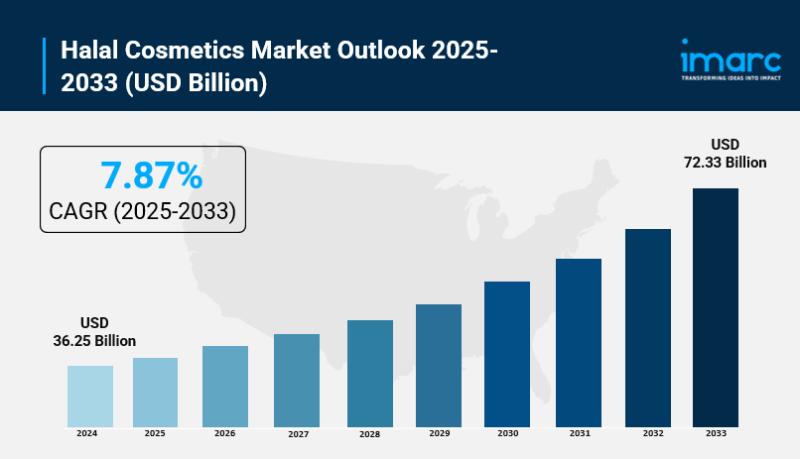
The halal cosmetics market demonstrated impressive performance in 2024, achieving a valuation of USD 36.25 billion. Industry forecasts indicate the sector will experience remarkable growth, potentially reaching USD 72.33 billion by 2033. This expansion represents a robust compound annual growth rate (CAGR) of 7.87%, significantly outpacing many traditional beauty market segments.
This growth trajectory reflects increasing consumer demand for ethically produced and religiously compliant beauty products, extending beyond traditional Muslim consumer bases to encompass broader ethical consumerism trends.
Product Categories and Market Distribution
The halal cosmetics sector encompasses diverse product categories serving various beauty and personal care needs:
Personal Care Products
- Skincare formulations meeting Islamic compliance standards
- Hair care products free from prohibited ingredients
- Fragrances developed according to halal principles
- Oral care products adhering to religious requirements
Color Cosmetics
- Makeup products certified for halal compliance
- Lipsticks and lip care items meeting religious standards
- Eye cosmetics formulated without prohibited substances
Distribution Channel Analysis
Market distribution patterns reveal traditional retail channels maintaining dominance while digital platforms show accelerating growth:
Offline Retail Channels (76.4% Market Share):
- Specialty cosmetics stores
- Supermarkets and hypermarket chains
- Beauty salons and professional outlets
- Department stores and luxury retail
Online Distribution (Rapid Growth Segment):
- E-commerce platforms expanding accessibility
- Brand-specific websites offering direct sales
- Digital marketplaces facilitating broader reach
The shift toward online retail represents a significant opportunity, particularly as certification transparency and product authenticity become increasingly important to consumers.
Regional Market Leadership
Asia Pacific Dominance
The Asia Pacific region commands over 62.8% of the global halal cosmetics market, driven by several key factors:
- Large Muslim population concentrations
- Well-established halal certification frameworks
- Strong government support for halal industry development
- Growing middle-class consumer spending on beauty products
Other Regional Markets
- North America: United States and Canada showing steady growth
- Europe: Germany, France, United Kingdom leading European adoption
- Middle East and Africa: Strong foundational demand in traditional markets
- Latin America: Brazil and Mexico emerging as growth markets
Industry Growth Drivers
Demographic Expansion
Global Muslim population growth represents a fundamental market driver. Demographic projections indicate the worldwide Muslim community will expand from approximately 1.6 billion to 2.2 billion by 2030, representing a 35% increase. This growth directly translates to expanded demand for Sharia-compliant cosmetics.
Particularly significant is the strengthening religious adherence among younger Muslim generations, who view halal certification as essential rather than optional. These consumers actively avoid products containing alcohol, pork derivatives, and certain animal-based components.
Ethical Consumerism Evolution
Modern beauty consumers demonstrate fundamentally different purchasing behaviors compared to previous generations. Contemporary shoppers seek products reflecting their personal values, creating favorable conditions for halal cosmetics growth.
Recent consumer behavior studies indicate approximately 75% of women and 60% of men in the United States regularly use skincare products, with many specifically seeking items meeting high ethical standards. Halal cosmetics naturally align with multiple consumer values including cruelty-free manufacturing, organic ingredients, and strict ethical production standards.
Regulatory Framework Enhancement
Strengthened regulatory environments provide essential trust foundations for market expansion. Notable developments include:
- Indonesia’s Ministry of Religious Affairs launching online platforms for overseas halal certificate registration
- Nearly 2.7 million halal-certified products registered with Indonesia’s BPJPH as of 2023
- Philippines unveiling a four-year Halal Industry Development Strategic Plan in January 2024
- Enhanced digital transformation streamlining certification processes
These regulatory improvements eliminate consumer uncertainty regarding product authenticity and compliance verification.
Key Market Players
Leading companies driving industry growth include:
- Clara International Beauty Group: Diverse Sharia-compliant product portfolios
- INGLOT Cosmetics: Innovative halal makeup formulations
- INIKA Organic: Natural and halal-certified beauty products
- Martha Tilaar Group: Established Asian market presence
- PHB Ethical Beauty Ltd: Ethical and halal beauty combinations
- Sampure Minerals: Mineral-based halal cosmetics
- Halal Beauty Cosmetics: Specialized halal beauty solutions
- IVY Beauty Corporation Sdn Bhd: Regional market leadership
Market Challenges and Opportunities
Industry Challenges
- Supply Chain Complexities: Managing halal-compliant ingredient sourcing across global supply networks
- Certification Standardization: Varying regional certification standards creating market fragmentation
- Consumer Education: Increasing awareness about halal cosmetics benefits beyond Muslim communities
Growth Opportunities
- Digital Platform Expansion: Enhanced online accessibility through e-commerce growth
- Product Innovation: Development of new formulations meeting both halal requirements and contemporary beauty trends
- Market Education: Expanding awareness among non-Muslim ethical consumers
- Regulatory Harmonization: Standardizing certification processes across different markets
Future Market Outlook
The halal cosmetics industry appears positioned for sustained growth through 2033, supported by multiple converging trends. Demographic expansion, ethical consumerism growth, and regulatory framework improvements create favorable conditions for continued market development.
Success factors for industry participants include maintaining product quality, ensuring certification transparency, expanding distribution networks, and effectively communicating value propositions to both Muslim and non-Muslim consumer segments.
Conclusion
The global halal cosmetics market represents one of the beauty industry’s most dynamic growth segments, with projections indicating substantial expansion over the next decade. Success in this market requires understanding diverse consumer motivations, maintaining rigorous compliance standards, and effectively navigating complex regulatory environments.
Companies positioning themselves strategically within this growing market stand to benefit from increasing consumer demand for ethically produced, religiously compliant, and high-quality beauty products that meet evolving global consumer expectations.
Original Article:
Open PR. (2025, September 7). Halal Cosmetics Market Size, Trends, Key Players, Opportunity and Forecast 2025-2033. Retrieved from https://www.openpr.com/news/4170241/halal-cosmetics-market-size-trends-key-players-opportunity