Industry Responds to Claims About Halal Meat in UK Supermarkets
Animal Welfare, Stunning Practices, and Consumer Confusion Spark Debate Online
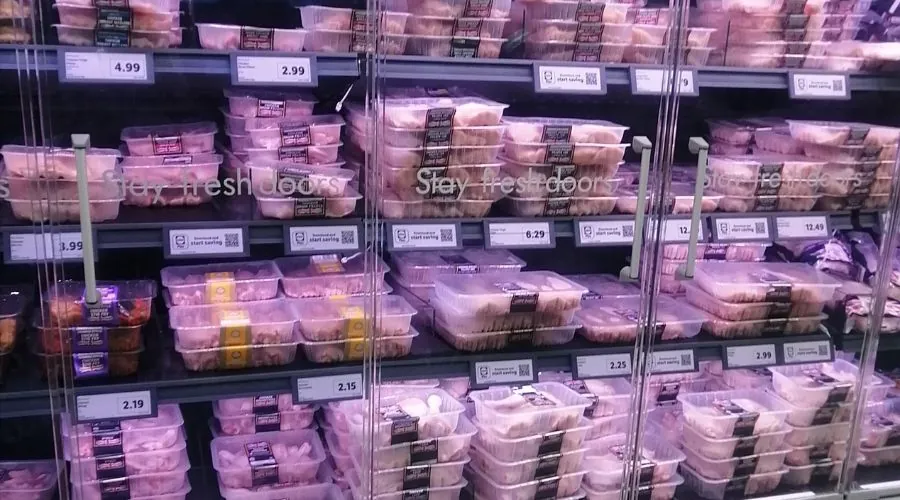
A wave of viral social media posts has reignited debate around the presence of halal meat in UK supermarkets, sparking concerns about animal welfare and whether animals are slaughtered without stunning. Videos and images showing abattoir codes on meat packaging—some on RSPCA Assured products—have led to public claims that large volumes of supermarket meat are halal-slaughtered, with critics fearing some of it may come from animals killed without prior stunning. But industry leaders, certification bodies, and retailers say these claims are misleading and don’t reflect current standards or practices.
What the Law Actually Says on Halal Slaughter
In the UK, stunning animals before slaughter is a legal requirement. However, exemptions exist for religious slaughter: all Shechita (kosher) and around 12% of halal slaughter is performed without stunning. Most halal meat, however, is from animals stunned using reversible methods, such as low-voltage electrical stunning.
According to recent Food Standards Agency (FSA) data, the proportion of non-stunned halal slaughter has increased, particularly for sheep—from 22% in 2022 to 29% in 2024.
Supermarkets Clarify: Most Meat Is Pre-Stunned
Most UK supermarkets declined to issue public statements, but several confirmed their policies:
- Lidl & Aldi: 100% of their meat is from animals stunned before slaughter.
- Sainsbury’s: Own-brand meat is stunned and not halal or kosher, but labelled halal/kosher options are available.
- Asda: All own-brand meat is pre-stunned. Halal and kosher products are sold with clear labels.
- M&S: All meat and poultry is stunned prior to slaughter.
- Morrisons: Follows British Retail Consortium standards—own brand meat is always pre-stunned.
- Tesco and Waitrose did not respond to requests for comment.
Assurance Schemes Push Back on Online Claims
Responding to allegations that RSPCA Assured products may be halal or non-stunned, the organisation was clear:
“All RSPCA Assured animals are stunned before slaughter. There are no halal or kosher-labelled RSPCA products.”
The RSPCA supports reversible stunning methods that ensure animals are unconscious and unable to feel pain during slaughter. The time between stunning and bleeding is tightly controlled to prevent recovery of consciousness.
Similarly, Red Tractor confirmed its products come only from animals stunned prior to exsanguination (bleeding), with acceptable methods including both reversible and irreversible stunning.
Halal Certification Bodies Say Welfare Is Not Compromised
Dr. Amer Rashid, Technical Director of Halal Certification Organisation Ltd, assured that all halal pre-stunning practices are fully compliant with UK law and animal welfare standards:
“Halal operations are stringently regulated by the FSA, overseen by licensed officials and halal auditors. Misconceptions about halal slaughter compromising welfare are simply false.”
The Association of Independent Meat Suppliers (AIMS) echoed this, calling the viral posts “misleading” and pointing out that most halal meat in the UK is pre-stunned, while non-stun slaughter is limited, legally exempt, and monitored by vets.
Why the Confusion? The Role of Labelling and Misinformation
Much of the online debate stems from people using slaughterhouse numbers printed on meat packs to look up abattoirs and speculate on stunning methods—without full context. A call for clearer labelling has emerged, but consumer behaviour often doesn’t match online sentiment.
For instance, farmer Ben Aveling went viral for confirming his lamb was pre-stunned and non-halal—but despite 150,000 impressions, the online buzz didn’t translate to a spike in sales. While he supports pre-stunning for both welfare and meat quality, he also acknowledged the importance of the Muslim market to the lamb industry amid declining domestic consumption:
“The Muslim trade is the reason our lambs are making any money right now.”
He also admitted that as a farmer, he was previously unaware of key details around stunning and halal slaughter—highlighting how even food producers can be disconnected from the nuances of the supply chain.
Campaigners Call for Stronger Regulation and Transparency
Animal welfare groups such as the RSPCA and British Veterinary Association (BVA) have long campaigned to end non-stun slaughter. While a full ban hasn’t materialised, BVA is pushing for stronger regulation and more transparent labelling, with a short-term goal of improving public understanding without infringing on religious freedoms.
A Defra spokesperson confirmed that animal welfare remains a top government priority:
“Strict laws are in place to protect animal welfare at slaughter. FSA vets are present in every approved slaughterhouse, and any breaches are fully investigated.”
Facts Over Fear
While social media claims have stirred debate, the reality is more nuanced. Most meat in UK supermarkets comes from stunned animals, including the vast majority of halal meat. Non-stun slaughter exists but is tightly regulated and represents a small portion of the market.
As consumer interest in food ethics grows, so too does the need for clearer labelling, public education, and balanced reporting—ensuring that debates about welfare and religious slaughter are based on facts, not fear.
Original Article:
Kidby, S. (2025, October 6). Industry reacts to claims about halal meat in UK supermarkets. Farmers Guide. Retrieved from https://www.farmersguide.co.uk/business/food-drink/industry-reacts-to-claims-about-halal-meat-in-uk-supermarkets/