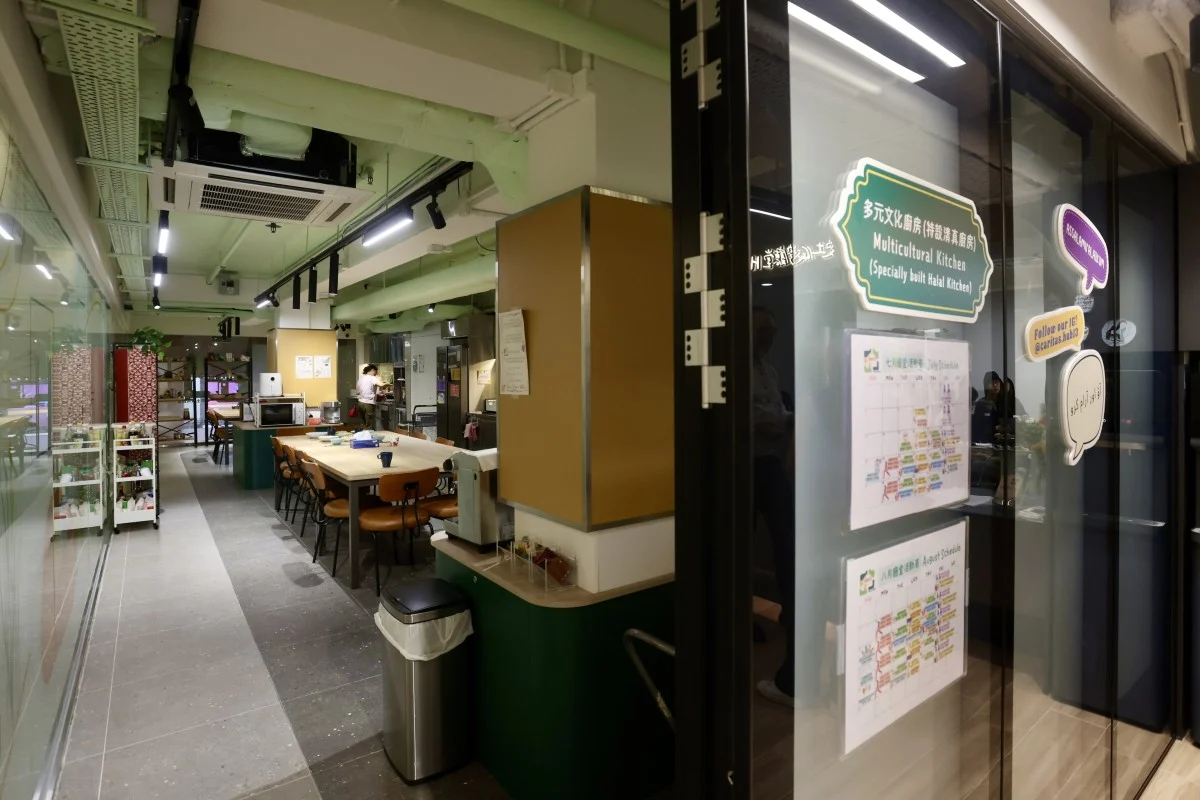
Hong Kong’s First Multicultural Community Space Serves Muslim Residents
Introduction to HUB13 Community Initiative
In Hong Kong’s historic To Kwa Wan neighborhood, a groundbreaking community facility has emerged to address the unique needs of the area’s diverse population. HUB13, a 2,000 square foot community living room located on Pau Chung Street, represents the first multicultural community space in Hong Kong to feature dedicated halal facilities, marking a significant step toward inclusive community development.
Supporting the “13 Streets” Community
HUB13 specifically serves families residing in the “13 Streets” area, a collection of aging and deteriorating buildings in To Kwa Wan. The facility addresses the needs of residents living in challenging housing situations, including rooftop squatter homes and subdivided flats. Many families face overcrowding, with some non-subdivided apartments housing two families totaling 11 people.
Over the past two decades, Caritas Hong Kong has documented an increasing number of low-income Pakistani and Indian families settling in To Kwa Wan. This demographic shift has resulted in numerous ethnic minority-operated businesses and mosques throughout the area, reflecting the community’s evolving cultural landscape.
Unique Multicultural Facilities
– Dedicated Halal Kitchen Infrastructure
The facility features carefully designed separate kitchen and dining areas to accommodate different dietary requirements. One kitchen is exclusively dedicated to halal food preparation, while another serves non-halal cuisine. Non-Muslim users may access the halal kitchen provided they strictly observe halal dietary restrictions. This thoughtful design enables cross-cultural food sharing and exchange, particularly during festive celebrations.
– Privacy-Conscious Exercise Facilities
HUB13 includes a compact gymnasium equipped with frosted glass walls to ensure complete privacy for users. The space accommodates two women-only exercise sessions daily and serves a dual purpose as a prayer room, demonstrating sensitivity to religious practices and cultural preferences.
– Comprehensive Programming
The facility operates from 10am to 8:30pm on weekdays and occasionally opens for weekend events. Regular activities include film screenings, Cantonese language classes, fitness sessions, and community gatherings, providing diverse opportunities for social interaction and skill development.
Community Impact and Personal Stories
– Individual Transformation
Azmat Tariq, a 48-year-old Pakistani homemaker, exemplifies the facility’s positive impact on residents’ lives. Previously hesitant to engage with others due to her busy home responsibilities, she now participates in weekly gatherings where ethnic minority families prepare food together and share experiences. The facility has provided her with opportunities to learn about health management while building confidence and social connections.
– Cultural Bridge-Building
HUB13 actively promotes intercultural understanding by addressing discrimination and misconceptions. When non-Muslim users express confusion about halal kitchen restrictions, staff provide educational explanations about halal principles and food identification. Additionally, ethnic Chinese participants are invited to join “cultural awakening” activities, including visits to mosques and Sikh temples.
Organizational Structure and Funding
– Operational Management
Caritas Hong Kong, a non-governmental organization, operates HUB13 using private funding sources. The initiative represents part of Caritas’s broader community service mission and demonstrates innovative approaches to addressing diverse community needs.
– Financial Support Network
The facility receives co-funding from Kerry Group and ZeShan Foundation, while Hongkong Land sponsors venue design and facilities. This collaborative funding model enables the facility to maintain operations while serving the community’s specialized requirements.
Broader Context and Future Vision
According to 2021 census data, Kowloon City ranks among Kowloon’s most ethnically diverse districts. Ethnic minority groups, including Filipinos, Indonesians, Indians, Thais, and Pakistanis, comprise 10.7% of the district’s population, highlighting the need for culturally responsive community services.
Since launching in early May, HUB13 has attracted 300 household members, with one-third representing ethnic minority families. The facility aims to expand membership to 800 households within three years, demonstrating ambitious growth targets for community engagement.
While Kowloon City district already hosts three government-operated community living rooms, HUB13 serves a complementary function by providing specialized multicultural facilities. The initiative hopes to influence future government community room designs by demonstrating alternatives to one-size-fits-all approaches that consider unique community needs.
Significance for Hong Kong’s Urban Development
HUB13 represents a pioneering model for inclusive community development in Hong Kong’s increasingly diverse neighborhoods. By providing culturally sensitive facilities and programming, the initiative demonstrates how community spaces can serve as catalysts for social integration while respecting cultural differences. The facility’s success may inspire similar multicultural community initiatives throughout Hong Kong, contributing to more inclusive urban development practices.
Original Article:
South China Morning Post. (2025, August 5). New Hong Kong community living room in To Kwa Wan to benefit ethnic minority groups. South China Morning Post. https://www.scmp.com/news/hong-kong/society/article/3320577/new-hong-kong-community-living-room-kwa-wan-boon-ethnic-minority-groups