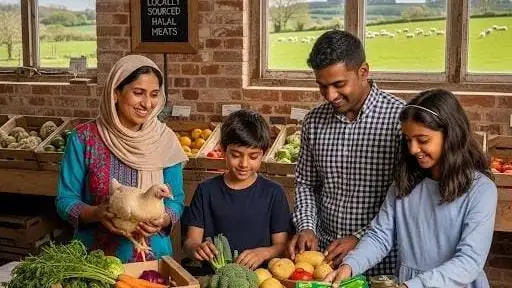
Rural Britain Faces Call for Greater Halal Food Inclusion as Demographics Shift
Depok – A recent academic report has sparked debate about food accessibility and cultural inclusion in rural Britain, arguing that the country’s “overwhelmingly white” countryside requires more comprehensive efforts to serve ethnic minority populations, including improved access to halal food options.
The Current Landscape of Rural Food Access
The report’s findings highlight a growing disconnect between Britain’s increasingly diverse population and the food infrastructure available in rural communities. While urban areas have adapted to serve multicultural populations with specialized shops, restaurants, and supermarket sections dedicated to various dietary requirements, rural areas have largely remained unchanged in their food offerings.
This disparity creates significant challenges for ethnic minorities living in or moving to rural areas, where halal meat, specialized ingredients, and culturally appropriate food options can be scarce or entirely unavailable. The situation is particularly acute for Muslim families who require halal-certified products as part of their religious observance.
Demographic Realities and Business Challenges
The challenge facing rural communities is both demographic and economic. Many countryside areas have historically homogeneous populations, which has naturally shaped local business models and food retail strategies. Small rural shops and restaurants typically stock products based on local demand patterns, and the limited customer base for specialized items can make it economically challenging to justify expanded inventories.
However, Britain’s demographic landscape is evolving. Census data shows increasing ethnic diversity even in traditionally homogeneous areas, driven by factors including housing costs, remote work opportunities, and lifestyle choices. This gradual shift is creating new demands on rural infrastructure, including food retail.
The Academic Perspective on Inclusion
The report’s authors argue that addressing food accessibility represents a crucial component of broader inclusion efforts. They contend that sustained inclusion efforts must go beyond mere tolerance to actively creating welcoming environments for diverse communities. From this perspective, ensuring access to culturally appropriate food becomes both a practical necessity and a symbolic gesture of acceptance.
The academics suggest that rural communities have a responsibility to adapt their services to accommodate changing demographics, viewing this as essential for creating truly inclusive environments where ethnic minorities can fully participate in countryside life.
Practical Challenges and Economic Considerations
Implementing such changes, however, presents numerous practical challenges. Rural businesses operate on thin margins, and expanding product lines to serve small customer segments can be financially risky. The infrastructure for halal food distribution is also less developed in rural areas, potentially increasing costs and complexity for retailers.
Additionally, storage and turnover issues arise when stocking specialized products for limited local markets. Perishable items like halal meat require careful inventory management, and rural shops may lack the sales volume to justify regular deliveries of such products.
Alternative Solutions
Some rural areas have begun exploring innovative solutions to address these challenges. Mobile halal butchers serve multiple communities on rotating schedules, while online ordering and delivery services help bridge the gap between urban suppliers and rural consumers. Community-supported agriculture models have also expanded to include halal-certified meat production in some regions.
Farmers’ markets and regional food networks offer another avenue for increasing diversity in rural food options. These platforms can provide opportunities for ethnic minority food producers to reach rural customers while supporting local economic development.
Community Response and Integration
The report’s recommendations have generated mixed responses within rural communities. Some residents and business owners welcome the opportunity to serve more diverse populations and see expanded food options as beneficial for everyone. Others question whether the costs and complexities of such changes are justified by current demographic realities.
Local councils and community organizations find themselves navigating these tensions while trying to balance practical constraints with inclusivity goals. Some have initiated dialogue programs bringing together longtime residents and newer community members to discuss needs and solutions collaboratively.
Looking Forward: Sustainable Approaches
Moving forward, sustainable solutions likely require collaboration between multiple stakeholders. Government support for rural business development could help offset the costs of expanding product ranges. Regional food distribution networks could achieve economies of scale that make specialized products more viable for rural retailers.
Educational initiatives might also play a role, helping rural communities understand diverse dietary requirements while providing ethnic minorities with information about local food sources and alternatives.
The Broader Context of Rural Inclusion
The debate over halal food access reflects broader questions about how rural Britain adapts to demographic change. As the country becomes increasingly diverse, rural communities face choices about whether and how to evolve their services and cultural practices.
Success in creating more inclusive rural environments will likely depend on finding approaches that acknowledge both the legitimate needs of ethnic minorities and the practical constraints facing rural businesses and communities. This balance requires ongoing dialogue, creative problem-solving, and recognition that inclusion efforts must be both meaningful and sustainable.
The conversation sparked by this report represents an important step in addressing these complex challenges, highlighting the need for thoughtful approaches to rural inclusion that benefit all community members while respecting the realities of countryside life.
Original Article:
Simpson, C. (2025, September 3). Overwhelmingly white countryside — halal food report claims. The Telegraph. Retrieved from https://www.telegraph.co.uk/news/2025/09/01/overwhelmingly-white-countryside-halal-food-report-claims/