Rukyatul Hilal: Understanding the Islamic Method of Crescent Moon Observation
JAKARTA (March 27, 2026)
Ramadan is the most sacred month in the Islamic calendar, eagerly awaited by Muslims around the world. For an entire month, they observe the fast, and when the month transitions to Shawwal, the celebration of Eid al-Fitr marks the joyful end of this spiritual journey.
However, determining precisely when Ramadan begins — and when Eid al-Fitr falls — is not an arbitrary matter. In Islamic practice, two methods are recognized for determining the start of important months in the Hijri calendar: the hisab method (astronomical calculation) and the rukyatul hilal method (direct observation of the crescent moon). This article explores the latter in depth — its meaning, history, practical application, modern relevance, and the ongoing debate surrounding it.
What Is Rukyatul Hilal?
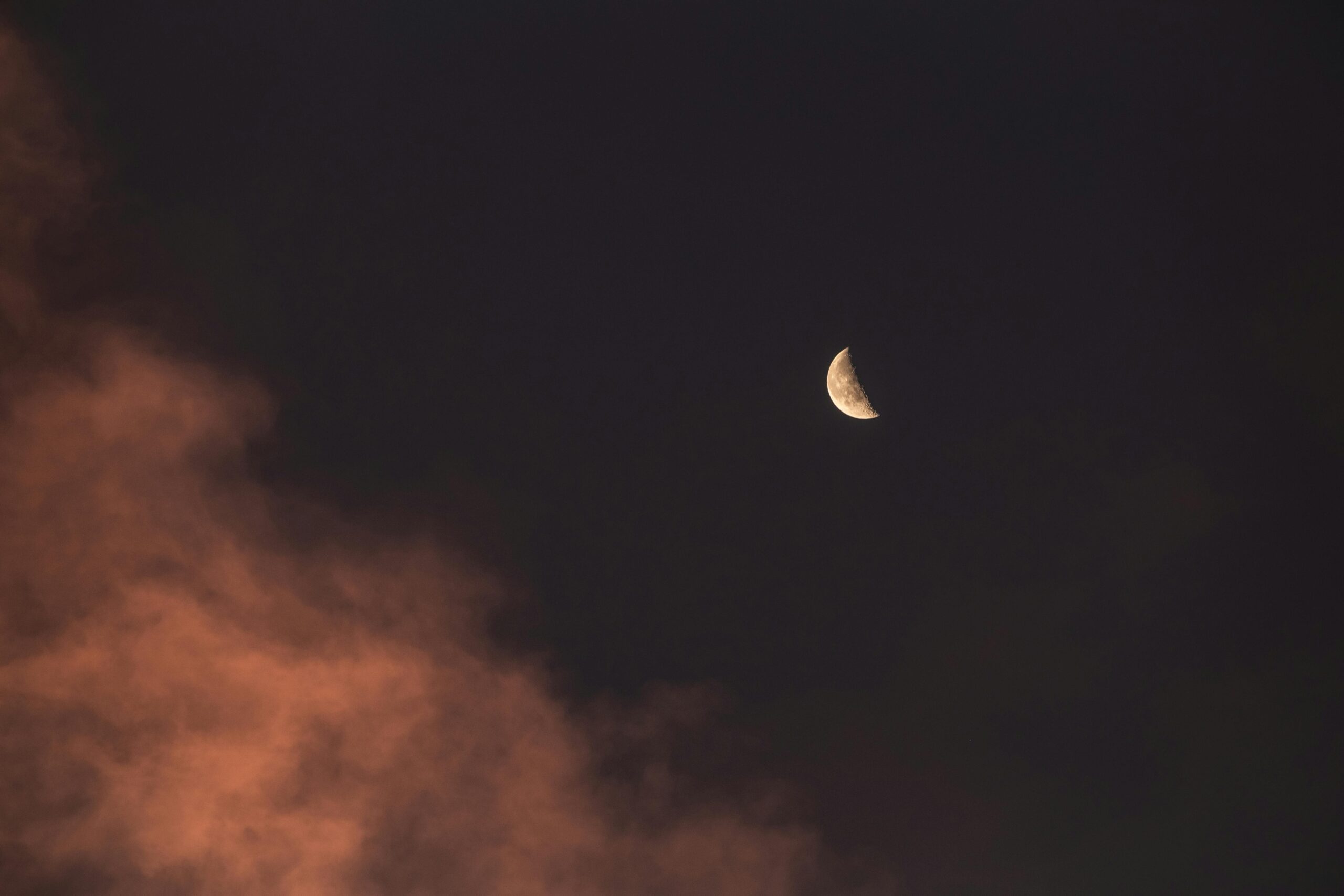
The term rukyatul hilal originates from two Arabic words. Rukyat (رُؤْيَة) is a verbal noun (isim masdar) derived from the verb ra’a–yara’u (رَأَى–يَرَى), meaning “to see” or “to observe.” Hilal (هِلاَل) means “crescent moon.” Together, rukyatul hilal is defined as the activity of observing the appearance of the crescent moon to determine the beginning of a new month in the Hijri calendar — particularly the 1st of Ramadan, the 1st of Shawwal (Eid al-Fitr), and other significant months.
The Islamic calendar is a lunar calendar (taqwim qamariyah), rooted in the ancient Arabian tradition of marking time by the phases of the moon. Each new month begins with the emergence of the young crescent moon — a thin sliver of light visible on the western horizon just after sunset. This astronomical phenomenon serves as the official marker of the new month, making the observation of the crescent moon a central religious practice in Islam.
Historical Background
Rukyatul hilal is the oldest of the two recognized methods of determining the beginning of the Hijri months. Its practice dates back to the time of the Prophet Muhammad (peace be upon him), and its basis is found in a well-known hadith narrated by Imam al-Bukhari and Muslim:
صُومُوا لِرُؤْيَتِهِ وَأَفْطِرُوا لِرُؤْيَتِهِ، فَإِنْ غُمَّ عَلَيْكُمْ فَأَكْمِلُوا عِدَّةَ شَعبانَ ثَلاثِينَ
“Fast when you see the crescent, and break the fast when you see it. If it is obscured from you, then complete thirty days of Sha’ban.” (Narrated by al-Bukhari and Muslim)
Beyond Ramadan and Eid al-Fitr, this method was also applied to determining the beginning of Muharram (the Islamic New Year) and Dhul-Hijjah (Eid al-Adha).
During the era of the Prophet and his companions, astronomical science was still in its early stages. Muslims largely relied on the more advanced Babylonian calendar system for broader timekeeping. Over time, the practice continued and was refined. During the caliphate of Umar ibn al-Khattab (ra), a more systematic approach to the Islamic calendar was developed — one that began incorporating elements of hisab (astronomical calculation) as a complementary tool.
How Rukyatul Hilal Works
The rukyatul hilal method centers on observing the actual position and condition of the moon in the sky. Observations are conducted immediately after sunset, when the sky is dimming but not yet fully dark — the moment when the faint crescent is most likely to be visible before it follows the sun below the horizon.
Observers look toward the western sky, tracking the angular distance between the moon and the sun’s position. The crescent being sought is the young crescent moon (hilal muda) — the first phase of the new lunar cycle.
Not every visible crescent qualifies. According to the criteria established by MABIMS (the Council of Religious Ministers of Brunei Darussalam, Indonesia, Malaysia, and Singapore), two specific thresholds must be met for a crescent to be accepted:
The moon’s altitude must be at least 3 degrees above the horizon. Below this threshold, the crescent is drowned out by the strong twilight glow still lingering after sunset. Additionally, the elongation — the angular distance between the moon and the sun — must be at least 6.4 degrees. Below this value, the crescent is too thin and faint to be seen against the brightness of the evening sky. This figure is derived from the known record of the closest observed crescent moon; anything less simply cannot compete with residual sunlight.
The tools used for rukyatul hilal have evolved considerably across history. In the time of the Prophet and his companions, the naked eye was the sole instrument — a method deeply dependent on atmospheric clarity and the observer’s visual acuity. Unfavorable weather, including clouds and haze, frequently interfered with observation. Over subsequent centuries, instruments such as compasses and hourglasses began to be incorporated. Today, modern optical devices including high-powered binoculars and telescope systems, combined with sophisticated astronomical software, support and enhance the precision of crescent observations.
Countries That Use Rukyatul Hilal
The rukyatul hilal method is most widely practiced in Muslim-majority countries in Southeast Asia, including Indonesia, Malaysia, Brunei Darussalam, Singapore, Thailand, and the Philippines. Beyond this region, countries such as Iran and large parts of India also rely on this method. In countries with Muslim minority populations — such as South Korea — communities often follow the rulings of Islamic councils from Muslim-majority nations.
Indonesia, Malaysia, Singapore, and Brunei Darussalam operate within the framework of MABIMS, a regional body that has developed a distinctive hybrid approach: rukyatul hilal is conducted as the primary method, while the Hijri calendar derived from hisab calculations serves as a secondary reference. This means that crescent observation provides the empirical confirmation, while astronomical calculations offer advance guidance — a model that balances religious tradition with scientific precision.
Why Rukyatul Hilal Remains Relevant Today
Despite being the oldest of the two methods — and despite remarkable advances in astronomical science — rukyatul hilal remains an essential and mandatory practice in much of the Muslim world. Two core reasons explain this enduring relevance.
The first is obedience to prophetic instruction. The hadith cited above is an explicit command from the Prophet to observe the crescent moon when determining the beginning and end of Ramadan. For many scholars, this commandment is not merely a practical suggestion but a religious obligation — a form of worship in itself. No level of technological sophistication changes the nature of this divine instruction.
The second is the principle of caution (ihtiyath). Religious authorities emphasize the importance of direct, empirical verification when making determinations that affect major acts of worship. The hisab method, however mathematically precise, remains a calculation — a prediction of where the moon should be. Rukyatul hilal confirms what is actually there. As a result, hisab functions as a supporting tool — a way to know in advance whether conditions are favorable for observation — but it does not replace the observation itself.
The Debate Between Rukyatul Hilal and Hisab: Two Approaches, One Goal
Few topics generate as much discussion among Muslims — particularly in the weeks leading up to Ramadan and Eid — as the question of which method should take precedence. Both sides present arguments firmly grounded in Islamic intellectual tradition.
Proponents of rukyatul hilal emphasize the direct prophetic basis of the method, the principle of empirical verification, and the spiritual and communal dimension of the practice. There is something deeply meaningful, they argue, about a global community of Muslims looking to the same sky for the same sign.
Proponents of hisab, on the other hand, highlight its superior precision, its ability to provide certainty well in advance, and the practical difficulties that rukyatul hilal faces in modern urban environments with high levels of light pollution and unpredictable weather. A unified global calendar, they argue, would better serve Muslim communities around the world.
What often gets lost in this debate, however, is that rukyatul hilal and hisab are not fundamentally opposed methods — they are complementary ones. Hisab provides scientific grounding and forward planning; rukyatul hilal provides empirical confirmation and fulfills the religious mandate. The two methods share a single purpose: ensuring that the acts of worship performed by Muslims are observed at the right time, in accordance with both divine instruction and the reality of the natural world.
Rather than a source of division, the coexistence of both methods in contemporary Islamic practice reflects the richness and adaptability of Islamic scholarship — a tradition that has always engaged seriously with science while remaining anchored in its foundational texts.
Conclusion
Rukyatul hilal is more than an ancient observational technique. It is a living religious practice that connects Muslims to the tradition of the Prophet, to the rhythms of the natural world, and to one another across more than fourteen centuries of Islamic history. The crescent moon has served as a marker of sacred time since the earliest days of Islam, and its observation remains a meaningful act of worship today.
Hisab, with its mathematical rigor and predictive power, complements rather than competes with rukyatul hilal. Both are legitimate contributions to Islamic scholarship. Both serve the same goal.
The task before Muslim communities is not to choose between Rukyatul Hilal and Hisab, but to understand them together — and in doing so, to preserve both the spirit of prophetic guidance and the spirit of intellectual inquiry that have long defined Islamic civilization.
Written by: Alhayya Maritza
References
Al-Qaradawi, Y. (2023). Berpuasa seperti Nabi. Bandung: Mizan.
Herman, M. A., Gassing, Q., & Shuhufi, M. (2024). Kontroversi Hisab dan Rukyat Dalam Penentuan Kalender Islam di Era Modern Pendekatan Fikih Kontemporer. Media Hukum Indonesia (MHI), 2(4).
Hidayat, E. H. (2019). Sejarah perkembangan hisab dan rukyat. Elfalaky: Jurnal Ilmu Falak, 3(1), 56-70.
Mustaqim, R. A. (2022). Hisab dan Rukyat. Banda Aceh: Syiah Kuala University Press.