Butterscotch and Halal Compliance: What Consumers Need to Know
JAKARTA (06/19/2026)
Butterscotch is a widely used flavoring agent in the global confectionery and beverage industry. Despite its seemingly simple ingredient profile, its halal status remains a subject of scrutiny among Muslim consumers and Islamic scholars alike. This article examines the critical halal checkpoints within butterscotch production, with practical guidance for food businesses seeking to serve the growing global halal market.
The global halal food market continues to expand rapidly, driven by a Muslim population exceeding 1.8 billion worldwide and a growing awareness of halal standards among non-Muslim consumers who associate halal certification with quality and safety. For food manufacturers and exporters for those targeting markets such as Indonesia, Malaysia, the Middle East, and North Africa. Because of that, understanding the halal status of individual ingredients is no longer optional. It is a business imperative.
One ingredient that frequently appears in beverages, desserts, and confectionery products is butterscotch, a caramel-style flavoring made primarily from brown sugar, butter, and various additives. While its base components appear innocuous, butterscotch occupies a grey area in halal classification that every food business should be aware of before entering Muslim-majority markets.
What Is Butterscotch?
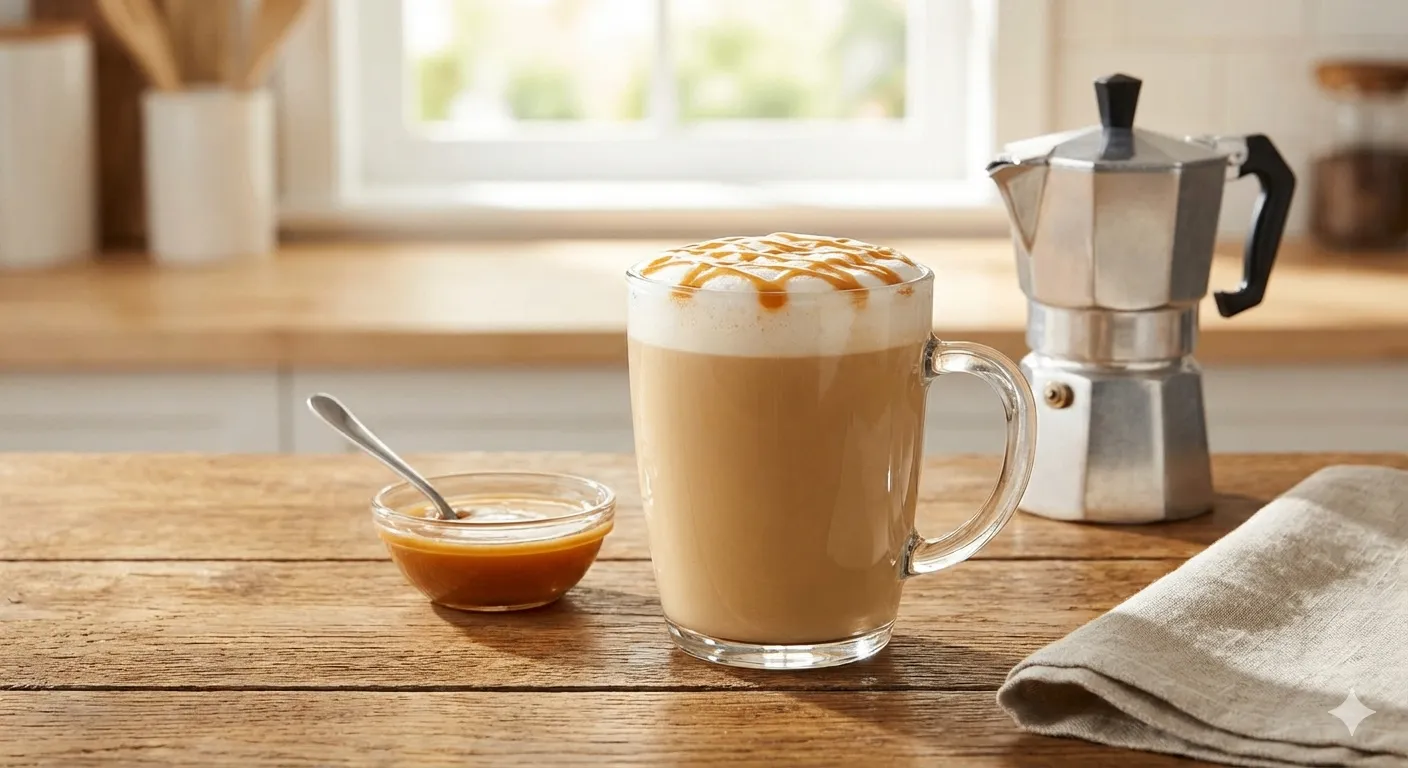
Butterscotch is produced by cooking brown sugar over an extended period until it caramelizes into a rich, amber-colored syrup. Butter and corn syrup are commonly added to achieve a smooth texture and distinct flavor. The result is a slightly tart, deeply sweet syrup used as a topping, flavoring base, or ingredient in a wide range of products from ice cream and pastries to coffee syrups and beverages like the now-popular butterbeer.
Because no single standardized formula exists for butterscotch, its ingredient composition varies significantly between manufacturers. This variability is precisely what makes its halal status conditional rather than absolute.
What is Butterscotch Halal Status
Based on some analysis, butterscotch is classified as mushbooh, an Arabic term meaning “doubtful” or “suspected”, with only a 60% consensus toward a halal classification among the models reviewed. This finding aligns with the general principle in Islamic jurisprudence that when the permissibility of a substance cannot be clearly established, caution must be exercised.
“Halal is clear and haram is clear, and between them are doubtful matters.” — HR. Bukhari & Muslim
This does not mean butterscotch is inherently haram. Rather, its halal status is entirely dependent on the sourcing and processing of its constituent ingredients, as outlined below.
Critical Halal Checkpoints
1. Butter and Emulsifiers
Butter (the defining ingredient in butterscotch) is a dairy-derived product generally considered halal. However, commercial butter production frequently involves the addition of emulsifiers to improve texture and shelf stability. This is where the halal risk arises.
Emulsifiers may be sourced from:
- Plant-based fats → generally permissible
- Animal-based fats → permissible only if derived from halal-slaughtered animals; impermissible if derived from porcine sources
Food businesses must verify the origin of every emulsifier present in their butter supply. Common emulsifiers to scrutinize include E471 (mono- and diglycerides of fatty acids) and E472 variants, which can be of animal origin.
2. Corn Syrup and Enzymatic Processing
Corn syrup is a standard component of many butterscotch formulations. While corn itself is unambiguously halal, the industrial processing of corn starch into syrup often involves enzymatic conversion. If those enzymes are:
- Derived from microbial or plant sources → halal
- Derived from porcine pancreatin or non-halal animal sources → haram
Additionally, any stabilizers, colorings, or preservatives added to corn syrup must be individually verified for halal compliance.
3. Flavoring Agents and Vanilla Extract
Many butterscotch formulations incorporate vanilla or other flavor enhancers to deepen the aromatic profile. The concern here lies in extraction methods. Vanilla extract is conventionally produced by macerating vanilla beans in an alcohol-and-water solution, which can result in ethanol concentrations that are not permissible under Islamic law.
According to MUI Fatwa No. 4 of 2023 on Halal Standardization, any food or beverage product containing ethanol exceeding 1% is classified as haram. Food businesses should therefore ensure that any flavoring agent used in their butterscotch either:
- Uses non-alcoholic extraction methods, or
- Carries verified halal certification from a recognized authority
4. Product Naming Considerations
For businesses seeking to market their products in Indonesia or other markets governed by MUI or BPJPH halal standards, product naming is an additional compliance layer. MUI Fatwa No. 4 of 2023 stipulates that food and beverage products may not bear names associated with prohibited substances, even if their actual formulation is halal-compliant.
Products that incorporate butterscotch as a flavoring in beverages named “butterbeer,” for instance, may face certification barriers due to the word “beer”, Regardless of whether any alcohol is present. Businesses are advised to consult with local halal certification bodies when naming products for Muslim-majority markets.
Implications for Food Businesses
For international food manufacturers, exporters, and retailers entering halal markets, the case of butterscotch offers a valuable lesson: ingredient-level halal compliance is more granular than many businesses anticipate. The following practical steps are recommended:
- Audit your supply chain: Verify the origin of every emulsifier, enzyme, and flavoring agent in your formulations
- Source halal-certified butter: Prioritize butter suppliers with recognized halal certification (e.g., MUI, JAKIM, ESMA)
- Replace alcohol-based flavorings: Use halal-certified vanilla paste or non-alcoholic extracts as alternatives
- Verify corn syrup processing: Confirm that enzymatic agents used in corn syrup production are of plant or microbial origin
- Engage a halal certification body: Seek formal certification through BPJPH (Indonesia), JAKIM (Malaysia), or equivalent authorities before market entry
- Review product naming: Ensure product names do not reference prohibited substances under the target market’s fatwa guidelines
Conclusion
Butterscotch is neither straightforwardly halal nor definitively haram. Its permissibility hinges on a chain of ingredient-sourcing decisions that must be made deliberately and transparently. For businesses targeting the global halal market estimated to be worth over USD 2 trillion. Understanding and addressing these nuances is not merely a matter of religious compliance. It is a mark of product integrity and consumer trust.
Muslim consumers and halal-conscious markets reward businesses that take certification seriously. As halal awareness grows globally, the competitive advantage belongs to those who invest in getting the details right — down to the emulsifier in their butter.
REFERENCES
Regulatory & Fatwa Sources
Majelis Ulama Indonesia (MUI). (2023). Fatwa MUI Nomor 4 Tahun 2023 tentang Standardisasi Fatwa Halal. Jakarta: MUI.
- Bukhari & Muslim — Hadith on halal, haram, and doubtful matters (Hadith al-Nu’man ibn Bashir).
Industry & Media Sources
HalalCorner.ID. (2025). Butterbeer, Halal atau Haram? Diakses dari www.halalcorner.id
detikFood. (2022). Hati-hati! Es Kopi Kekinian Bisa Jadi Haram Kalau Ada Bahan Ini. Diakses dari www.detikfood.com
HalalLens. (2026). Butterscotch – Is It Halal? Diakses dari www.halallens.com
Academic Journal References
Zainudin, A. N., Jaafar, M., & Redzwan, G. (2020). Halal status of flavouring agents derived from alcohol-based extraction: Issues and challenges. International Journal of Academic Research in Business and Social Sciences, 10(6), 255–265.